Nebra sky disk, Archaeological artifact in Saxony-Anhalt, Germany
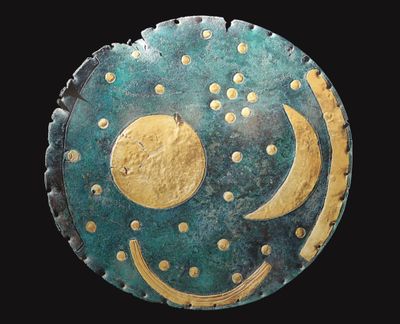
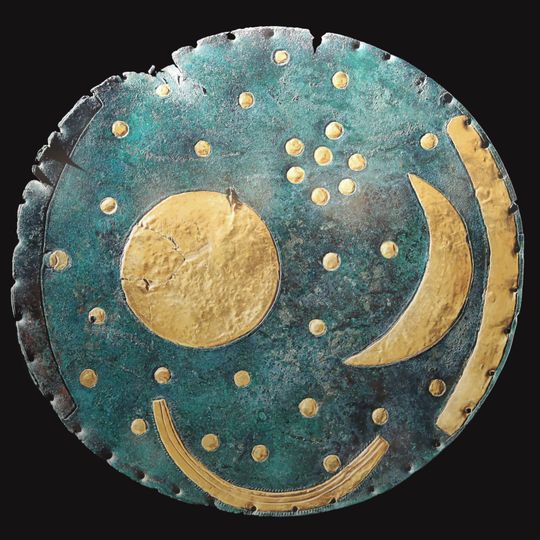
The Nebra sky disk is a Bronze Age bronze artwork measuring about 32 centimeters in diameter with gold inlays. The representations on it depict the sun, moon, stars, and the Pleiades constellation.
The object was created in the early Bronze Age and was discovered in 1999 with a metal detector near Nebra. German authorities secured it from illegal traders in 2002, preventing its loss abroad.
The disk shows how Bronze Age people observed the sky and transformed their knowledge of celestial bodies into metalwork. Such objects give us insight today into how these communities understood and interpreted their world.
The object is preserved and displayed at the State Museum of Prehistory in Halle, where visitors can see it in a controlled setting. The museum visit offers a good opportunity to learn more about Bronze Age sites and metallurgical methods of the period.
Scientific analysis shows that the copper components came from Austria, while the gold elements came from sources in Eastern Europe or Britain. These findings suggest far-reaching trade networks that connected Central Europe with distant regions even in the Bronze Age.
The community of curious travelers
AroundUs brings together thousands of curated places, local tips, and hidden gems, enriched daily by 91,314 contributors worldwide.