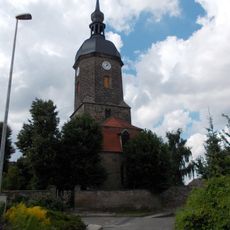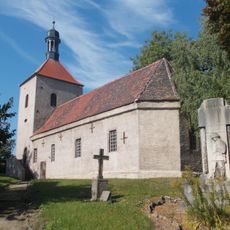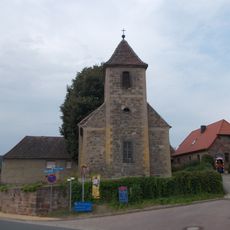
Schloss Vitzenburg, Medieval château in Querfurt, Germany.
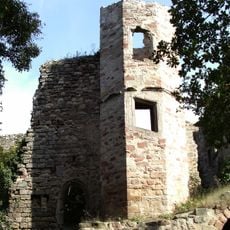
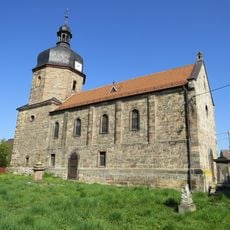
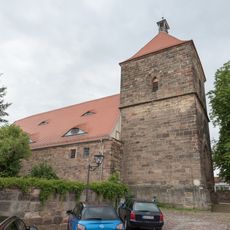
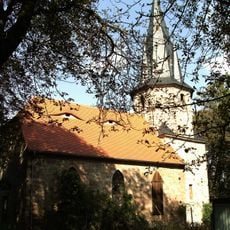
Schloss Vitzenburg is a medieval castle near Querfurt situated on elevated terrain with defensive walls and watchtowers. The complex comprises multiple buildings from different periods that together form a substantial fortified structure.
Vitzenburg appears in the Hersfeld tithe register of 881–899 and was named again in 979, when Otto II granted its tithes to Memleben. Before 991 the noble Brun and his wife Adilint founded a convent of St Mary and Dionysius inside the castle; Otto III confirmed it in 991. Around 1112 the convent became a monastery, which Otto of Bamberg dissolved in favour of Reinsdorf in 1123.
The name Vitzenburg probably derives from a nobleman called Vizo, who according to the Pegau Annals held castle and convent shortly before his death. Before 991 the nobleman Brun and his wife Adilint founded a convent of St. Maria and Dionysius inside the castle; Wiprecht von Groitzsch later expelled the nuns for lax discipline. His mother Sigena von Leinungen was buried here in 1110.
The complex stands on a west-projecting hill spur above the Unstrut, southwest of the village; a terrace north below the former main castle may be the remnant of an old enclosing ditch. The surviving buildings are Renaissance and Neo-Renaissance work, so expect a mix of older stone walls and later multi-storey wings rather than a single-period fortress.
The 1590 Querfurt chronicle by Cyriakus Spangenberg claimed the nunnery was founded in 626 under the Merovingian king Dagobert I; this is a 16th-century invention with no evidence, and a Merovingian foundation here can be ruled out. The first documented mention is in Hersfeld Abbey's tithe register of 881–899.
The community of curious travelers
AroundUs brings together thousands of curated places, local tips, and hidden gems, enriched daily by 93,095 contributors worldwide.