University of Frankfurt Institute for Social Research, research institute in Frankfurt, Germany
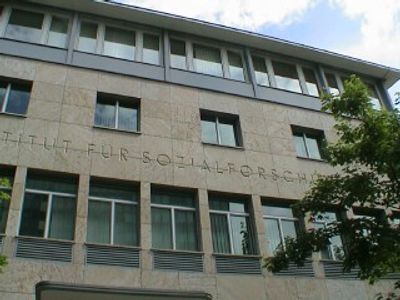
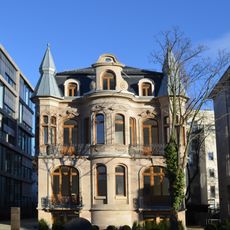
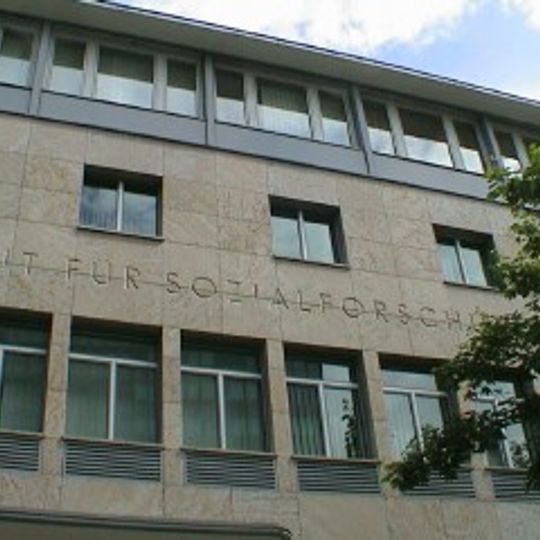
The University of Frankfurt Institute for Social Research is a research facility where scholars examine society and human behavior. The building has a functional appearance and sits in a university district with offices, seminar rooms, and archives filled with important documents and publications.
The institute was founded in 1923 and opened its first dedicated building in 1924 with support from Felix Weil. After the Gestapo closed it in 1933, it moved to New York City, but returned to Frankfurt in 1949 and reopened in 1950 as a privately founded institution with public funding.
The institute's name reflects its focus on social questions that have shaped its work since its founding. Visitors can observe how the spaces encourage discussion about society, power, and human relations, evident in how researchers and students engage with one another and their work here.
The institute is located in a university district and is regularly visited by students and researchers moving between its spaces. Visitors can attend public lectures or learn about current research through its publications.
The institute developed Critical Theory under Max Horkheimer and Theodor Adorno, an approach that questions assumptions about society, culture, and power. These theories spread worldwide and influenced generations of scholars and thinkers in reassessing social issues.
The community of curious travelers
AroundUs brings together thousands of curated places, local tips, and hidden gems, enriched daily by 91,632 contributors worldwide.