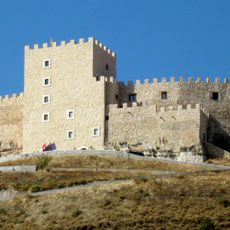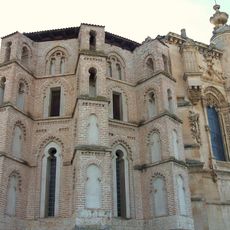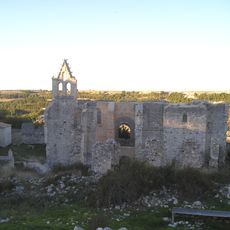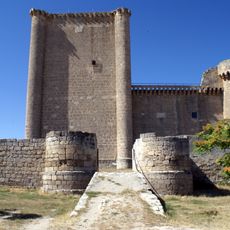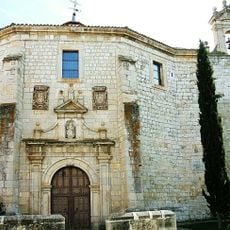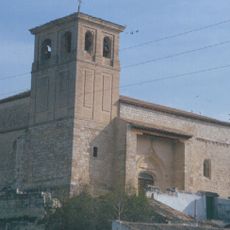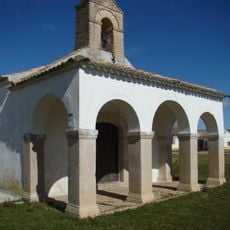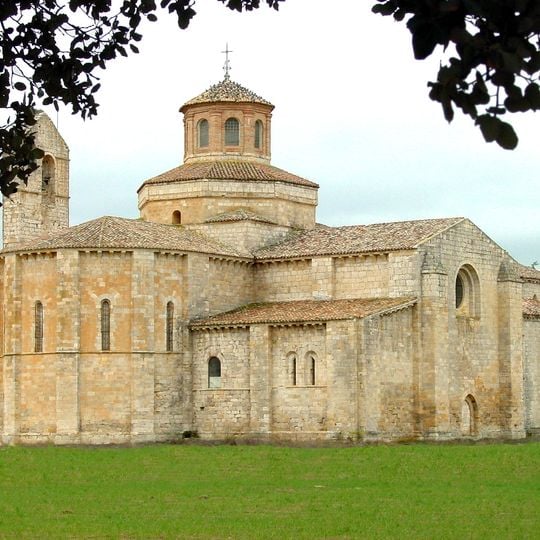
Valbuena Abbey, Cistercian monastery in Valbuena de Duero, Spain
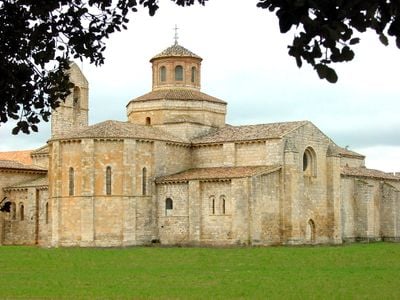
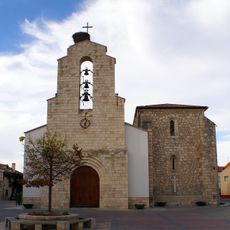
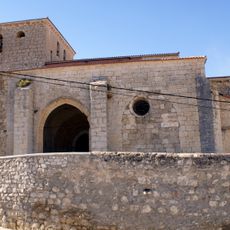
Valbuena Abbey is a Cistercian monastery in Valbuena de Duero, Spain, featuring a three-nave church, five apses, a two-story cloister, and multiple adjoining halls. The structures were built primarily between the 12th and 13th centuries and form a unified complex designed to support monastic daily life.
The monastery was founded in 1143 by Countess Estefanía de Armengol, with initial monks arriving from Berdona Abbey in France. That French foundation was connected to Morimond Abbey, which shaped Cistercian expansion across the Iberian Peninsula.
The monastery displays fundamental Cistercian architectural principles through geometric design and minimal decoration that reflect the monks' spiritual values. Every space was built for daily monastic life, with function determining form rather than ornamental display.
The monastery is now managed by the Ages of Man Foundation and welcomes visitors through guided tours that allow exploration of the medieval architecture. These walks provide access to both main spaces and less accessible areas of the complex.
The monastery preserves a 16th-century dome above the choir and an 18th-century sacristy with original plasterwork still visible on its walls. These later additions demonstrate how the complex evolved over centuries while maintaining its original character.
The community of curious travelers
AroundUs brings together thousands of curated places, local tips, and hidden gems, enriched daily by 92,610 contributors worldwide.