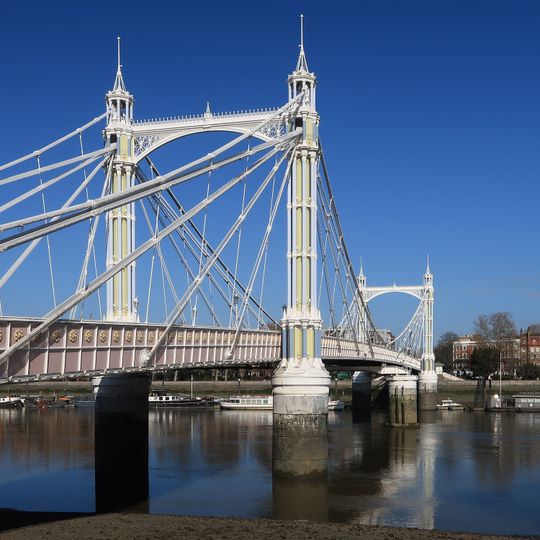
Albert Bridge, Steel suspension bridge in Chelsea and Battersea, England
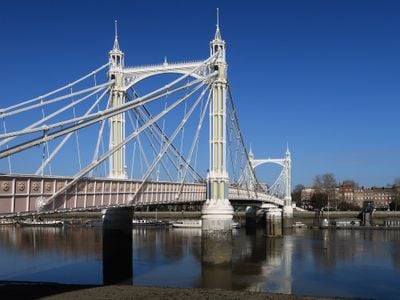
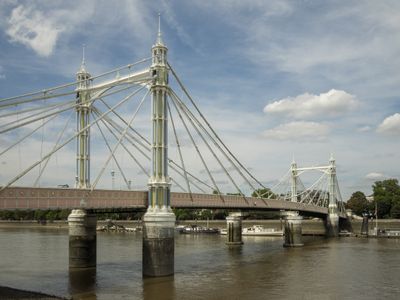
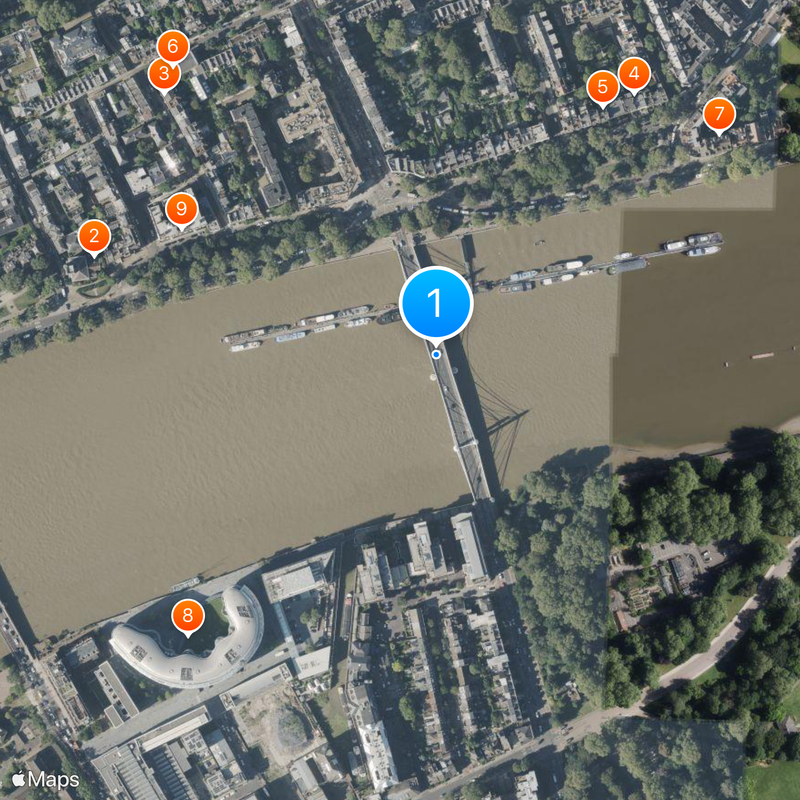
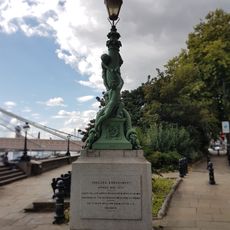
Albert Bridge stretches across the Thames between Chelsea and Battersea, linking two shores with a web of steel cables held by four octagonal towers made of cast iron. Two solid concrete piers stand in the riverbed and support the central span, while railings and walkways along the sides are meant for pedestrians.
Rowland Mason Ordish designed this crossing, which opened to traffic in 1873 using a mix of suspension and cable-stayed elements. Later reinforcements with concrete piers were added to improve stability and carry increasing traffic.
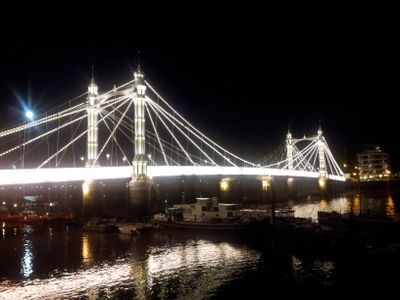
This crossing takes its name from Prince Albert, consort of Queen Victoria, and locals still use it to link two distinct parts of the city. At night, thousands of small bulbs light the entire structure in warm tones, making it a popular spot for photographers.
A single traffic lane runs across with a weight limit of five tons, and pedestrians can use the walkways on both sides. The best time to visit is during evening hours when the lights turn on and the surroundings are quieter.
Signs at both ends ask soldiers from the nearby Chelsea Barracks not to march in step while crossing, to avoid structural vibrations. This precaution dates back to a time when rhythmic troop movements could set bridges into resonance.
The community of curious travelers
AroundUs brings together thousands of curated places, local tips, and hidden gems, enriched daily by 91,782 contributors worldwide.