Mold gold cape, Bronze Age gold cape at British Museum, United Kingdom
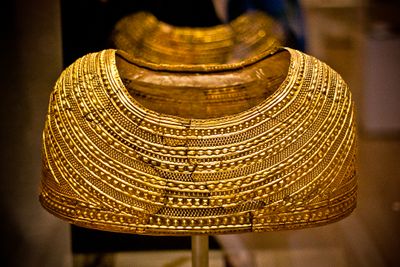
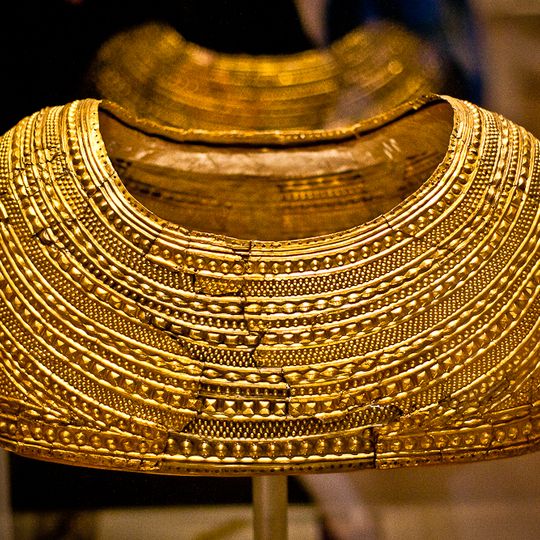
The Mold gold cape is a Bronze Age object made from hammered gold, shaped to cover the shoulders and upper chest, and decorated with rows of ribs, concentric rings, and raised circular forms. It was found in Wales and is now on display at the British Museum in London.
Workers discovered the cape in 1833 inside a burial mound near Mold, in Flintshire, Wales, during quarrying work. It was then acquired by the British Museum, where it has remained ever since.
The cape was likely worn by someone who held a special role in their community, given how rarely gold objects of this kind were made for everyday use. Its small size suggests it was shaped for a person with a slight build, which makes it feel surprisingly personal when viewed up close.
The cape is on display in Room 51 of the British Museum, alongside other prehistoric European objects. Because it sits behind protective glass, stepping back slightly gives a clearer view and reduces glare.
The entire object was shaped from a single nugget of gold roughly the size of a golf ball, hammered down into an extremely thin sheet. The goldsmith had to work slowly and carefully, since the metal could crack or tear at any point during the process.
The community of curious travelers
AroundUs brings together thousands of curated places, local tips, and hidden gems, enriched daily by 91,000 contributors worldwide.