Donington Hall, Grade II* listed house in Castle Donington, England
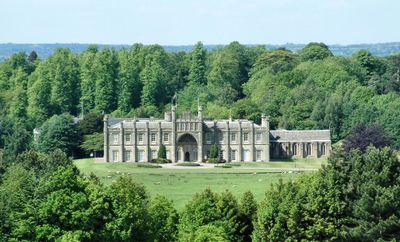
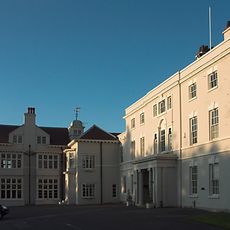
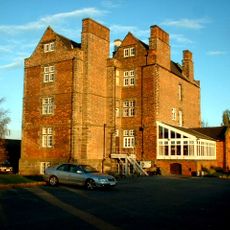
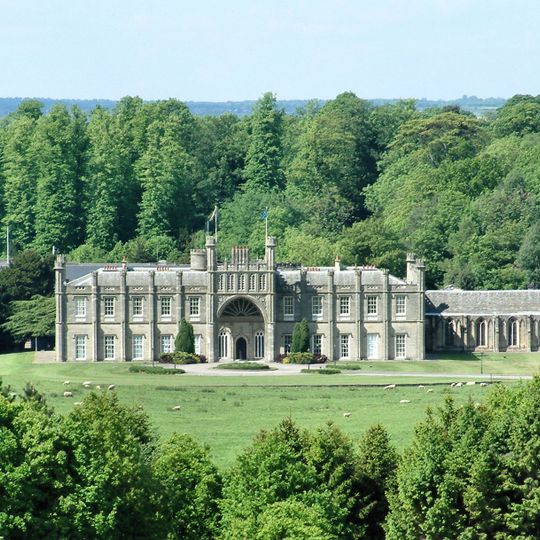
Donington Hall is a Grade II* listed country house standing on a large estate in Castle Donington, England, overlooking Donington Park Circuit. The facade shows Gothic Revival windows with pointed arches, a square corner tower, and crenellated parapets along the roofline, while the main entrance sits beneath a stone porch.
Architect William Wilkins redesigned the house in the 1790s for Francis Rawdon-Hastings in Gothic Revival style after demolishing an earlier building. During World War I the estate served as a prisoner camp for German officers, before later passing to the British military and eventually returning to private ownership.
The estate's extensive road network became instrumental in establishing the Donington Park racing circuit in 1931, shaping local motorsport heritage.
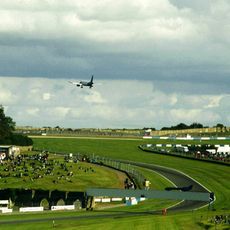
The estate sits directly beside Donington Park Circuit and is visible from the racetrack, but remains generally closed to visitors. Future conversion plans aim to turn the building into a motorsport-related hotel that will be accessible to guests.
In 1915 German naval officer Gunther Plüschow escaped from the prisoner camp and successfully reached Germany, the only POW to do so from Britain. In the 1970s motorcycle manufacturer Norton-Villiers-Triumph used the estate as its headquarters before it became linked to Formula 1 history through its proximity to the circuit.
The community of curious travelers
AroundUs brings together thousands of curated places, local tips, and hidden gems, enriched daily by 92,852 contributors worldwide.