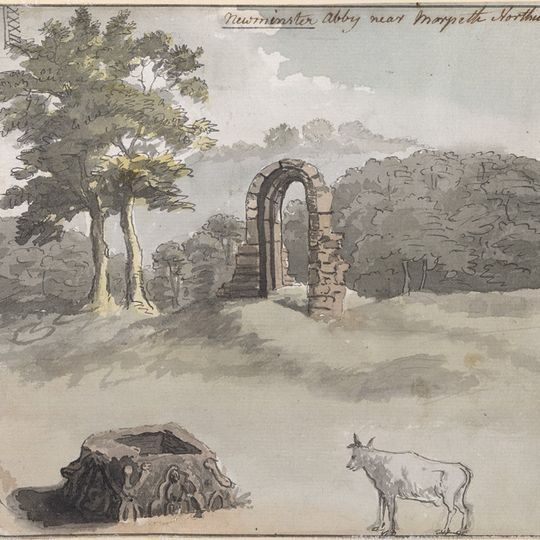
Newminster Abbey, Cistercian monastery ruins in Morpeth, England
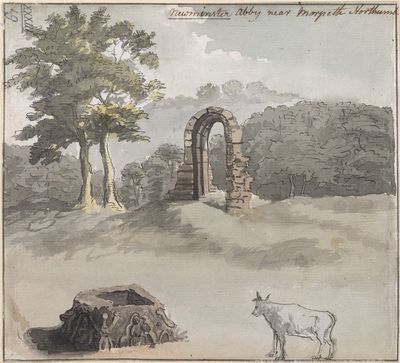
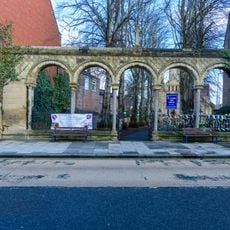
Newminster Abbey is a Cistercian monastery ruin near the River Wansbeck, close to the town of Morpeth in Northumberland. Parts of the cloister survive with paired slender columns and sandstone arches in both pointed and rounded forms, giving a sense of the original layout of the medieval complex.
The abbey was founded in 1137 and grew into a wealthy institution that held lands across northern England, along with rights to fishing and salt production. It was dissolved in the 16th century during the suppression of English monasteries under Henry VIII, after which it passed into secular ownership.
The first abbot, Saint Robert of Newminster, was buried on the grounds after his death, and his tomb drew pilgrims from across northern England who reported miracles there. This tradition gave the site a reputation that went well beyond its role as a monastery.
The ruins sit on private land and are not freely open to the public, but they can be seen from a nearby hillside or along the footpath that runs beside the western edge of the site. Respecting the boundaries of the private property is important when visiting the area.
After the dissolution, the Grey family who took over the estate systematically removed stones from the ruins to use in their own construction projects nearby. This practice was common across England after the Reformation and explains why so little of the original structure remains standing today.
The community of curious travelers
AroundUs brings together thousands of curated places, local tips, and hidden gems, enriched daily by 91,984 contributors worldwide.