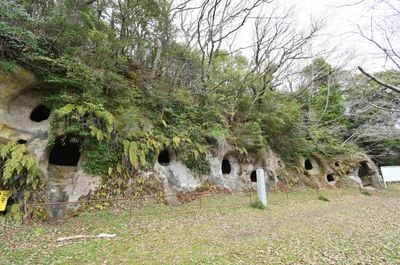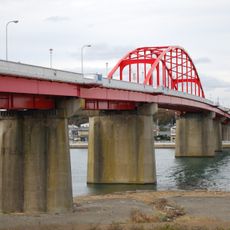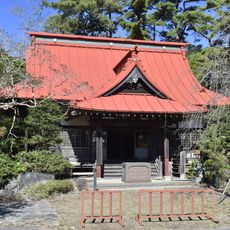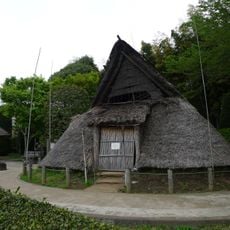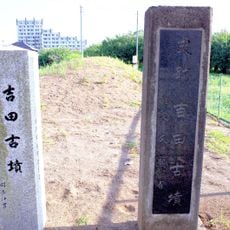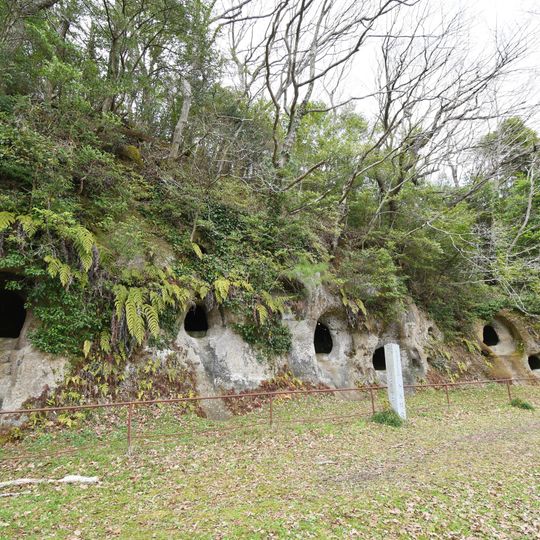
Jūgorōana, Cave tomb and kofungun in Nakane, Japan.
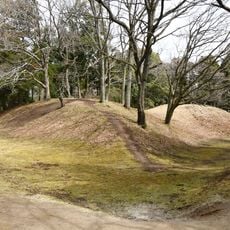
Jūgorōana is a burial site with a corridor-type structure built into the tuff hills near the Naka River, featuring U-shaped stands designed for ancient casket placement. The location shows how elite individuals arranged their burial spaces during this early period.
This burial site dates from the Kofun period between 250 and 538 AD and reflects the burial traditions of those in power. It marks an era when such monuments demonstrated the status of the deceased.
The name translates to 'Fifteen-Rō Cave' and local stories link this place to Taira no Masakado, a notable figure from the Heian period. This connection shows how historical figures remain present in the region's narratives.
This site is accessible by car from nearby stations and has information placards and rest areas on location. Wearing comfortable shoes is recommended, as the terrain is uneven and entry to the cave requires some care.
The architecture includes elements suggesting connections with Tang China, as the structure and naming conventions indicate. This demonstrates how cultural influences from the Asian mainland reached early Japanese burial practices.
The community of curious travelers
AroundUs brings together thousands of curated places, local tips, and hidden gems, enriched daily by 91,426 contributors worldwide.