Mihai Viteazul National College, Secondary education institution in Turda, Romania.
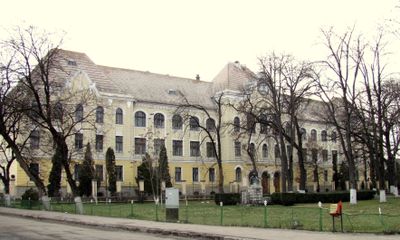
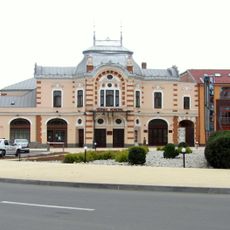
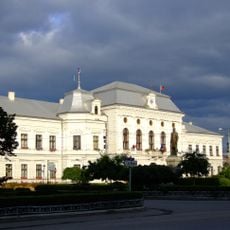
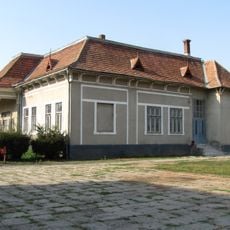
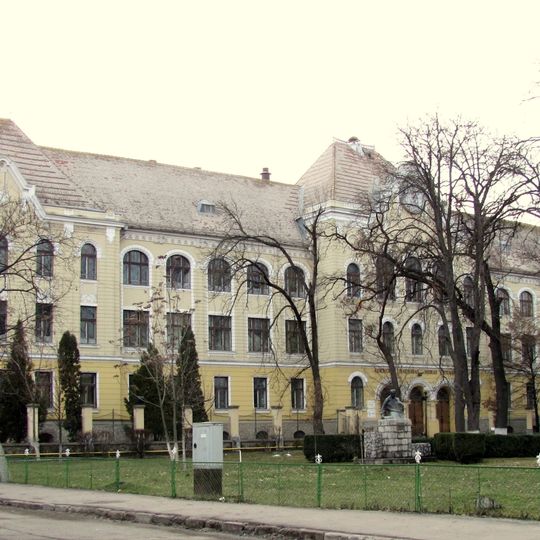
Mihai Viteazul National College is a secondary school in Turda with classical architecture, featuring a symmetrical facade and large windows across three floors. The school offers students two educational pathways: science and humanities programs with specialized laboratories for physics, chemistry, biology, and computer science.
The school was founded in 1911 after three years of construction, starting operations while serving both Hungarian and Romanian students during the Austro-Hungarian period. During World War II, the institution played an important role in maintaining Romanian education when the border between Romania and Hungary was established just north of Turda.
The school reflects the multicultural traditions of Transylvania by offering education in Romanian and Hungarian languages. This dual approach shows how the region honors its diverse communities and their educational needs.
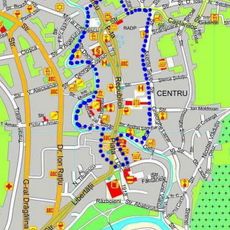
The school is located on Dr. Ioan Rațiu Street and is primarily occupied by students and staff during school hours. The laboratories and facilities are generally not open to visitors except during special events or open days.
The school became particularly important during World War II because Turda's location between Romania and Hungary turned it into a cultural borderland. This geographical position made the institution a place where Romanian educational traditions were protected during a period of significant change.
The community of curious travelers
AroundUs brings together thousands of curated places, local tips, and hidden gems, enriched daily by 92,437 contributors worldwide.