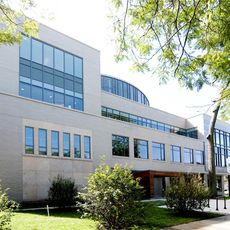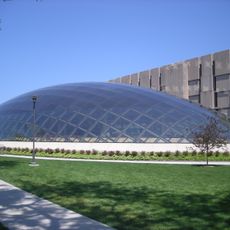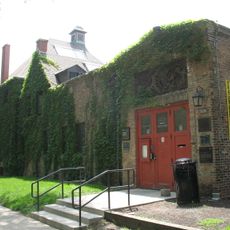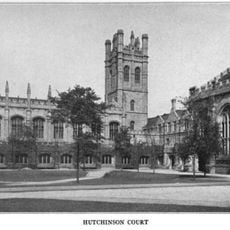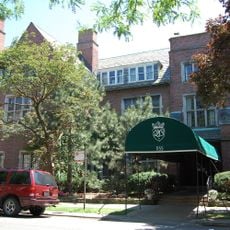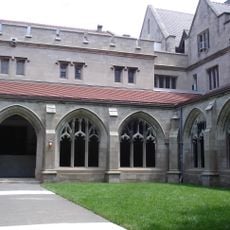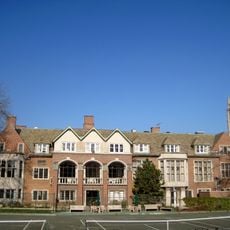
George Herbert Jones Laboratory, Research laboratory at University of Chicago, Illinois.
The George Herbert Jones Laboratory is a research building on the University of Chicago campus that houses multiple floors with spaces designed for chemical experiments and analysis. The structure continues to serve chemistry students and researchers through its combination of original features and working laboratory facilities.
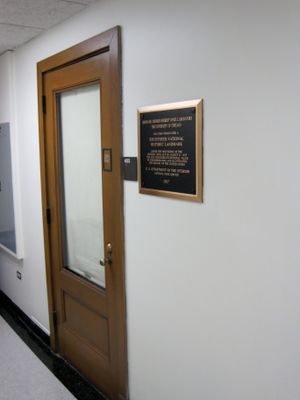
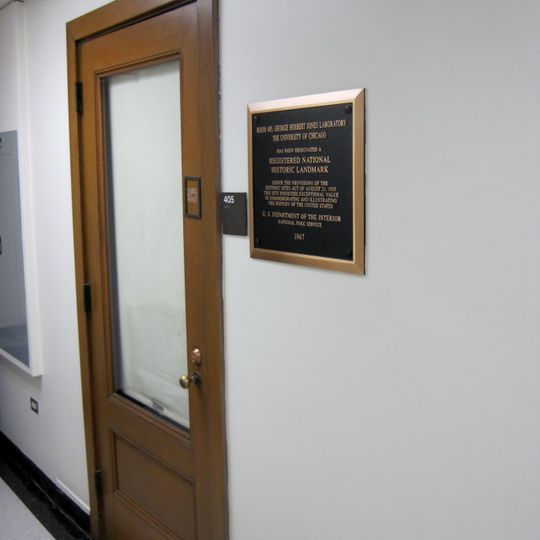
The building gained worldwide attention when Glenn Seaborg and his team successfully isolated and measured plutonium in a small room in 1942. This breakthrough was a decisive moment in nuclear chemistry and marked a turning point in 20th-century scientific research.
The laboratory represents a landmark in the story of nuclear science and is maintained by the university as a place where visitors can understand a pivotal moment in chemistry. The preserved spaces allow people to see where transformative scientific work took place and reflect on its lasting impact.
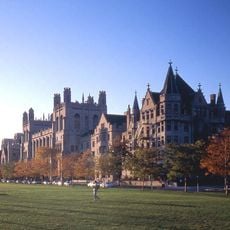
The laboratory building is located on the university grounds and can be explored as part of campus visits. It is helpful to check in advance which areas are open to visitors, since the structure remains an active research facility.
A particularly notable space is Room 405, a tiny room measuring only about 6 by 9 feet where the historic breakthrough took place. The original shelves and work counters remain in place, giving visitors a direct sense of how confined the space was for such groundbreaking work.
The community of curious travelers
AroundUs brings together thousands of curated places, local tips, and hidden gems, enriched daily by 90,749 contributors worldwide.