James Scott House, historic house in Pennsylvania, United States
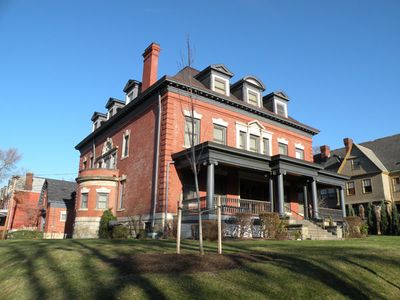
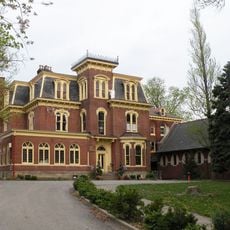
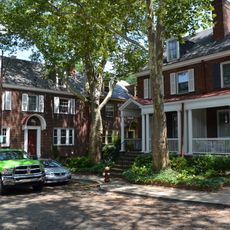
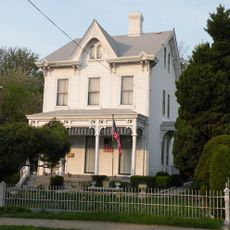
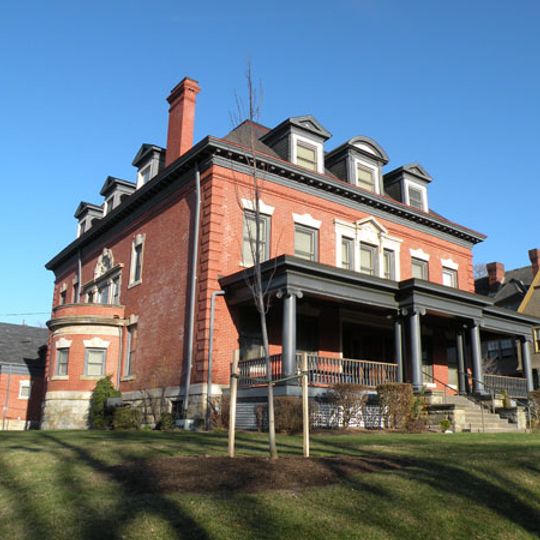
The James Scott House is a large brick residence in Pittsburgh built around 1900 in the Colonial Revival style. The building has nearly cubic proportions with two and a half stories, detailed brickwork, sandstone window lintels, and three dormers with triangular pediments, while a separate carriage house from 1902 with matching design sits adjacent to it.
The house was built around 1900 by James Scott, a Scottish immigrant and senior steel manager, with a carriage house added in 1902. Throughout the 20th century it changed hands multiple times, served as an orphanage during the 1940s, and was later converted to apartments before being restored in the 1990s and added to the National Register of Historic Places in 1997.
The house bears the name of James Scott, a Scottish immigrant who rose through the steel industry. The Colonial Revival style was a deliberate choice by affluent families to honor American history and craftsmanship through their homes.
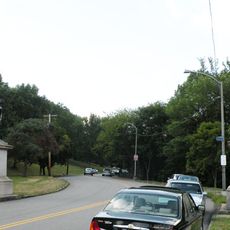
The house sits on Stanton Avenue on slightly elevated ground, making its facade easily visible from the street. The front porch with classical columns was rebuilt in the 1990s and offers a good vantage point to observe architectural details such as brickwork and window elements.
The homeowner's daughter, Helen Scott, secretly married the son of then-Vice President Charles W. Fairbanks in 1906, drawing massive national press attention. This unexpected event brought the family and the house into headlines, including the New York Times, linking the Pittsburgh residence to a moment of national attention.
The community of curious travelers
AroundUs brings together thousands of curated places, local tips, and hidden gems, enriched daily by 91,380 contributors worldwide.