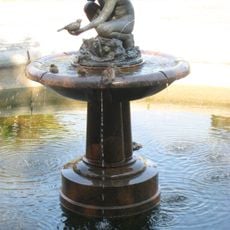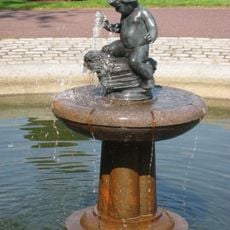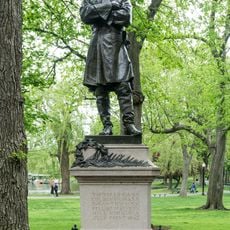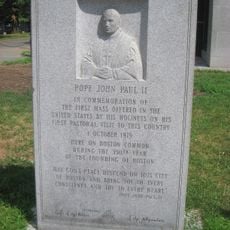
Boston Public Garden Flagpole Base, Bronze sculpture at Boston Public Garden, United States
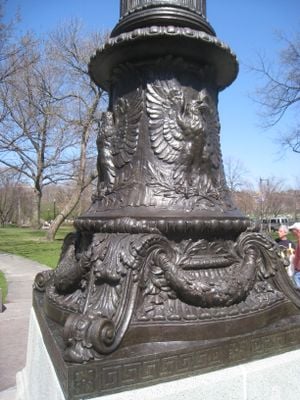
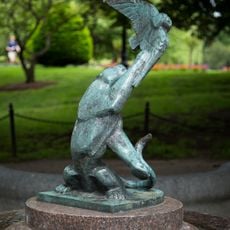
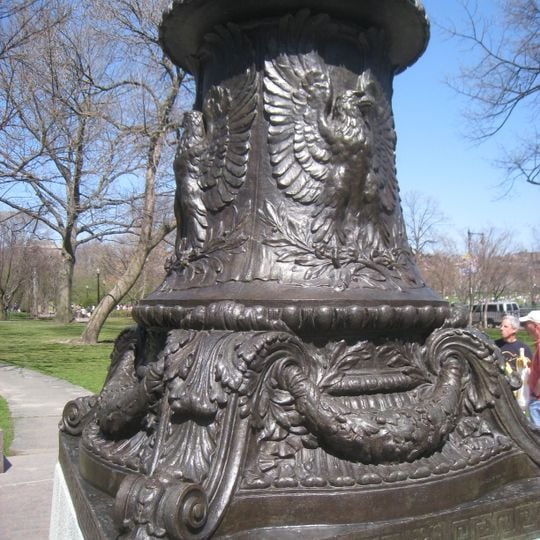
The flagpole base in Boston Public Garden is a bronze work featuring four relief panels that show American eagles with outstretched wings holding branches in their talons. The composition displays the birds on all four sides of the base, mounted on a granite foundation that stabilizes and elevates the entire work.
The bronze base was created in 1921 by sculptor William D. Austin after a lightning strike destroyed the previous flagpole in 1920. The new work was designed to honor those who died in World War I.
The eagles in the relief panels carry symbolic meaning that visitors can see expressed through the craftsmanship and positioning of each bird on the bronze surface. This layer of meaning is woven throughout the memorial and connects people to the broader message it was designed to convey.
The sculpture sits near Boylston Street and is easy to reach on foot as part of a walk through the garden grounds. Visitors do best visiting when weather is mild and daylight lasts longer, making it easier to observe all the detail in the bronze panels.
The sculpture was moved in 1933 from its original location at the Boylston Street intersection to its present spot within the garden, revealing how the park's layout changed over time. This relocation is less widely known than the original creation and tells a story of how cities reshape their public spaces.
The community of curious travelers
AroundUs brings together thousands of curated places, local tips, and hidden gems, enriched daily by 91,676 contributors worldwide.