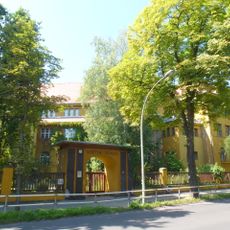
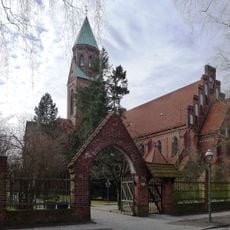
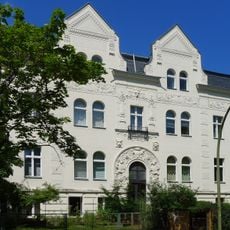
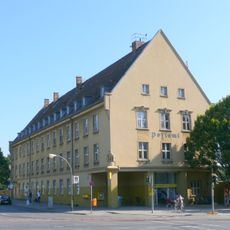
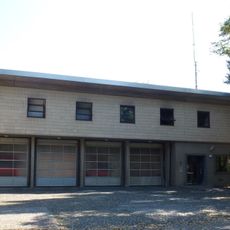
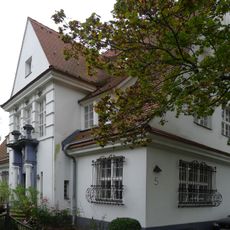
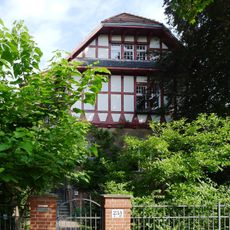
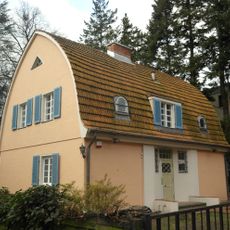
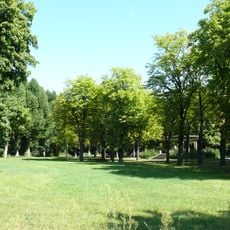
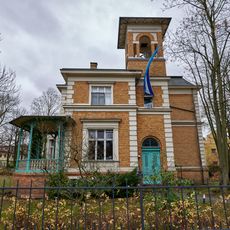
Wiesenbaude, Beer hall at Groß-Lichterfelde, Berlin, Germany
Wiesenbaude was a beer hall in Groß-Lichterfelde that drew design inspiration from Silesian mountain lodge architecture, with decorative elements typical of that regional style. The building accommodated roughly one hundred guests and occupied a position at a road intersection.
The building originated as an exhibition pavilion from the 1896 Berlin Trade Exhibition and was relocated to this site, opening as a beer hall in 1897. This transformation shows how exhibition structures were adapted for permanent use in Berlin's expanding residential neighborhoods.
The name comes from the meadow where it was built, and it served as a gathering place for locals to eat and socialize. Neighbors would come here to enjoy regional food and a house herbal liqueur called Echt Stonsdorfer Bitter.
The location was served by the world's first electric tram line, which connected Groß-Lichterfelde station to the nearby cadet school. This made it easy for visitors to reach the establishment using reliable public transport.
During the 1923 hyperinflation period, metal thieves stole the beer lines from the building to sell the copper, showing how desperate people became during the economic crisis. This type of metal scavenging was a stark sign of the financial desperation that gripped the country.
The community of curious travelers
AroundUs brings together thousands of curated places, local tips, and hidden gems, enriched daily by 92,691 contributors worldwide.