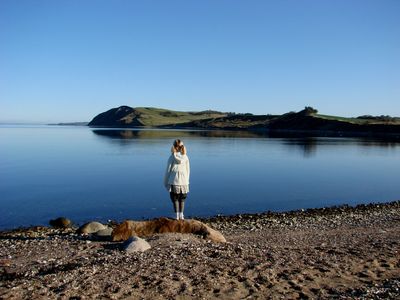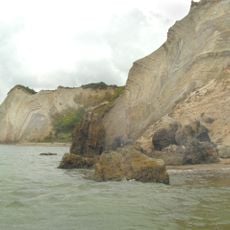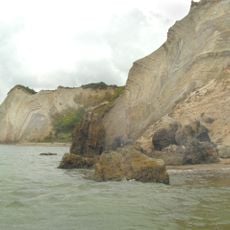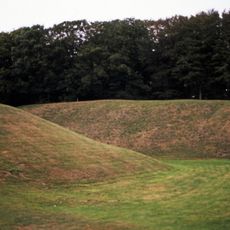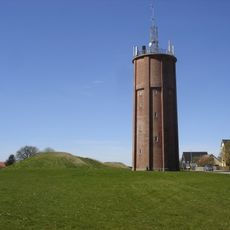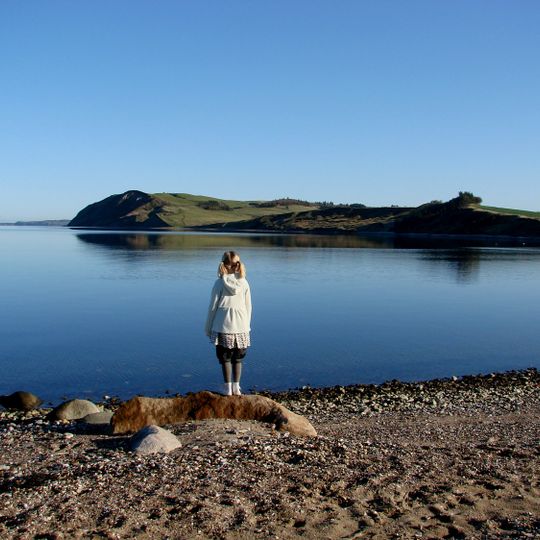
Hanklit, Coastal cliff in Morsø Municipality, Denmark.
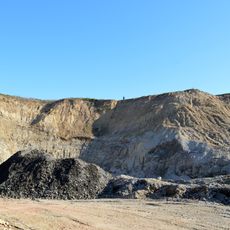
Hanklit is a coastal cliff reaching approximately 60 meters high, displaying alternating layers of light moler sediment and dark volcanic ash bands. The layered composition reveals a complex geological formation built over millions of years.
The cliff formed roughly 55 million years ago when Denmark lay beneath an ancient sea filled with microscopic algae. The sediments that accumulated on the seafloor eventually became the layered structure visible today.
The local community purchased this site in 1937 to prevent commercial development and establish it as a protected natural place. Today, it serves as a space where visitors come to understand the geological story written in stone.
Two parking areas nearby provide access to trails and information boards throughout the site. Wear sturdy footwear and check weather conditions, as the coastal location can be quite windy.
Within the moler composition lie roughly 145 separate layers of volcanic ash that scientists use to study Earth's history. This dense layering makes it an important location for research on ancient environmental changes.
The community of curious travelers
AroundUs brings together thousands of curated places, local tips, and hidden gems, enriched daily by 91,841 contributors worldwide.