Chinesisches Teehaus, Tourist attraction in Luisenpark, Schwetzingerstadt/Oststadt, Mannheim, Germany
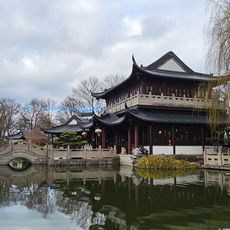
The Chinesisches Teehaus is a tourist attraction set within the Luisenpark in the Schwetzingerstadt/Oststadt district of Mannheim, Germany, and is considered the largest traditional Chinese teahouse of its kind in Europe. The two-story building with an outdoor terrace was constructed in a southern Chinese style, using natural stone, wood, bricks, and tiles brought directly from China and assembled by Chinese craftsmen on site.
The teahouse opened in 2001 as a joint project between German and Chinese specialists, and has since stood as a symbol of cultural exchange between the two countries. The garden was designed by Chinese landscape architect Professor Li Zheng, who planned its layout according to Feng Shui principles.
The garden surrounding the teahouse was laid out following the principles of Feng Shui, where the placement of paths, plants, and stones is meant to create a balanced environment. Walking through it, visitors can see how this logic shapes every detail, from the direction of the pathways to the position of the water features.
The teahouse is located inside the Luisenpark and is easy to reach by public transport, with parking available nearby for those arriving by car. Opening hours change with the season, so it is worth checking them before your visit, as the teahouse closes earlier during colder months and may close temporarily in bad weather.
Every building material used in the teahouse, from the stones to the wooden elements and roof tiles, was made in China and shipped to Mannheim in containers. Chinese craftsmen traveled to Germany specifically to assemble the structure on site, which gives the building a degree of authenticity that is rarely found outside China.
The community of curious travelers
AroundUs brings together thousands of curated places, local tips, and hidden gems, enriched daily by 90,846 contributors worldwide.