Unterer Neckar: Maulbeerinsel, Nature reserve on Neckar River in Mannheim, Germany.
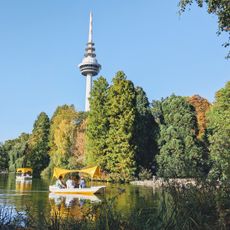
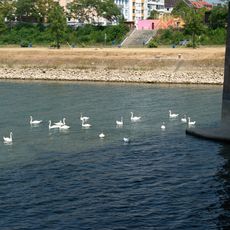
The Maulbeerinsel in the Lower Neckar is a nature reserve near Mannheim that spreads along the river banks and is marked by characteristic mulberry trees. The grounds contain natural habitats with walking paths where visitors can explore the local plants and wildlife.
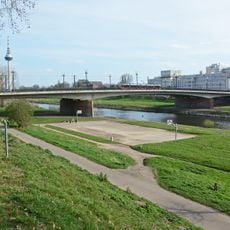
The Maulbeerinsel was created when the Feudenheim Neckar Canal opened in 1927, separating it from the Altneckar on Mannheim territory. In 1819 Grand Duchess Stephanie of Baden planted white mulberry trees here to revive silkworm rearing, which the Palatine electors had promoted since 1690. The western part of the island, downstream of the Riedbahn bridge, has been a 10.3-hectare nature reserve since 1986.
The island's name refers to the white mulberry plantation that Grand Duchess Stéphanie de Beauharnais of Baden laid out in 1819 to revive silkworm (Bombyx mori) rearing, which the Palatine electors had already promoted from 1690. Protecting the surviving trees is the stated purpose of the reserve.
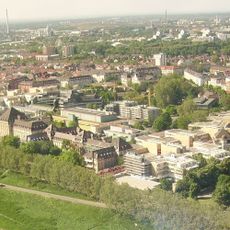
The reserve lies on Mannheim's municipal territory between the Feudenheim Neckar canal and the Altneckar; the protected western part begins downstream of the Riedbahn bridge. It forms one of six areas of the Unterer Neckar Heidelberg-Mannheim nature and landscape protection area. The surrounding Neckar section is shaped by intensive agricultural and technical-industrial use.
The white mulberry plantation was established in 1819 by Grand Duchess Stephanie of Baden to revive silkworm rearing, which the Palatine electors had already promoted since 1690. Protecting the remaining trees of this planting is the stated purpose of the 10.3-hectare reserve.
The community of curious travelers
AroundUs brings together thousands of curated places, local tips, and hidden gems, enriched daily by 93,520 contributors worldwide.