Jüdischer Friedhof Mannheim, Jewish cemetery in Mannheim, Germany.
Jüdischer Friedhof Mannheim is a burial ground with around 5,400 gravestones documenting names and information of Jewish residents from Mannheim and the surrounding region. The site is systematically laid out and contains detailed records that are preserved in a publicly accessible database holding over 6,000 entries.
The cemetery opened in 1842 alongside the main cemetery, with the first burial on 15 August. In 1938, under Nazi pressure, the Jewish community moved over 3,500 dead from the old cemetery at F 7 to a collective grave here, holding a farewell sermon on 17 July. During the November Pogroms of that year, SA men blew up the cemetery buildings.
The cemetery preserves the memory of Mannheim's Jewish community through the graves of figures such as Wolf Ladenburg, founder of the Ladenburg bank, and Alice Bensheimer, a women's rights campaigner. A field at the rear holds Jews buried with their Christian spouses, and a 1969 plot mainly of low cushion stones commemorates those whose urns came from concentration camps or who took their own lives before deportation to Gurs.
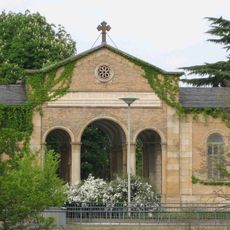
The cemetery lies east of the Hauptfriedhof in Wohlgelegen, on the right bank of the Neckar northeast of the city centre. The main path is lined with lime and horse chestnut trees, and the burial rows run continuously toward the northeast. The Einsegnungshalle stands to the left of the entrance.
The memorial 'Denen, die kein Grab fanden' dates from 1954 and stands in the front section, between 31 gravestones brought from the old cemetery on F 7 and 14 more set along the wall. It marks a collective grave holding over 3,500 people transferred here in 1938.
The community of curious travelers
AroundUs brings together thousands of curated places, local tips, and hidden gems, enriched daily by 94,087 contributors worldwide.