Lanz-Villa, Residential palace in Oststadt district, Mannheim, Germany
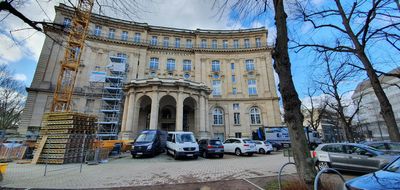
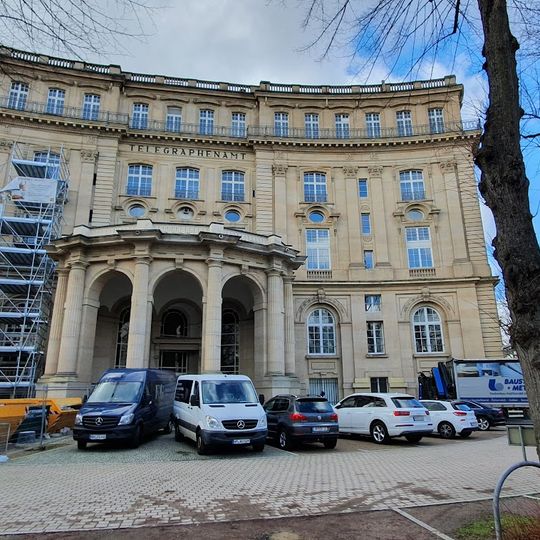
Lanz-Villa is a four-story residential palace in the Oststadt district of Mannheim, Germany, built from light yellow sandstone in a French architectural style. The structure displays porticos, cornices, and pilasters on its facade and contains around 4,100 square meters of space with ceiling heights ranging from four to seven meters.
Industrialist Karl Lanz commissioned French architect Eugène Saint-Ange to design the residence between 1907 and 1913, during the German Empire period. The choice of French style drew criticism at the time because of tense German-French relations in the early 20th century.
The building is named after Karl Lanz, head of the Heinrich Lanz AG agricultural machinery works, who had it built as the family's residence. After his death in 1921 his widow Gisella sold the palace to the Deutsche Reichspost in winter 1922, and the family had to vacate it by 1 April 1923. Gisella Lanz then commissioned a much smaller villa nearby, one of the first such projects by a woman builder in Mannheim.
The building now functions as office space and can be viewed from the outside, though the interior rooms are generally not open to the public. The facade is best seen from the street during daylight, when the light sandstone details show clearly.
The entrance hall with its marble columns and ground floor ceremonial rooms still preserve original wood carvings and stucco work in neoclassical style. These details represent some of the few surviving examples of French-influenced interior decoration in Mannheim private buildings from that period.
The community of curious travelers
AroundUs brings together thousands of curated places, local tips, and hidden gems, enriched daily by 92,922 contributors worldwide.