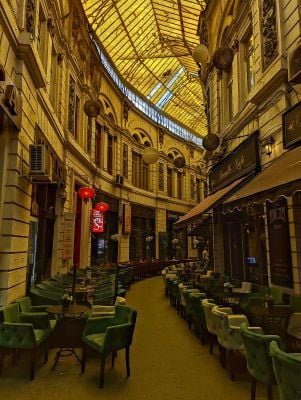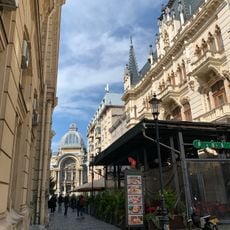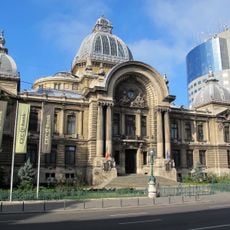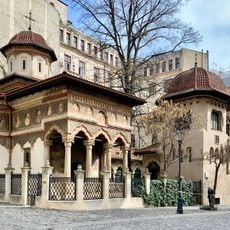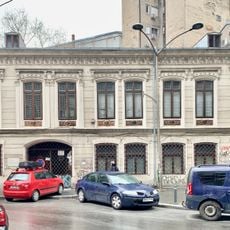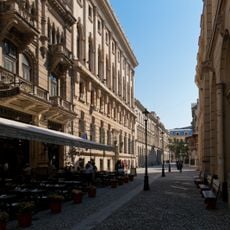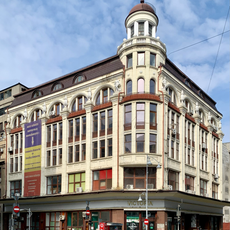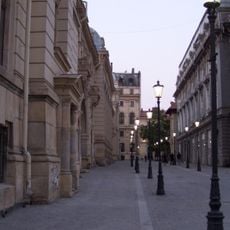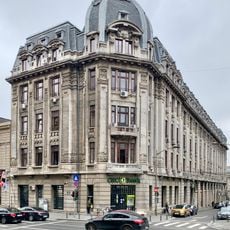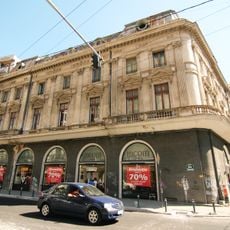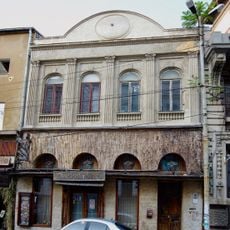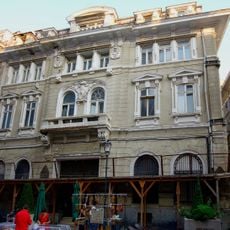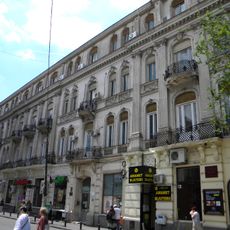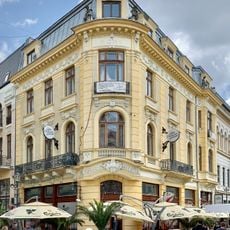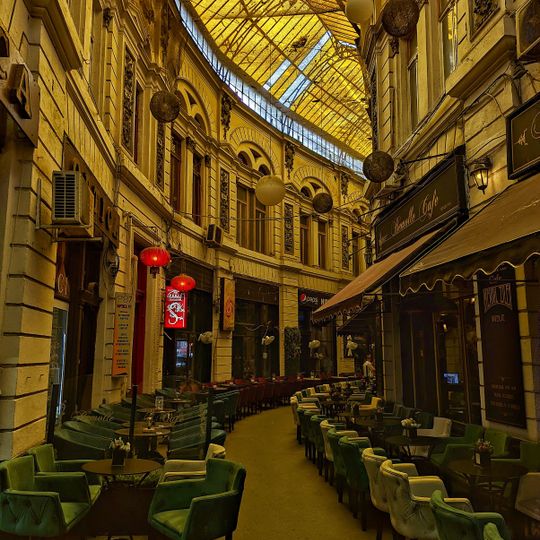
Pasajul Vilacrosse, Covered pedestrian passage in central Bucharest, Romania.
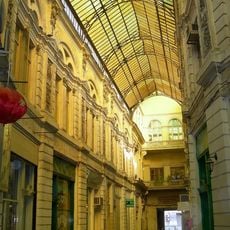
Pasajul Vilacrosse is a covered pedestrian passage in central Bucharest with a distinctive fork shape created by two branches connecting Calea Victoriei to the National Bank. A yellow glass roof spans the passage, filtering natural light throughout the day and creating a sheltered corridor lined with storefronts on both sides.
The passage was built in 1891 by architect Felix Xenopol as a solution to reduce congestion in the city center. It replaced the Campineanu Inn and quickly became an important commercial hub connecting major streets in downtown Bucharest.
The passage served as Bucharest's jewelry trading hub during much of the 20th century and housed the city's first stock exchange during the interwar years. People still gather here to shop and dine, treating it as a gathering place rooted in those earlier commercial traditions.
The passage is accessible to pedestrians throughout the day and night and contains multiple restaurants, cafes, and wine bars. The layout is easy to navigate and well-lit, making it a practical shortcut through the central district even during busy hours.
The distinctive fork shape of the passage was created because a hotel owner refused to sell the central property during construction. This single act of resistance literally divided the passage into two branches that remain separated to this day.
The community of curious travelers
AroundUs brings together thousands of curated places, local tips, and hidden gems, enriched daily by 91,373 contributors worldwide.