Gheorghe Tattarescu Museum, Art museum and historic monument in central Bucharest, Romania.
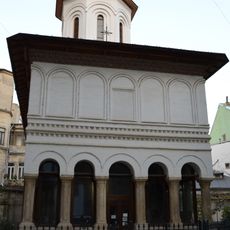
The Gheorghe Tattarescu Museum is an art museum housed in a well-preserved 19th-century residence in central Bucharest. The building is designed like a traditional Romanian inn and displays paintings, prints, and personal belongings of the painter.
The house was built in the early 19th century by Dimitrie Popescu and sold on 25 May 1855 to Gheorghe Tattarescu for 1,231 gold coins. In 1951 his niece Georgeta Wertheimer donated it to the Romanian state, and it opened as a memorial museum. Tattarescu adapted the house until 1858, adding a studio and rooms for students.
Tattarescu was a painter who decorated churches across Romania and shaped how religious spaces looked in his time. His works show how art once connected faith and daily life together.
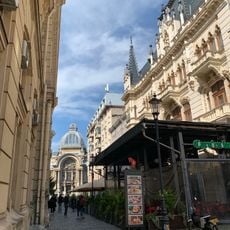
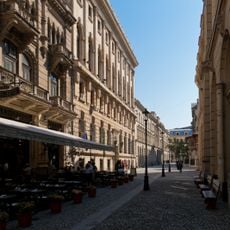
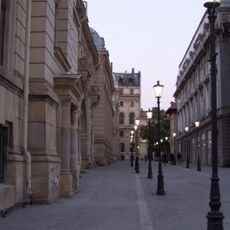
The house stands at Domnița Anastasia Street no. 7, in central Bucharest, a short walk from Calea Victoriei and the National History Museum. The entrance is through a vaulted gang off the street, with the main door to the right of the passage. The courtyard was paved with river cobbles; the property now measures about 620 sq m of the original 950.
On the wall of the neighbouring house, above an oak bench in a tiny garden, Tattarescu painted a landscape with cypresses, white swans and greenish water, inspired by the gardens of Tivoli. The bench and the painted panel can still be seen from the courtyard side.
The community of curious travelers
AroundUs brings together thousands of curated places, local tips, and hidden gems, enriched daily by 93,464 contributors worldwide.