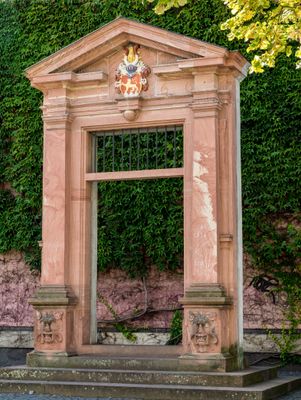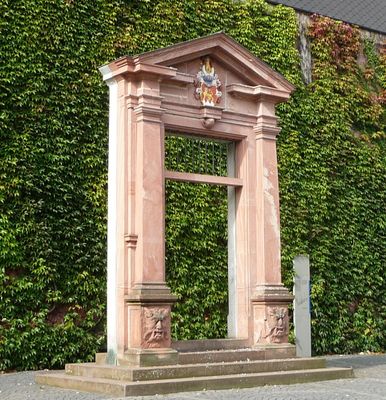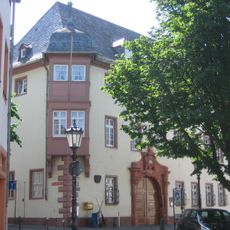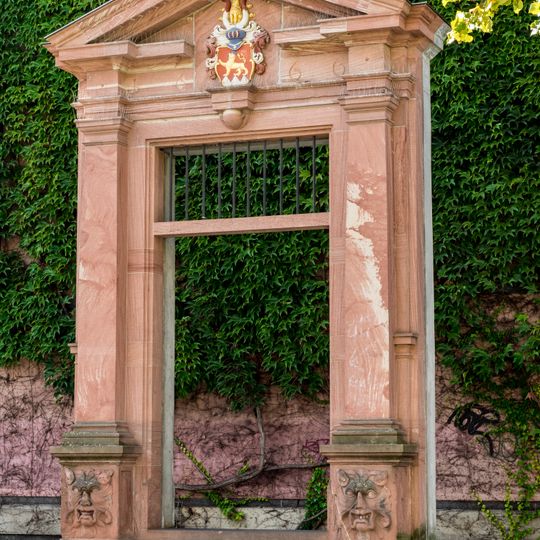
Portal des ehemaligen Bischöflichen Palais, Renaissance palace portal in Altstadt, Mainz, Germany.
The portal features red sandstone construction with elaborate decorative elements including pilasters, a triangular pediment, and intricate stonework that exemplifies late Renaissance architectural craftsmanship from the 17th century.
Originally built between 1663 and 1666 as part of the Episcopal Palace designed by Johann Georg von Schönborn, the portal survived the building's destruction during World War II bombing raids in August 1942.
The portal represents the ecclesiastical power and religious authority of the Mainz bishops during the 17th century, serving as a symbolic entrance to one of the most important church administrative centers in the region.
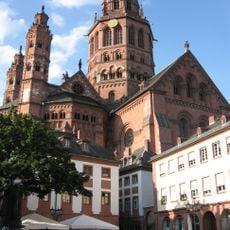
Located on Bischofsplatz in the old town, the reconstructed portal stands near the cathedral district and can be accessed during daylight hours for architectural observation and historical documentation purposes.
The portal underwent careful restoration by craftsman Theo Ignaz Graffé in 1993, using original sandstone elements that were salvaged from the ruins and reassembled at their historical location after five decades.
The community of curious travelers
AroundUs brings together thousands of curated places, local tips, and hidden gems, enriched daily by 91,641 contributors worldwide.