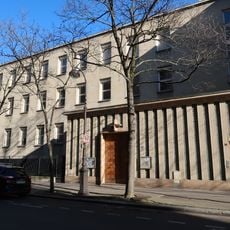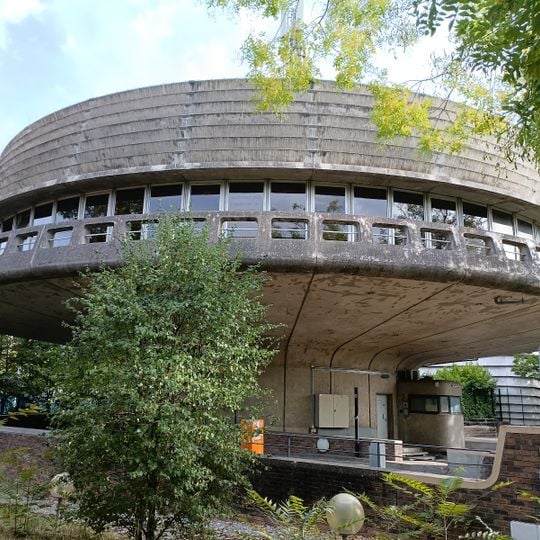
Central téléphonique Murat, telephone exchange in Paris, France
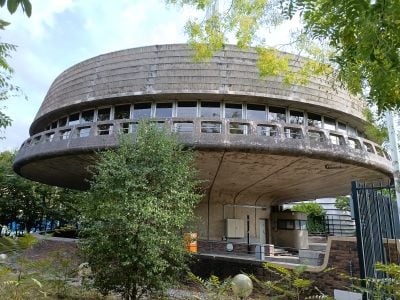
The Central téléphonique Murat is a round concrete telephone exchange building in Paris, France, designed by architect Pierre Vivien in 1976. Its upper section resembles a flying saucer or a camembert cheese, with a thick central core and windows running around the top, while most of the technical spaces sit hidden underground.
Pierre Vivien, who also served as chief architect for civil buildings and national palaces, completed the exchange in 1976 as part of the city's expanding phone network. It was one of five underground phone centers built in Paris during that decade, intended to house the heavy routing equipment of the time.
Locals often call the building 'le camembert' because its round shape brings to mind the famous French cheese. Its bare concrete surfaces and worn metal details give it a strange, almost forgotten look that catches the eye of passersby, even though it never became a celebrated landmark.
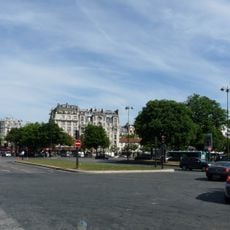
You can only view the building from the street, as it remains a working site and is not open to visitors. The area around Porte d'Auteuil is easy to reach, so a walk past the structure works well without any need to enter or plan a long stop.
The building played a part in changing how French phone numbers were written: in 1985 the system moved to six- to eight-digit numbers, and in 1996 it expanded to ten digits. Most people walking by notice only the odd saucer shape, unaware that three underground levels once held the machines that routed calls across the city.
The community of curious travelers
AroundUs brings together thousands of curated places, local tips, and hidden gems, enriched daily by 91,917 contributors worldwide.