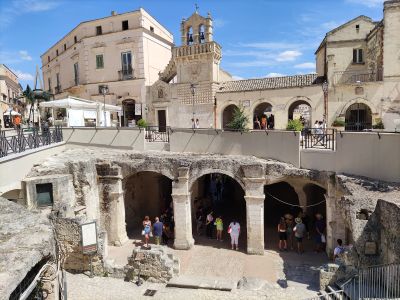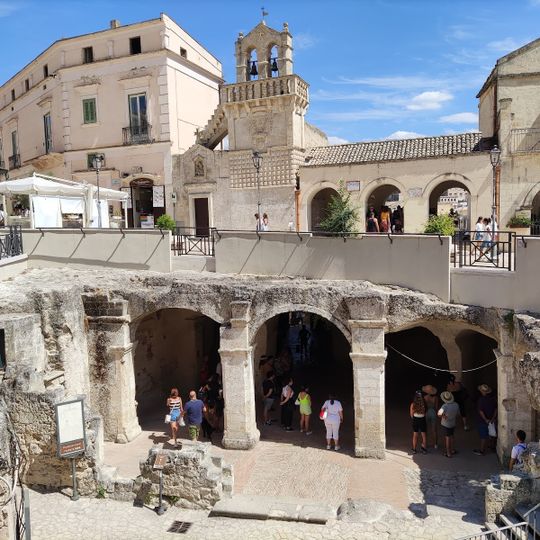
Palombaro Lungo - Cisterna Ipogea, Archaeological site and underground water cistern in Matera, Italy.
The Palombaro Lungo is a large underground water storage tank located beneath Piazza Vittorio Veneto in central Matera, originally built in the 19th century. The structure was created by connecting several natural caves and measures approximately 50 meters long and about 15 meters deep, with rounded walls of pale yellowish calcarenite rock coated with waterproof cocciopesto material.
The cistern was completed in its current form in the late 1800s under the direction of engineer Rosi, though it was created by connecting caves used for much longer. It supplied water to Matera for over 150 years until 1927, when the Pugliese aqueduct system took over water distribution and made the tank obsolete.
The name Palombaro likely derives from Latin words related to diving or collecting water, while Lungo refers to its large size. Local residents depended on this cistern as their main water source, and traces of their daily practice remain visible in the rounded marks left by buckets on the walls where people collected water for centuries.
Access is through Piazza Vittorio Veneto in the city center, where the cistern opening is visible from above. Visitors walk on metal catwalks that cross over the water or along the dry areas below, giving clear views of the entire structure and its construction.
In 1991, the cistern was rediscovered by Enzo Viti and his team, who explored the underground space by boat despite it being forgotten for decades. Particularly striking is a dry area called La Spiaggetta, where old lost buckets remain visible on the ground, as reminders of how people collected water long ago.
The community of curious travelers
AroundUs brings together thousands of curated places, local tips, and hidden gems, enriched daily by 91,697 contributors worldwide.