See the monuments around you in AROpen chests in the app
Around Us is built for your phone — point your camera at the streets and discover the monuments and places around you in augmented reality.Around Us is built for your phone — chests unlock when you walk, explore and capture nearby places.
Basilicata: main sites, villages and heritage of southern Italy
Basilicata stretches between the Apennines and the Ionian Sea in the south of Italy. This region invites you to see varied landscapes, villages built on the rocks and a history that goes back to ancient times. Matera, listed as a world heritage site, shows its Sassi, old homes carved in limestone. Further north, the Vulture massif has medieval castles and vineyards making Aglianico del Vulture. The Lucanian Dolomites have walking paths between rocky peaks, while the Pollino National Park, Italy's largest, protects a wild area where ancient Bosnian pines still grow.
Along the Ionian coast, Metaponto and Policoro keep traces of Magna Graecia with their temples and archaeological remains. Inland, towns like Venosa, the home of poet Horace, and Craco, a village on a hill that is no longer inhabited, tell more stories of the region. Between cliff monasteries, old centers with narrow streets and nature parks, Basilicata offers a journey through different times and feelings.
Basilicata: main sites, villages and heritage of southern Italy
Basilicata stretches between the Apennines and the Ionian Sea in the south of Italy. This region invites you to see varied landscapes, villages built on the rocks and a history that goes back to ancient times. Matera, listed as a world heritage site, shows its Sassi, old homes carved in limestone. Further north, the Vulture massif has medieval castles and vineyards making Aglianico del Vulture. The Lucanian Dolomites have walking paths between rocky peaks, while the Pollino National Park, Italy's largest, protects a wild area where ancient Bosnian pines still grow.
Along the Ionian coast, Metaponto and Policoro keep traces of Magna Graecia with their temples and archaeological remains. Inland, towns like Venosa, the home of poet Horace, and Craco, a village on a hill that is no longer inhabited, tell more stories of the region. Between cliff monasteries, old centers with narrow streets and nature parks, Basilicata offers a journey through different times and feelings.
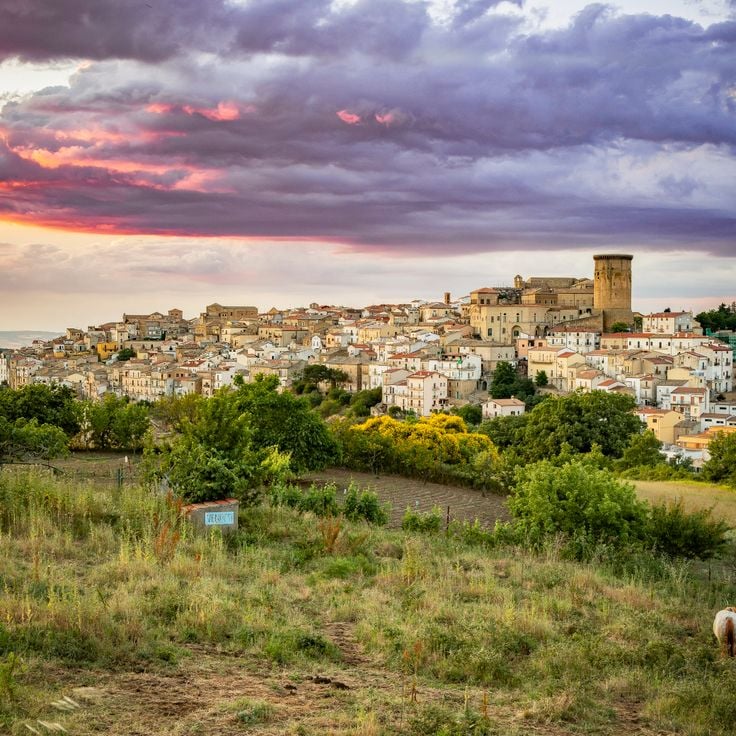
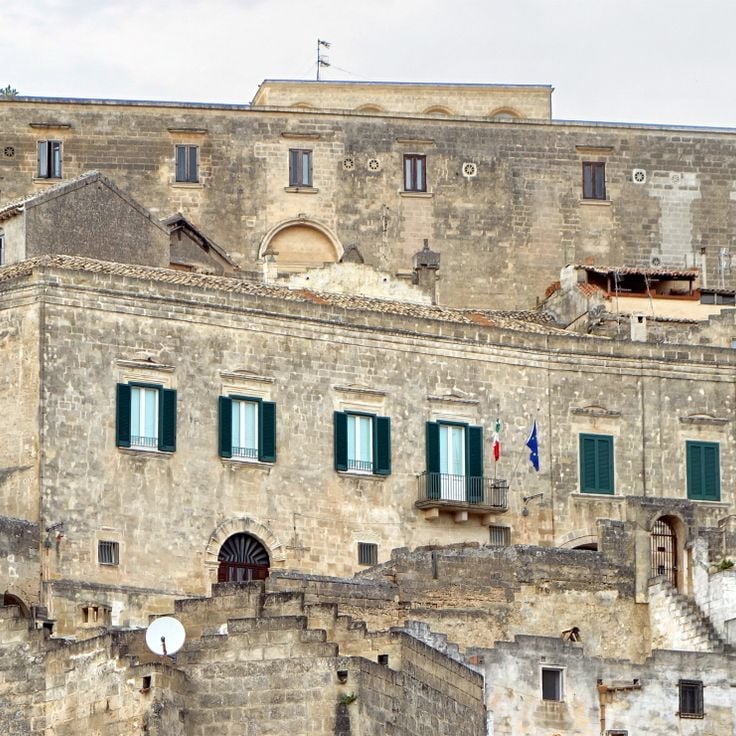
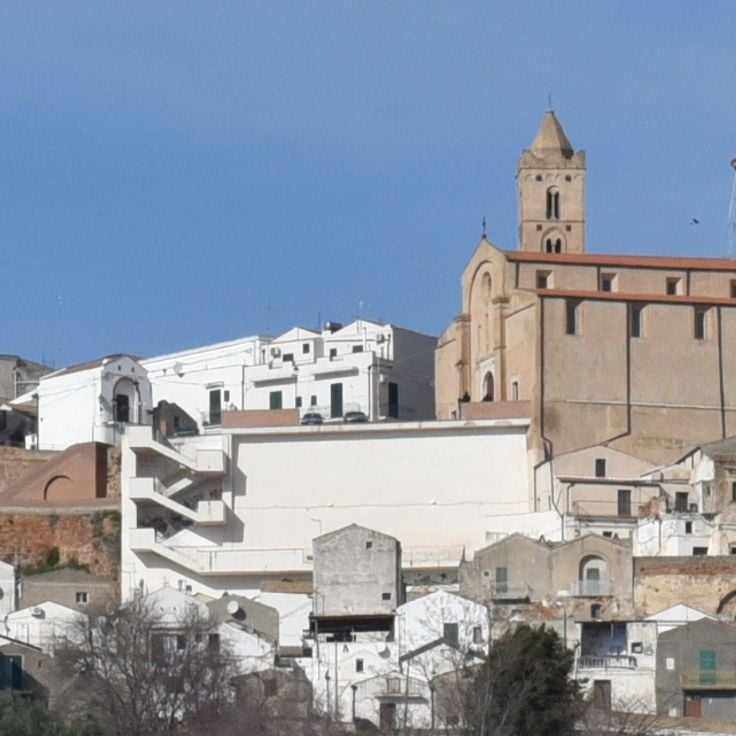
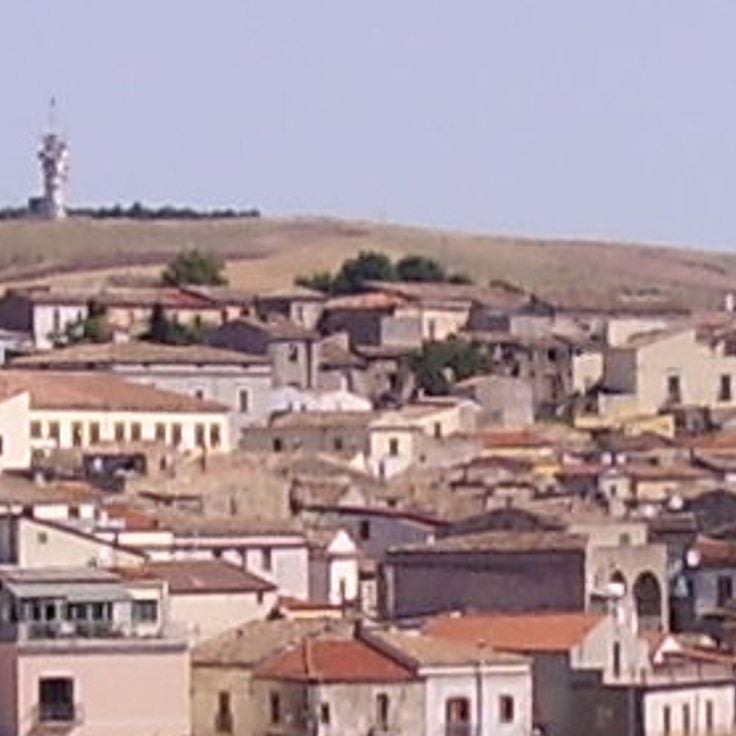
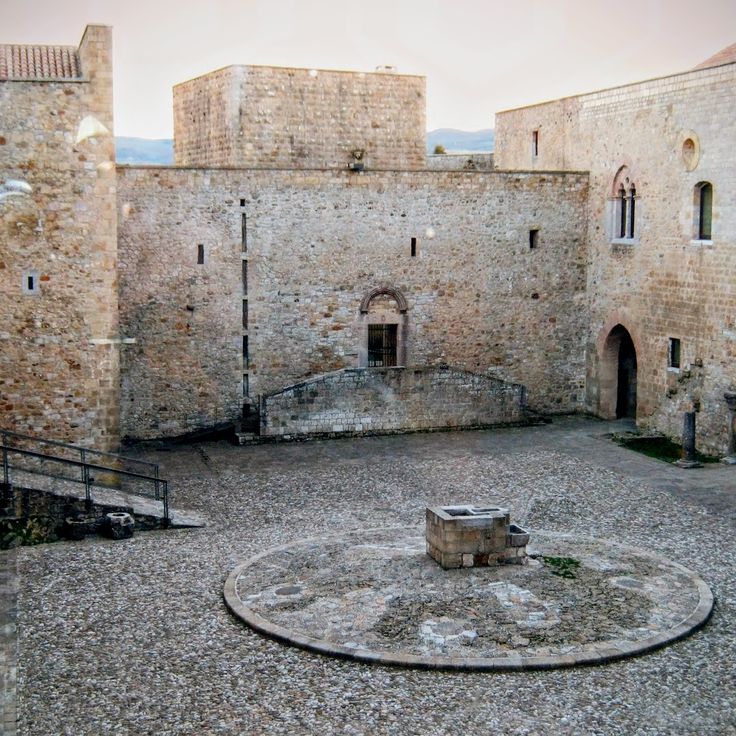
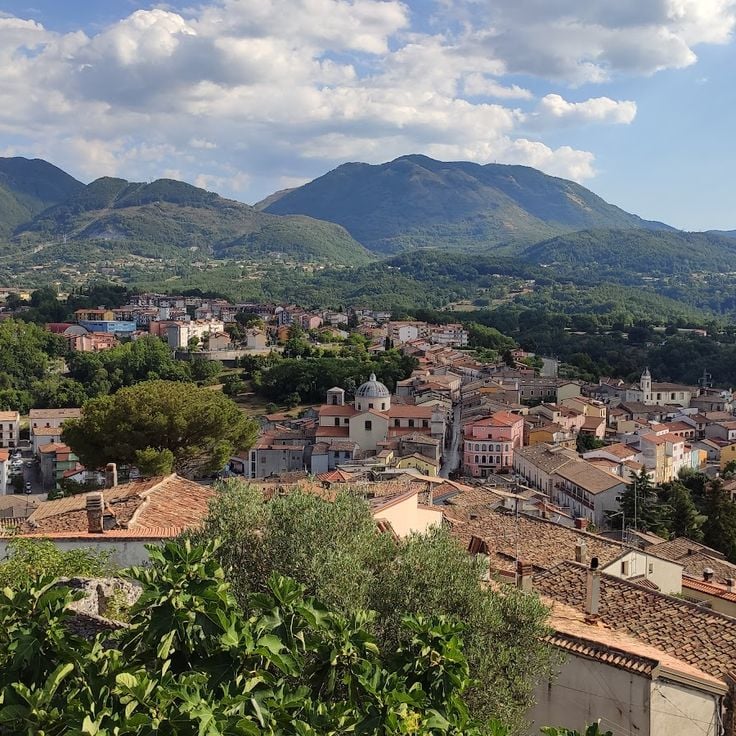
Tricarico is a village in Basilicata with an old center dominated by a castle. The castle sits above narrow streets and stone buildings that form the heart of the village. From this vantage point, you look out over valleys and the surrounding countryside. The village lies in the interior region between the Apennines and the Ionian coast, where history and nature meet. Tricarico shows what life is like in a southern Italian mountain village, with its crafts and architecture that tell stories across centuries.
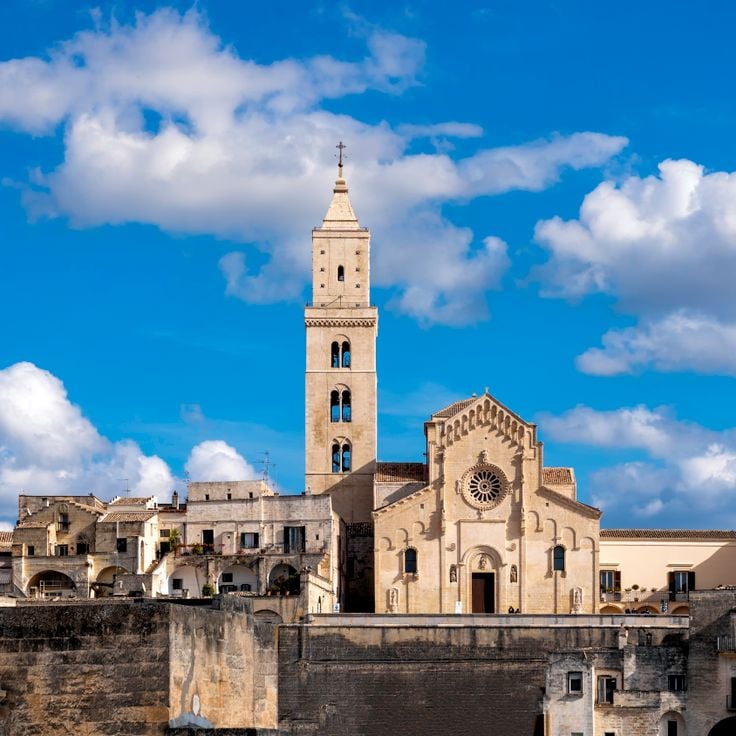
The Cathedral of Matera stands in the historic center of the city and displays the religious architecture that is typical of this region. The building shapes Matera's townscape with its facade and tells of the long history of this city, which lies between the Apennines and the Ionian Sea. This cathedral is part of the rich cultural heritage of Basilicata, where ancient sites, medieval castles, and natural areas come together.
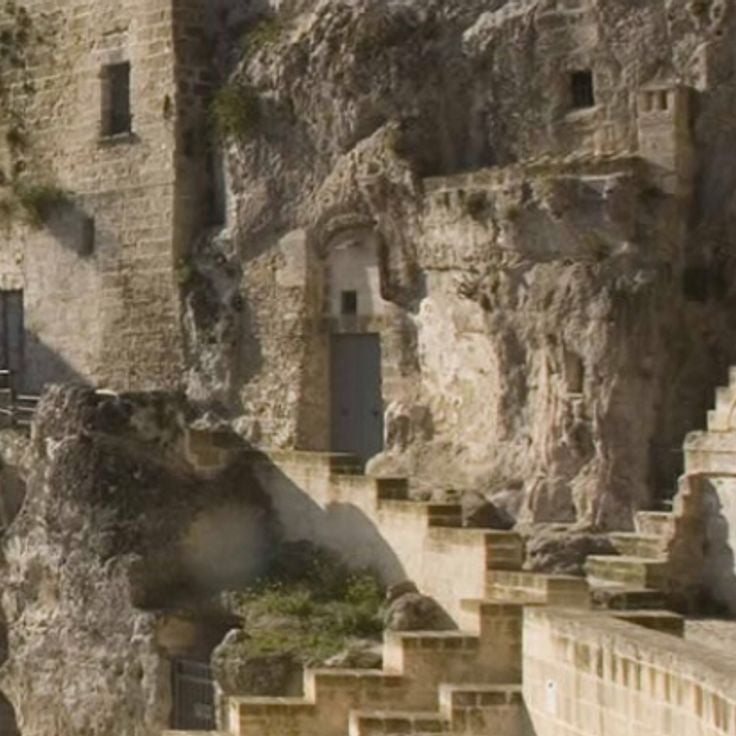
Casa Grotta di Vico Solitario is a preserved dwelling carved into the stone in Matera's Sassi district. It shows how people lived in these rock-cut homes. The rooms contain everyday objects that reveal what daily life was like for residents. Visitors can see how families occupied these tight spaces hollowed from limestone and go about their routines.
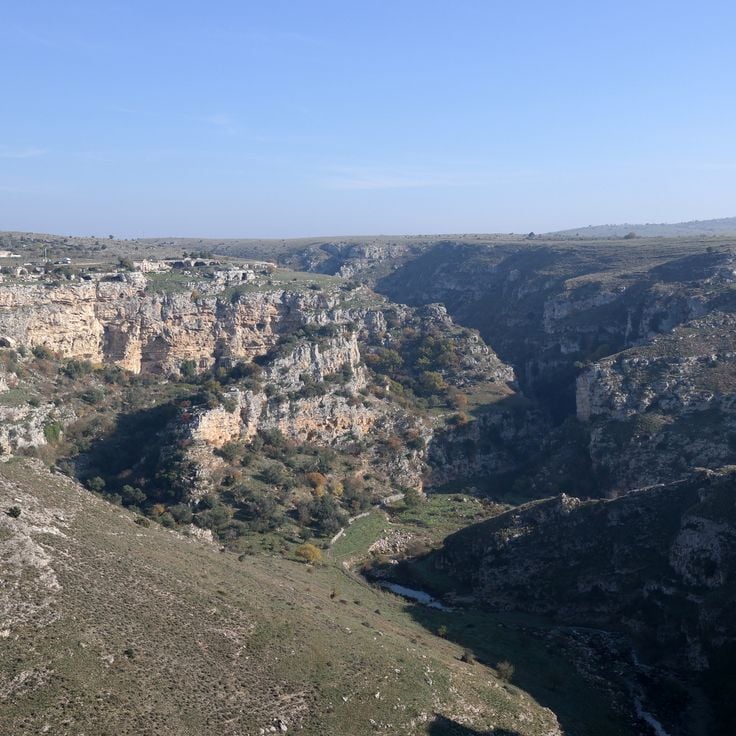
The Parco della Murgia Materana is a natural park surrounding Matera that features deep ravines, cliffs, and viewing points across the landscape. From these vantage points, you can see the Murgia plateau with its distinctive formations. The park connects the city to the surrounding countryside and reveals the geological story of this region.
The Palombaro Lungo is an underground cistern beneath Matera, carved deep into the limestone rock. This ancient water reservoir shows how residents of the city collected and stored water since ancient times. The cistern sits below the Sassi, Matera's old districts that are part of the UNESCO World Heritage site. It reveals the importance of water in a region where natural springs are rare. Visitors can still enter this structure today and see how previous residents solved their water needs.
The MUSMA in Matera presents modern and contemporary sculptures and artworks inside the historic Palazzo Pomarici. This museum allows visitors to see works by various artists in a setting that connects the town's past with present-day creative expression. The collection shows different approaches to sculpture and artistic practice, adding to the cultural life of a region known for its ancient ruins, medieval castles, and stunning natural landscapes.
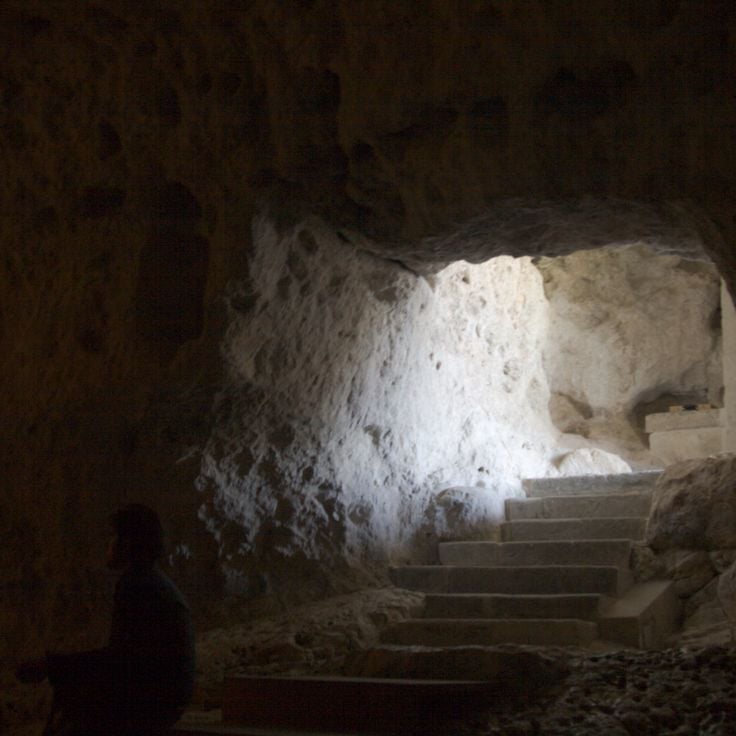
The Cripta del Peccato Originale is an ancient rock-cut church nestled in the limestone plateau near Matera. Inside this underground chapel, Byzantine frescoes decorate the stone walls, depicting scenes from Christian tradition. The painted figures still bear their original colors and reveal the spiritual practices of early Christian communities. This church represents how believers carved sacred spaces directly into the rock for prayer and worship. Soft light filtering through simple openings illuminates the frescoes and creates an intimate setting for contemplation.
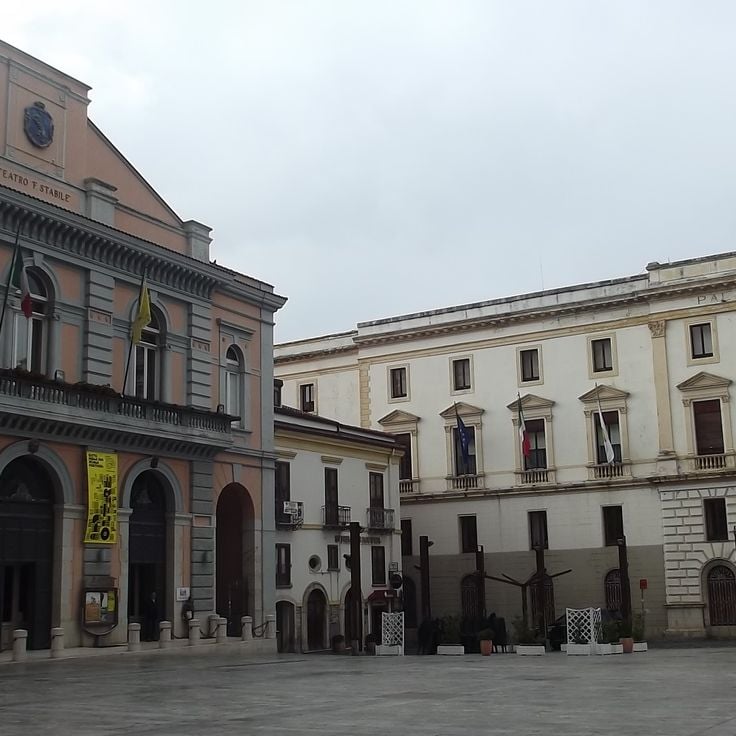
The historic centre of Potenza is the old heart of the regional capital. Here you find narrow streets and historic buildings that tell stories from different periods. The centre shows how the city developed from medieval times to the present day. The architecture reflects the history of the region and invites you to walk through winding streets.
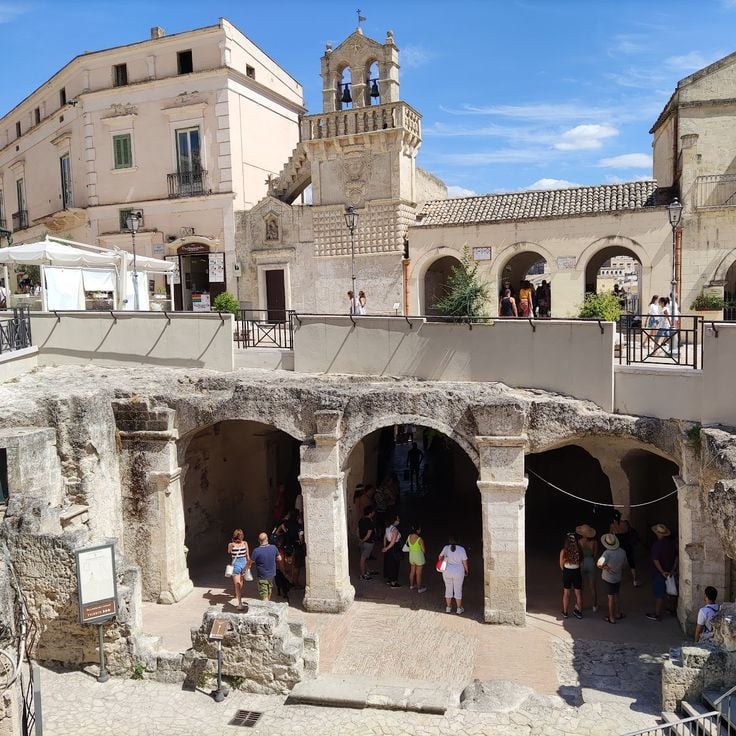
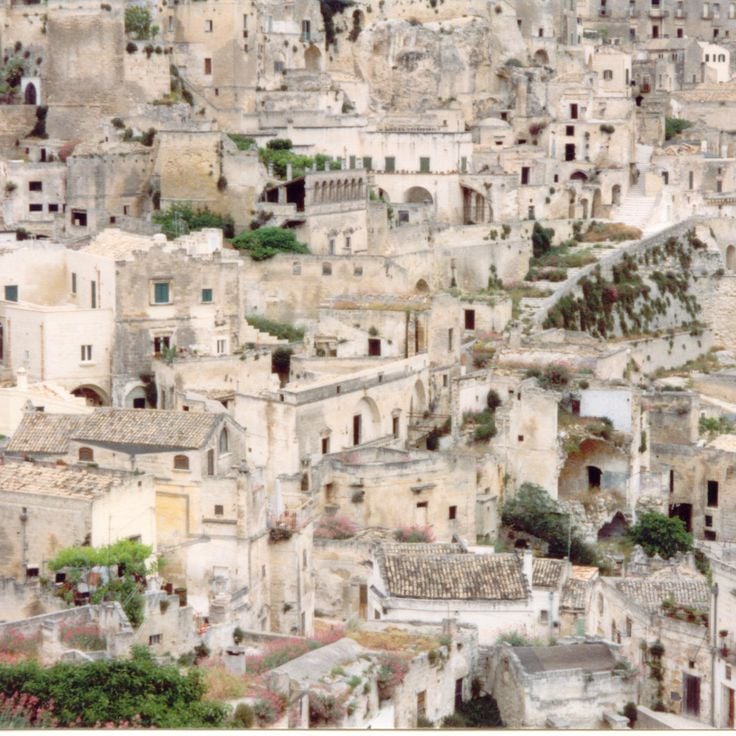
The Sassi of Matera are ancient neighborhoods carved directly into limestone rock. The Sasso Caveoso and Sasso Barisano show how people lived in these caves for hundreds of years. The church park holds rock-cut churches that monks carved into the stone. Walking through the tight alleyways, you see the traces of this history: stairways leading into homes, small windows, and rooftops that double as streets for other houses. Matera shows how earlier residents worked with the land and built their homes from nature and stone.
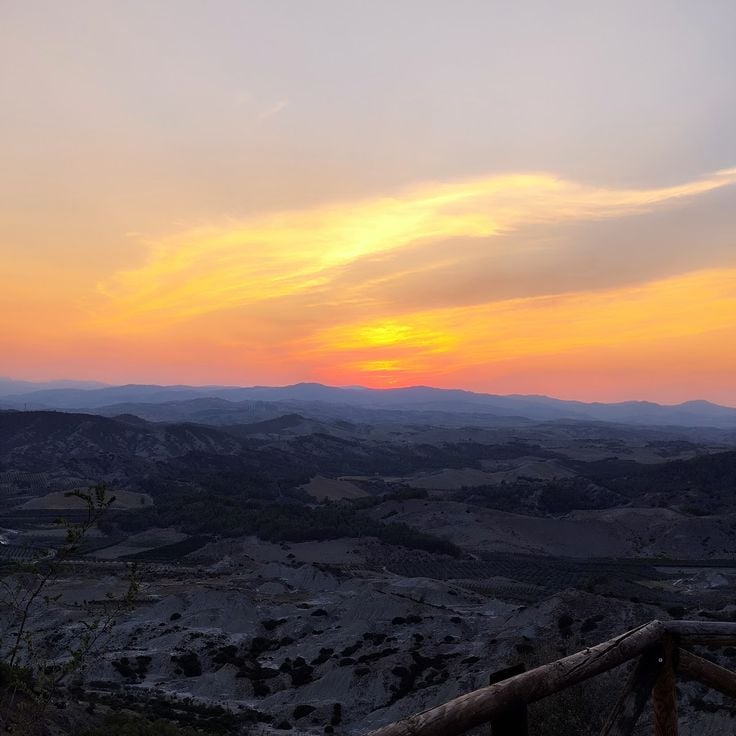
The Belvedere di Montalbano Jonico offers a view of the Badlands Lucanis, a landscape of ravines and bare hills typical of this region. From this viewpoint, you can see the jagged topography shaped by erosion that defines the face of southern Basilicata.
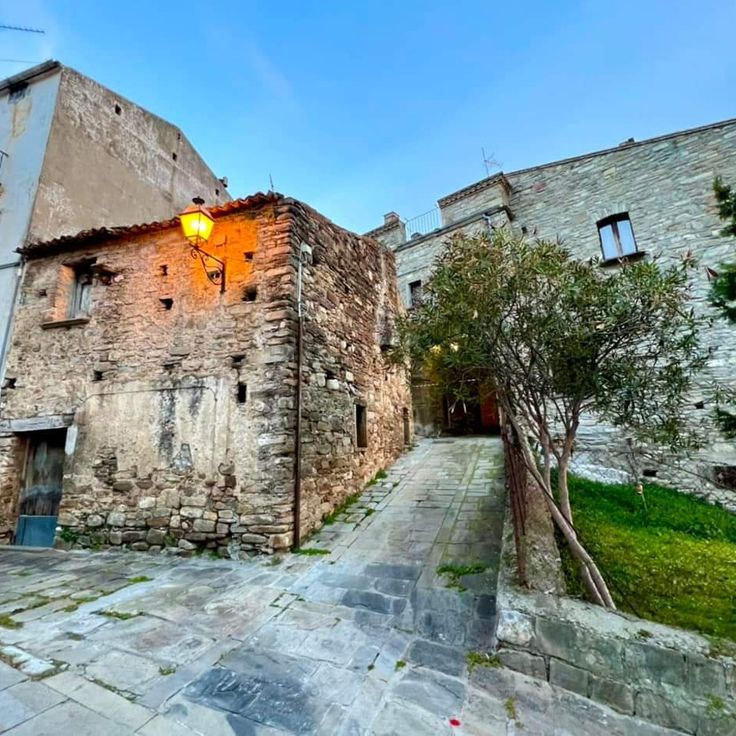
Guardia Perticara is a village built from stone on the slopes of the Agri Valley. The houses cluster together, following the shape of the hillside. Views from the village reach across the mountains and valleys of Basilicata. This settlement belongs to the region that stretches between the Apennines and the Ionian Sea, a land with roots in ancient times. Guardia Perticara shows how people have made their homes and shaped this corner of southern Italy over the centuries.
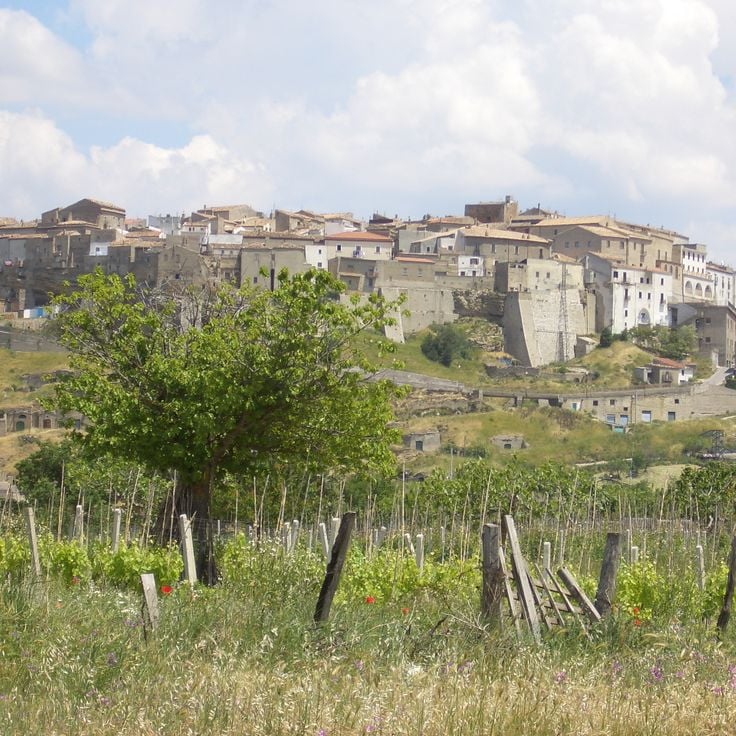
Pisticci is a white village perched on a hillside in Basilicata. The village has narrow streets and houses built in the traditional style of the Lucania region. The buildings are tightly clustered together and follow the slope of the hill. From above, you can see across the fields and toward the sea. The village shows how people lived in this area over time.
Bernalda is a small village in Basilicata with an old town center located near the archaeological remains of Metaponto. The place offers access to ancient sites from Magna Graecia and connects the rural life of the region with its rich history. The narrow streets of the center show the typical building style of southern Italian villages, while nearby the remains of ancient temples and settlements from antiquity invite exploration.
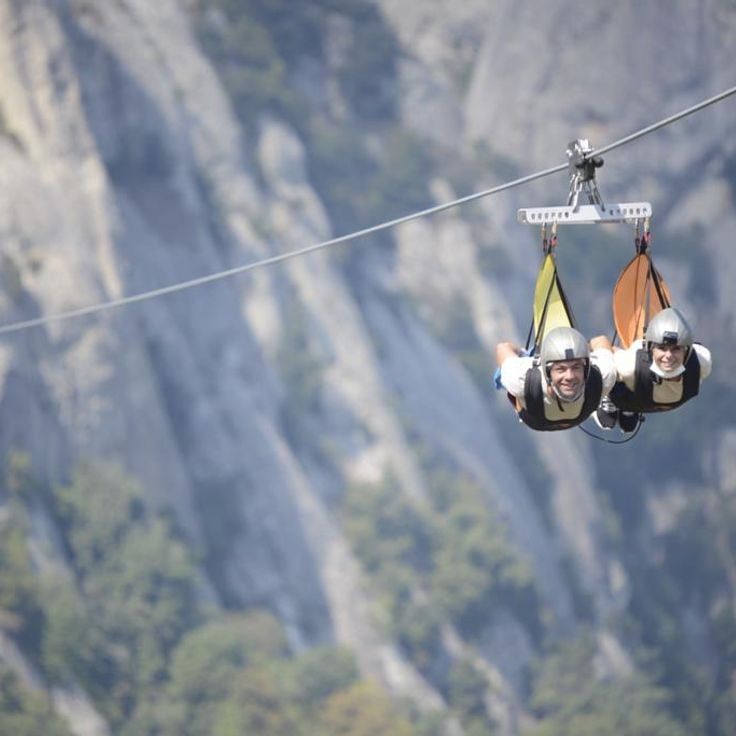
The Volo dell'Angelo is a zip line that connects Castelmezzano and Pietrapertosa in the Dolomiti Lucane. This experience allows you to see the rocky peaks and steep slopes of the region from above. The flight lasts several minutes and offers views of the landscape spreading out below. Visitors experience the height and scale of this mountainous area in a direct way.
Tursi is an old town in Basilicata set on a hillside. The Rabatana quarter shows how people lived here long ago, with houses spread across the slope. Walking through the narrow streets, you can read the history in the stone buildings. This town is part of a region that holds stories from ancient times to today. The hilltop location offers views across the landscape of Basilicata.
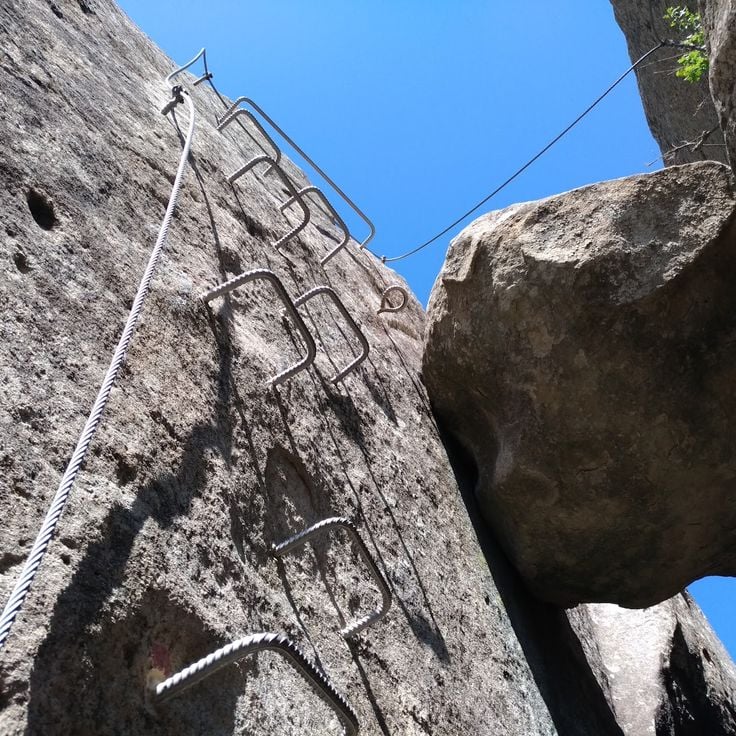
The Via Ferrata Marcirosa runs through the Dolomiti Lucane and offers an equipped climbing route along the rock faces near Pietrapertosa. This climbing path is part of a region that combines different landscapes between the Apennines and the Ionian Sea and takes visitors through various periods and environments. The route allows climbers to experience up close the prominent rocky towers that characterize this southern Italian area.
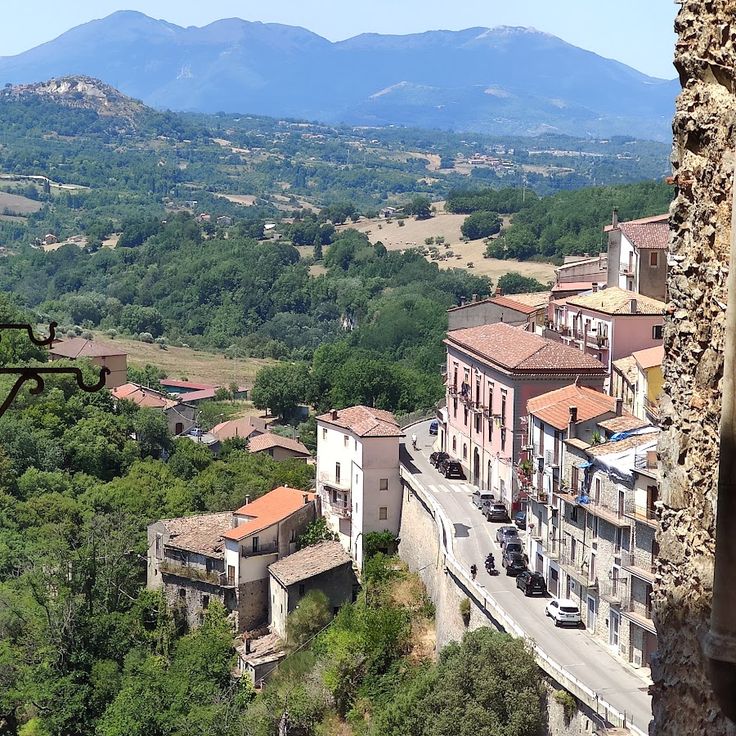
Viggianello is a historic village that sits at the edge of Pollino National Park and serves as a gateway to Italy's largest protected area. The village displays typical features of southern Italian mountain settlements with narrow streets and old stone buildings. From here, visitors can access the park's hiking trails that wind between rocky peaks and ancient pine forests. Viggianello connects local history with access to the pristine nature of Pollino.
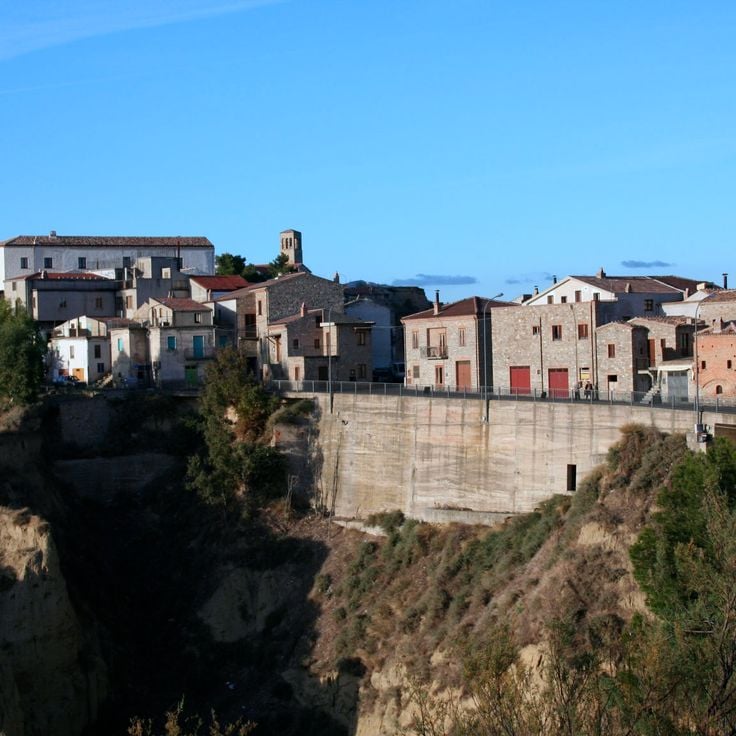
Aliano is a village set in a landscape of calanchi, those characteristic ravines that define Basilicata. The village has a rich cultural and literary history. It sits in a region spread between the Apennines and the Ionian Sea, where ancient ruins, medieval castles, and abandoned villages tell the story of the past. Aliano is part of this varied southern Italian landscape where history and nature come together.
Acerenza sits on a hilltop in Basilicata and features a cathedral that looks like a fortress towering over the small town. The building dominates the landscape and speaks to the city's medieval past. Narrow streets wind through the historic center, where daily life unfolds. This town is one of many places in Basilicata that reveals how the region's history shaped the communities that developed here over centuries.
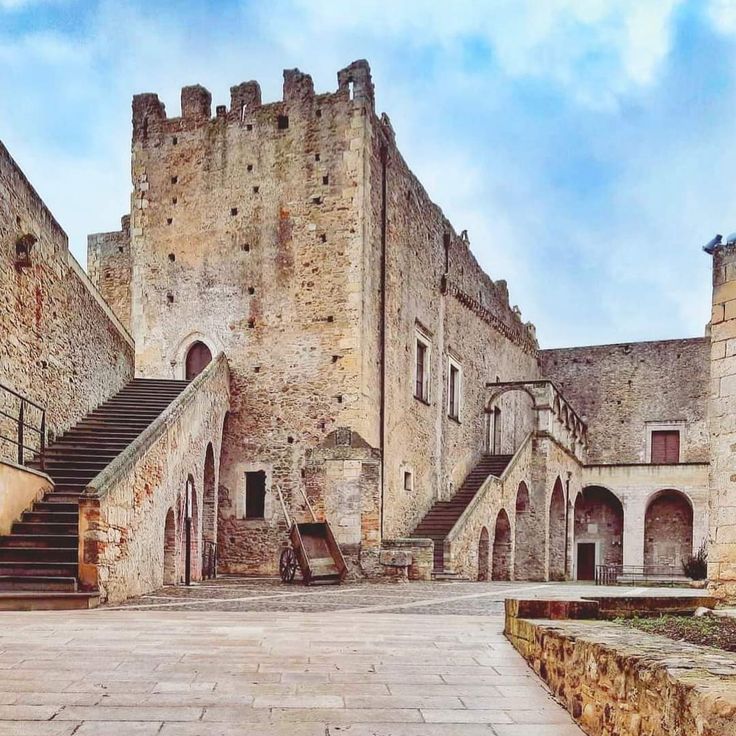
Miglionico is a village in Basilicata built on a hilltop and dominated by the Castello del Malconsiglio. This medieval fortress towers above the settlement and looks out over the surrounding countryside. The village itself has narrow streets lined with stone buildings that cling to the slopes. From this elevated position, you can see across the rolling landscape toward distant mountains.
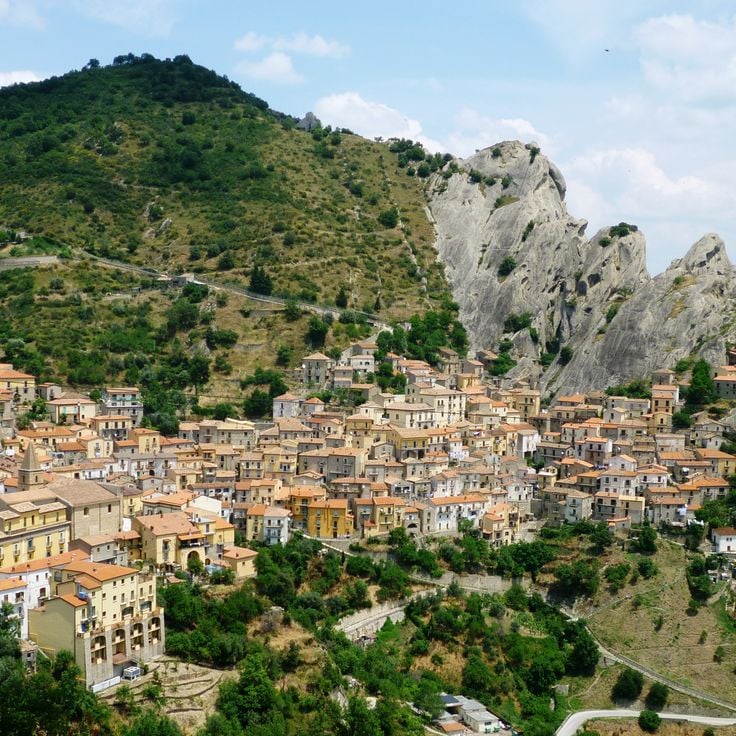
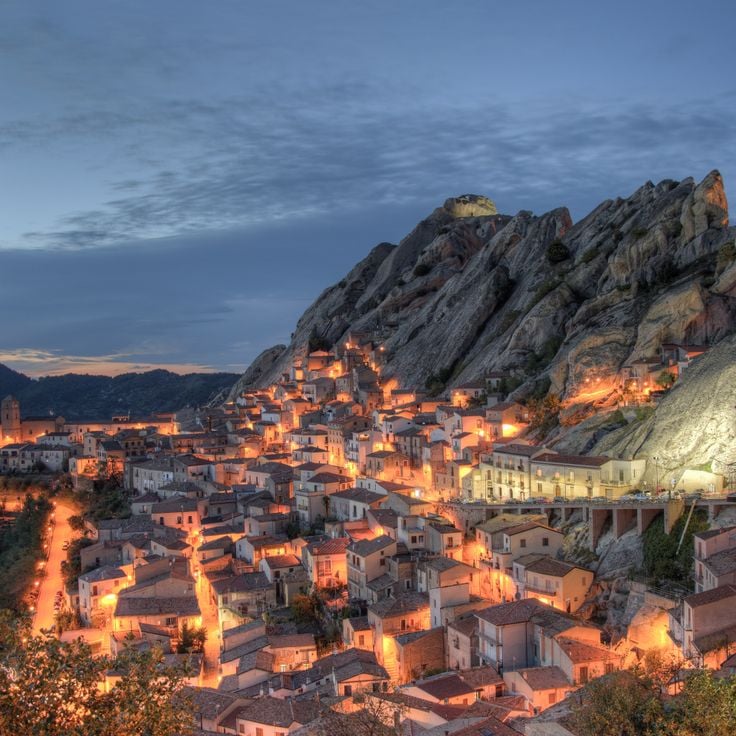
Castelmezzano is a village in the Dolomiti Lucane, perched against steep rocky cliffs. Houses cluster together along the hillside, connected by narrow lanes that wind between the buildings. From the village, you can see the distinctive rock formations that surround it. This location shows how communities adapted to mountain terrain in southern Italy.
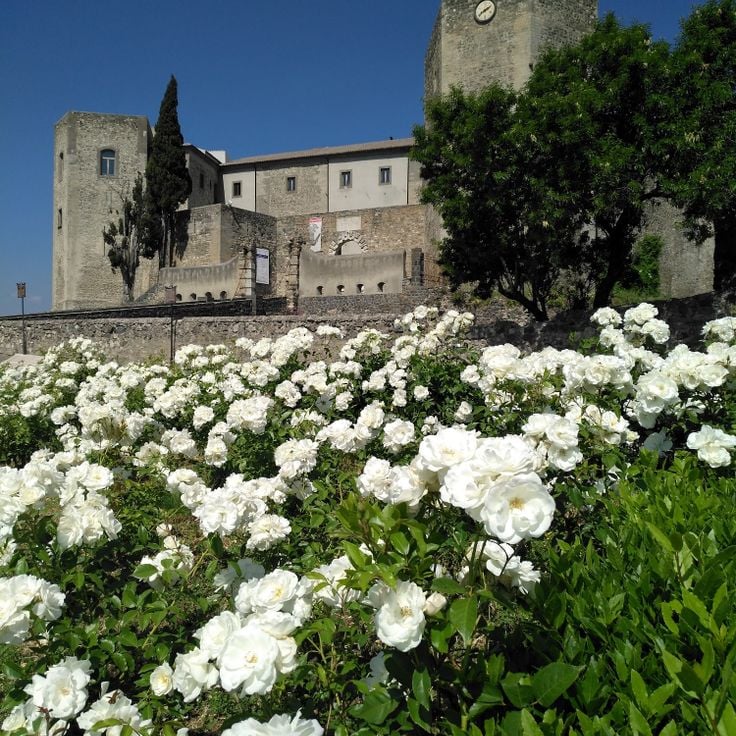
Castello di Melfi is a medieval castle that stands in the region of Basilicata. The building now houses the National Archaeological Museum, which displays collections from Greek and Roman times. Visitors can walk through the rooms and see objects that tell the story of the ancient past of this southern Italian region. The castle itself shows construction from different periods and offers insight into the history of the city of Melfi.
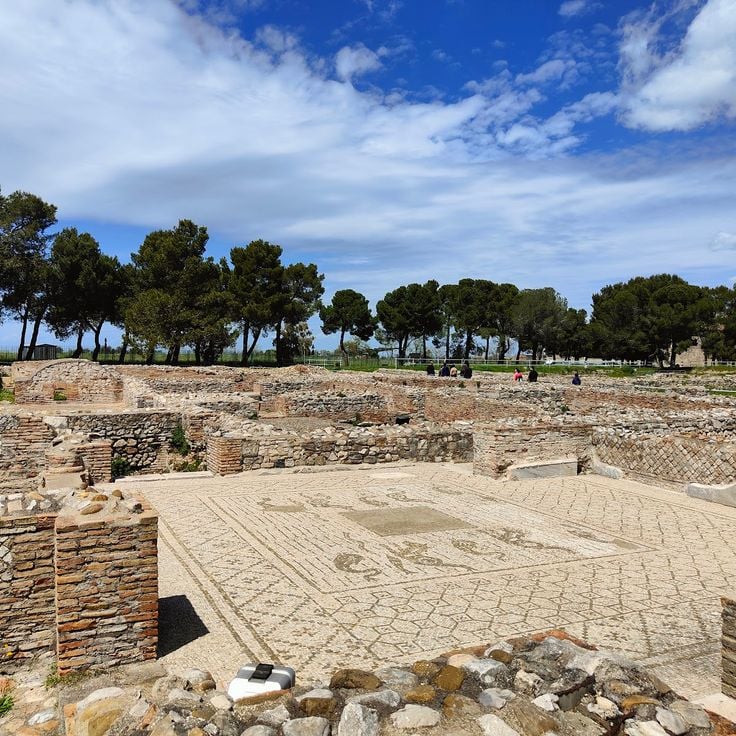
The Parco Archeologico di Venosa displays the remains of the Roman city of Venusia and its early Christian settlements. Visitors can see building foundations, mosaics, and inscriptions that tell the story of how the city was settled and developed over several centuries. The site brings together evidence from different periods and shows what life was like in an important ancient city.
Pietrapertosa is a village in the Lucanian Dolomites where houses are built directly into the rocky cliffs. The dwellings appear to emerge from the stone itself, creating streets that wind between structures carved into the mountainside. Walking through the village, you see how generations of inhabitants adapted their homes to the challenging terrain. The tight alleyways and stone facades give the place a raw, genuine character shaped by its dramatic setting.
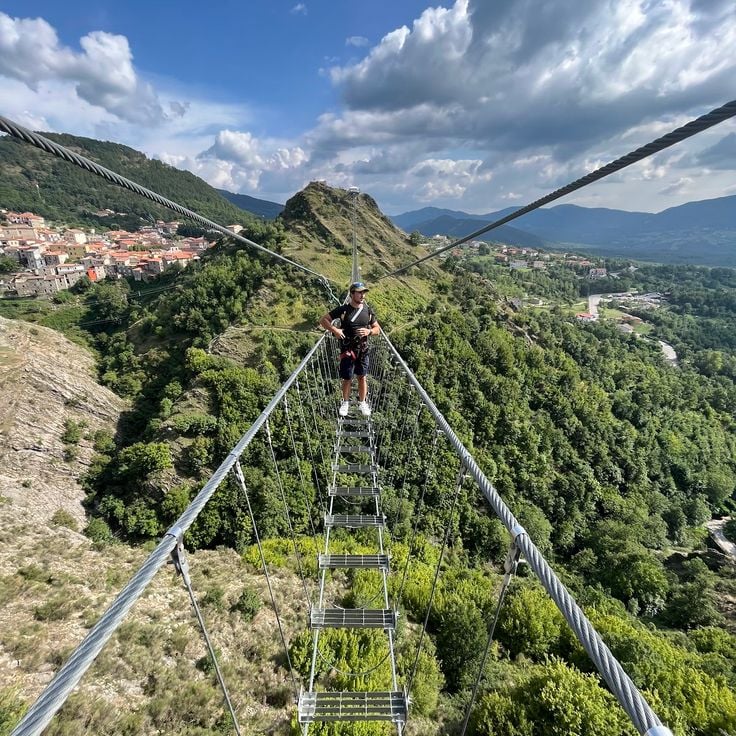
The Ponte alla Luna in Sasso di Castalda is a suspended bridge that spans between rock formations, offering visitors an intense experience high above the ground. The bridge connects rocky sections and allows for walks through the rock landscape of this area. Here you can discover the landscape from a new perspective while experiencing the geology of Basilicata up close.
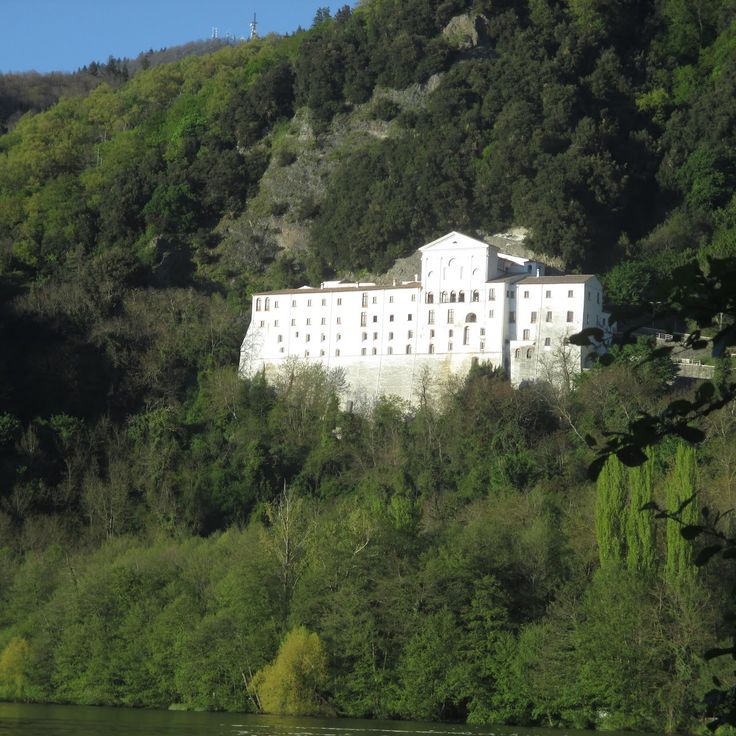
The Abbey of San Michele Arcangelo sits on the shores of a lake in Monticchio, in the Basilicata region. This ancient Benedictine monastery blends history and nature in a singular way. Monks lived and worked here for centuries. The lake surrounds the abbey and creates a quiet setting. The buildings show medieval architecture and craftsmanship. Visitors find a place where spirituality and landscape meet.
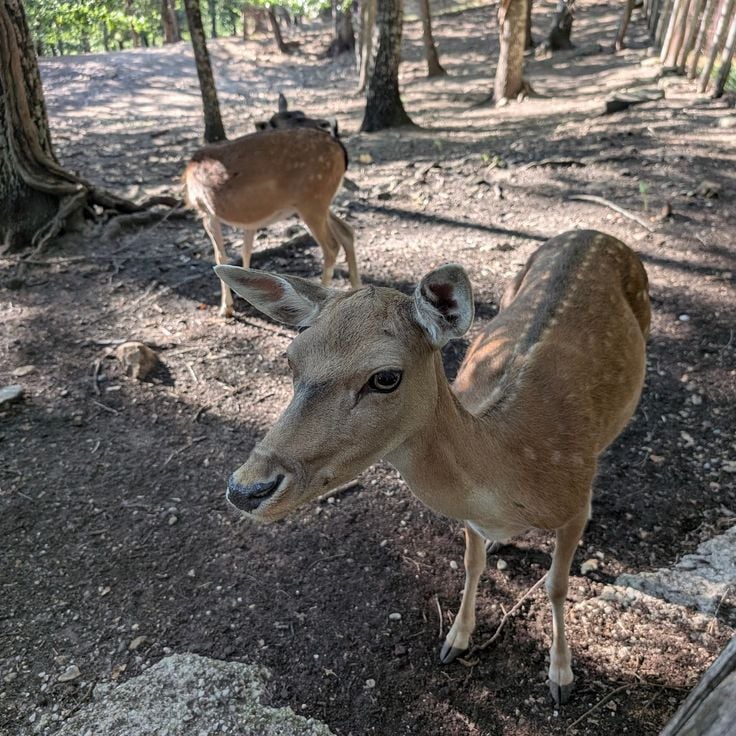
Gallipoli Cognato is a natural regional park in Accettura known for its striking rock formations that resemble the larger Lucani Dolomites. The park offers hiking trails through varied terrain with steep cliff faces, green slopes, and views over the surrounding region. Visitors can experience the geology and plant life of Basilicata in a setting away from main tourist routes.
The historic center of Melfi is the old heart of this town in the Vulture region. Walking through its narrow streets, you pass between stone buildings and emerge into small squares where local life unfolds. The architecture reflects different periods, from the Middle Ages onward. Churches and palaces shape the character of the place, while the castle of Melfi overlooks everything from above. History is present in the buildings and the way people move through these spaces.
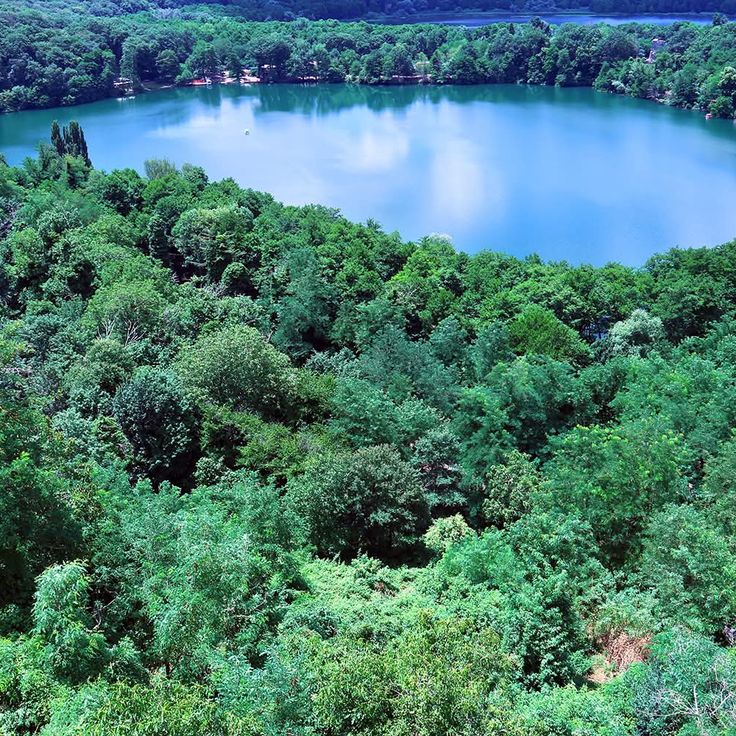
The lakes of monticchio sit on the flanks of mount vulture in basilicata. They formed in volcanic crater basins and are surrounded by thick forests. These two lakes create a quiet space in this mountainous region, where forests descend to the water's edge. Visitors can walk the trails, fish, or simply spend time in this natural landscape. The lakes are part of the region's diverse natural environment.
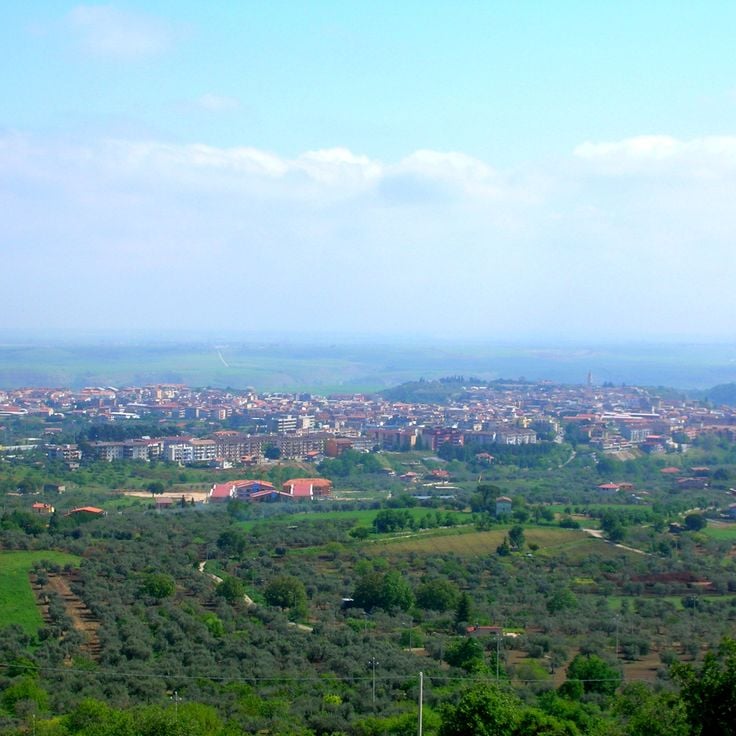
Venosa is a historical town in the Vulture area with an ancient center full of history. The town was once the birthplace of the poet Horace and preserves traces of its ancient past. The narrow streets of the old quarter lead past medieval buildings and ancient churches. Venosa shows how life in this region has been shaped over the centuries, with architecture and streets that tell of different historical periods.
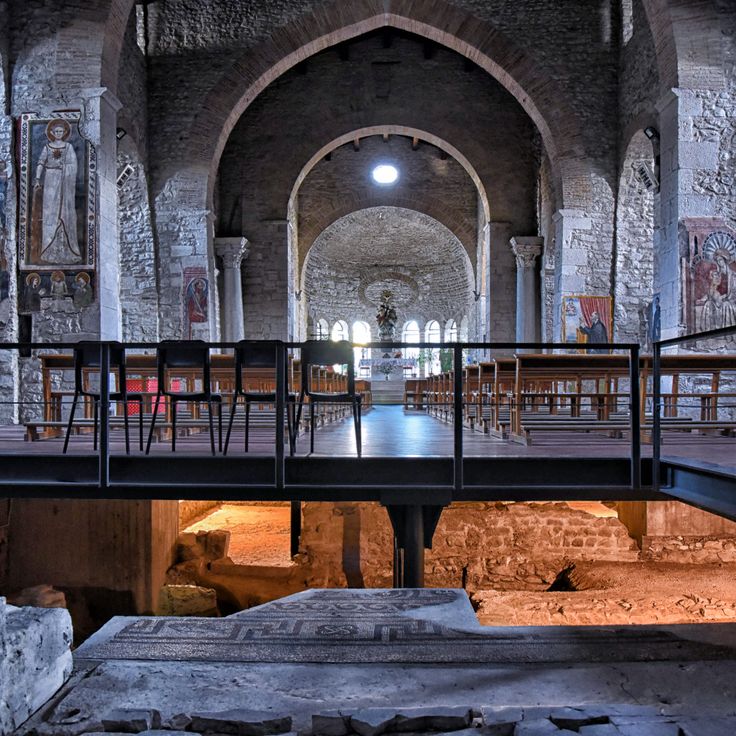
The Abbey of the Most Holy Trinity in Venosa stands as evidence of medieval religious architecture. These ruins tell of a time when Benedictine monks inhabited and managed these sacred spaces. The complex blends Romanesque and Byzantine style elements, showing how the Church held influence in this region. The stones and walls still visible today allow visitors to step back into the medieval past of Venosa, a town also known as the birthplace of the poet Horace.
Castel Lagopesole is a castle built by Emperor Frederick II in the 13th century on a hilltop near Avigliano. The fortress served as an administrative and military center for the kingdom. Visitors can explore the stone walls and towers while enjoying views across the Basilicata landscape. The castle shows the reach of the Hohenstaufen dynasty in southern Italy.
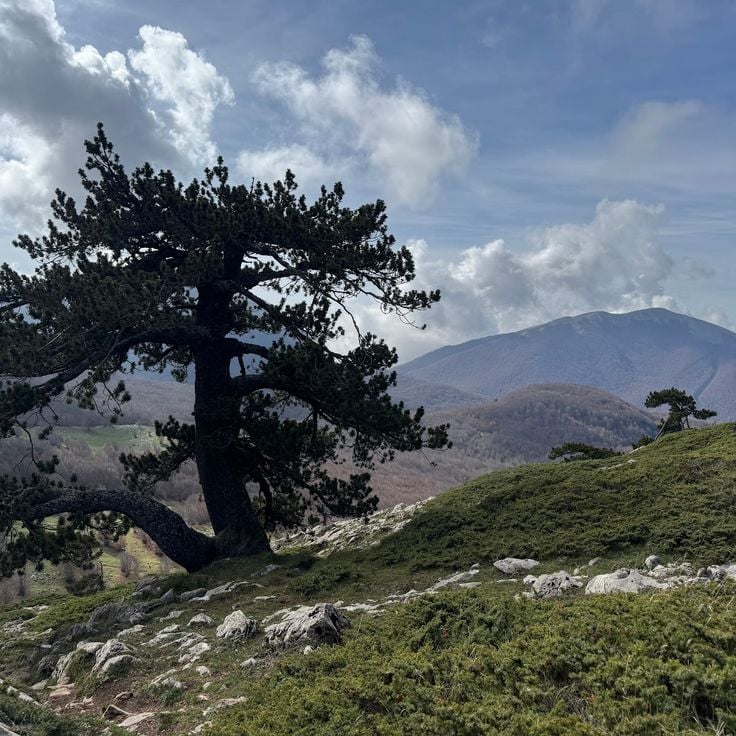
The Pollino National Park spans the mountainous terrain of Basilicata and Calabria, protecting a natural environment with alpine flora and fauna. In this park, centuries-old Bosnian pines still grow, and hikers find trails between steep rock formations. The park offers insight into the diverse nature of southern Italy and draws visitors seeking to walk through untouched landscapes.
Craco sits on a hilltop in Basilicata as an abandoned village that draws visitors and filmmakers. Stone buildings and narrow streets remain largely as they were left, telling the story of people who once lived here. The village was evacuated due to landslides and now serves as a backdrop for films and television productions. Walking through its empty lanes offers a glimpse into how communities evolved and changed over time.
Rotonda is a small village in the Pollino mountain range in Basilicata. Nestled in a highland setting, this village serves as a gateway for hiking in Pollino National Park, Italy's largest national park. From here, visitors can walk among the forested slopes and rocky peaks that characterize the park. The village itself has the typical appearance of a southern Italian mountain settlement, with narrow streets and stone houses. It is a convenient base for those wanting to explore the natural landscape of the surrounding park.
The Serra di Crispo hike in the Pollino area of Basilicata takes you through groves of rare lorica pines found nowhere else in the world. These trees have adapted to the harsh mountain conditions over centuries. The trail shows how nature shapes itself to extreme elevations and rocky terrain. Along the way, you can see across the surrounding peaks and valleys.
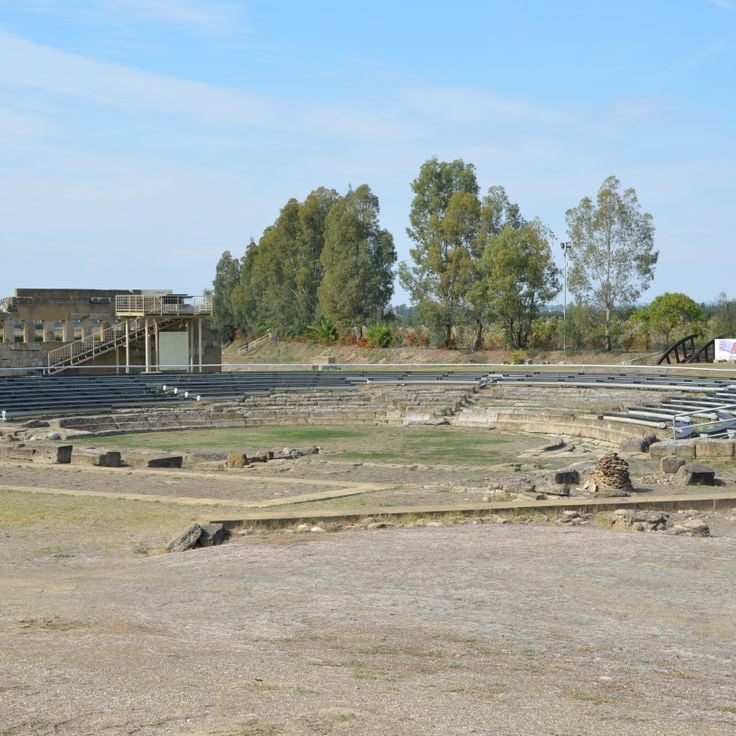
Metaponto holds the remains of an ancient Greek city. Visitors can see temple ruins, columns, and other archaeological finds that tell the story of Magna Grecia. The excavations show how people lived here thousands of years ago. Walking through the ruins gives a sense of how important this ancient settlement was on the Ionian coast.
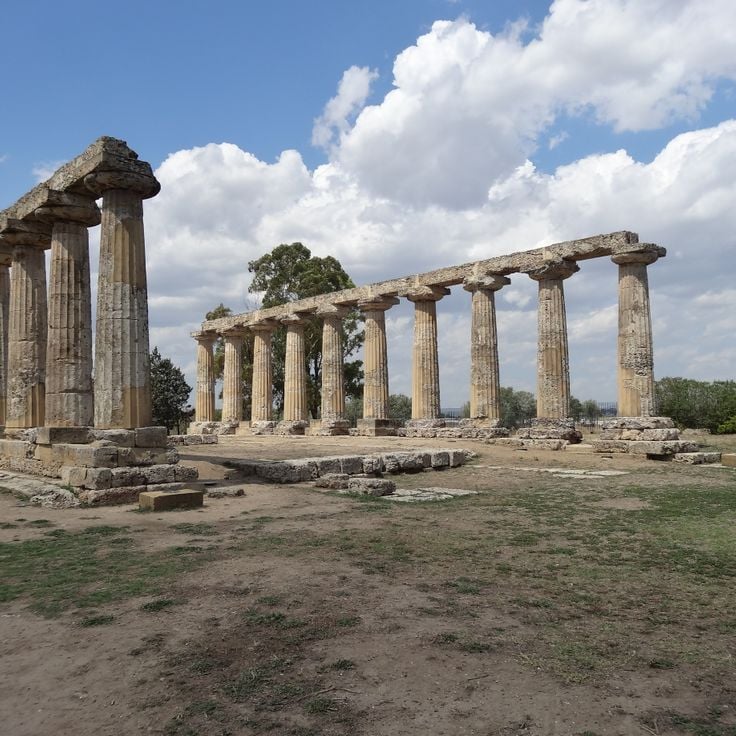
The Tavole Palatine are the remains of an ancient Greek temple at Metaponto. These Doric columns stand on a plain near the Ionian coast and date from the time of Magna Graecia. The temple shows how the Greeks lived and worshipped in this southern Italian region. Today, visitors can walk between the stone columns and imagine life in antiquity.
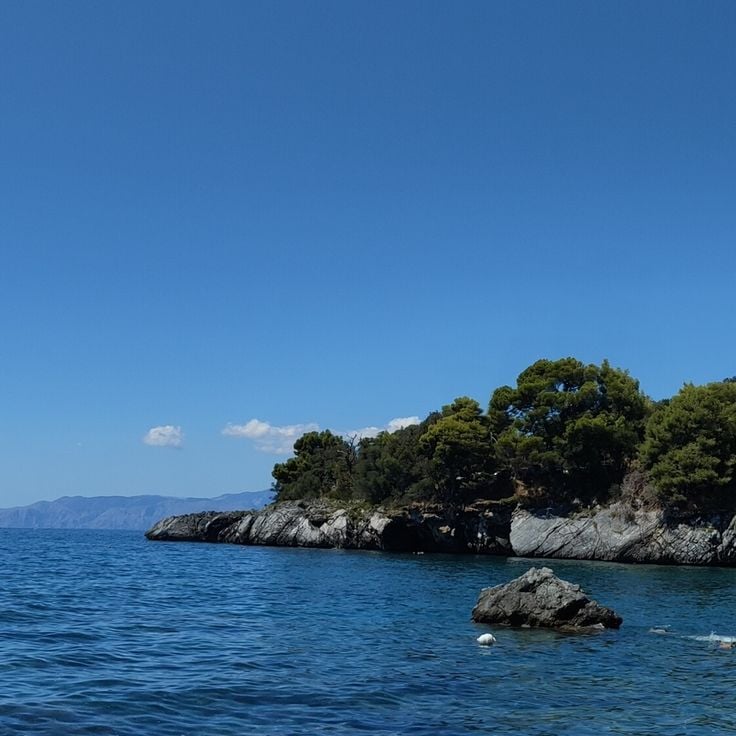
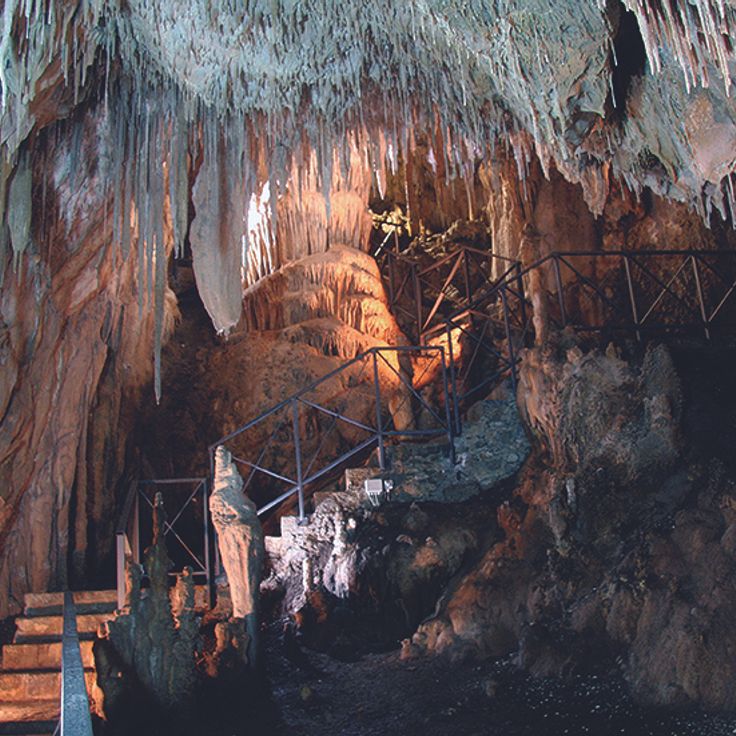
The Grotta delle Meraviglie is a sea cave on the coast of Maratea, reachable only by boat. Inside, rock formations create shapes and colors worth seeing. This cave sits in a region where ancient history and nature meet. The boat access makes this place special for travelers exploring the Basilicata coastline and its connection to the wider story of southern Italy.
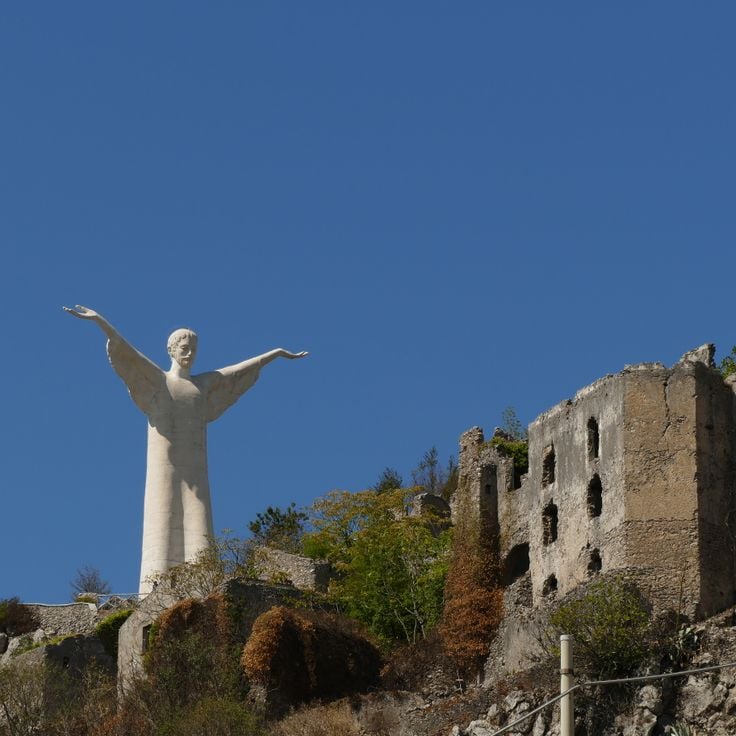
The Cristo Redentore statue is a monumental sculpture that towers above the town of Maratea. This landmark sits on a hilltop overlooking the coast and surrounding landscape. Visitors can reach the statue by walking along paths that wind up through the area, and from the top they can see across the sea and the rocky coastline. The work serves as a key point of reference in the region and draws people who make the climb to take in the views and the natural environment around them.
San Severino Lucano is a mountain village in the Pollino area, positioned as a gateway for nature exploration. The village sits among rocky peaks and forests, offering access to hiking trails that wind through the Dolomiti Lucane landscape. From this base, visitors can explore the region's plant and animal life, including century-old pine forests and the diverse wildlife of the Pollino National Park. The village itself features narrow streets with traditional stone houses built into the hillside. Many people use San Severino Lucano as a starting point for day trips into the surrounding nature.
Policoro is a modern coastal town along the Ionian Sea where contemporary beach life meets ancient history. The city is defined by its sandy shores where locals and visitors gather. Around Policoro lie the remains of Magna Grecia, including temples and archaeological sites that reveal how people lived in antiquity. The proximity of nature and history makes this place a bridge between the sea and the past.
The Oasi WWF Policoro Herakleia is a nature reserve on the Ionian coast of Basilicata. Dunes and pine forests create habitats for coastal wildlife and migratory birds. The reserve connects nature protection with the history of Herakleia, an ancient city of Magna Graecia. Visitors can walk through different ecosystems and observe species that travel between Africa and Europe. The site shows how southern Italian landscapes look where land meets sea.
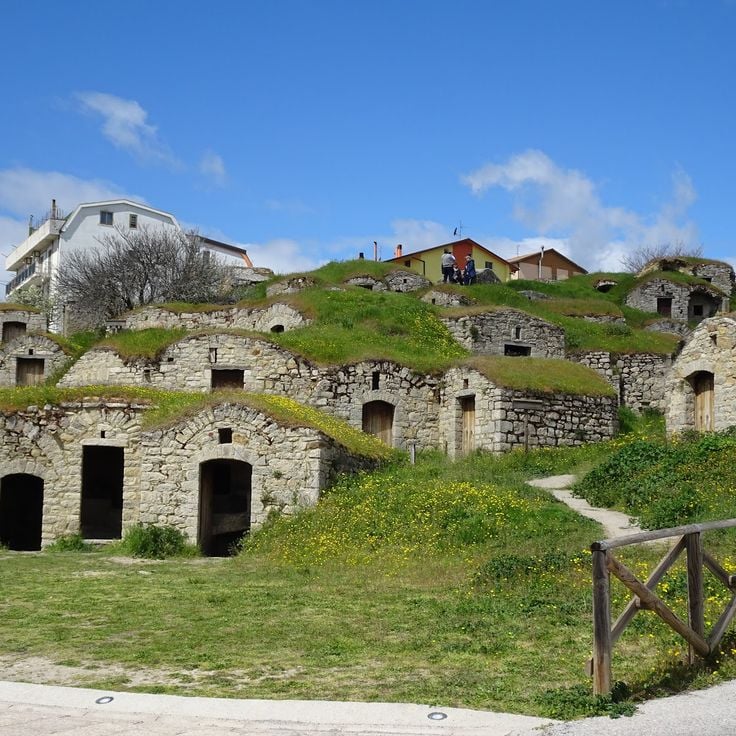
The Palmenti di Pietragalla are caves carved into stone, showing the rural heritage of this region. They came from old local traditions and allow visitors to see how people from earlier times worked. These sites are part of the craftwork history of Basilicata, where people for centuries used stone to accomplish their daily tasks. The place invites visitors to understand how residents lived and worked with their surroundings.
The historic center of Maratea rises along the coast with narrow streets and old buildings that climb toward the Tyrrhenian Sea. The town preserves elements from different periods, with churches, palaces, and homes built over centuries. From the center, you can see the coastline and access walking paths that connect to the surrounding region. Maratea represents the link between the coastal heritage and the mountains of Basilicata that rise behind it.
Tricarico is a village in Basilicata with an old center dominated by a castle. The castle sits above narrow streets and stone buildings that form the heart of the village. From this vantage point, you look out over valleys and the surrounding countryside. The village lies in the interior region between the Apennines and the Ionian coast, where history and nature meet. Tricarico shows what life is like in a southern Italian mountain village, with its crafts and architecture that tell stories across centuries.
The Cathedral of Matera stands in the historic center of the city and displays the religious architecture that is typical of this region. The building shapes Matera's townscape with its facade and tells of the long history of this city, which lies between the Apennines and the Ionian Sea. This cathedral is part of the rich cultural heritage of Basilicata, where ancient sites, medieval castles, and natural areas come together.
Casa Grotta di Vico Solitario is a preserved dwelling carved into the stone in Matera's Sassi district. It shows how people lived in these rock-cut homes. The rooms contain everyday objects that reveal what daily life was like for residents. Visitors can see how families occupied these tight spaces hollowed from limestone and go about their routines.
The Parco della Murgia Materana is a natural park surrounding Matera that features deep ravines, cliffs, and viewing points across the landscape. From these vantage points, you can see the Murgia plateau with its distinctive formations. The park connects the city to the surrounding countryside and reveals the geological story of this region.
The Palombaro Lungo is an underground cistern beneath Matera, carved deep into the limestone rock. This ancient water reservoir shows how residents of the city collected and stored water since ancient times. The cistern sits below the Sassi, Matera's old districts that are part of the UNESCO World Heritage site. It reveals the importance of water in a region where natural springs are rare. Visitors can still enter this structure today and see how previous residents solved their water needs.
The MUSMA in Matera presents modern and contemporary sculptures and artworks inside the historic Palazzo Pomarici. This museum allows visitors to see works by various artists in a setting that connects the town's past with present-day creative expression. The collection shows different approaches to sculpture and artistic practice, adding to the cultural life of a region known for its ancient ruins, medieval castles, and stunning natural landscapes.
The Cripta del Peccato Originale is an ancient rock-cut church nestled in the limestone plateau near Matera. Inside this underground chapel, Byzantine frescoes decorate the stone walls, depicting scenes from Christian tradition. The painted figures still bear their original colors and reveal the spiritual practices of early Christian communities. This church represents how believers carved sacred spaces directly into the rock for prayer and worship. Soft light filtering through simple openings illuminates the frescoes and creates an intimate setting for contemplation.
The historic centre of Potenza is the old heart of the regional capital. Here you find narrow streets and historic buildings that tell stories from different periods. The centre shows how the city developed from medieval times to the present day. The architecture reflects the history of the region and invites you to walk through winding streets.
The Sassi of Matera are ancient neighborhoods carved directly into limestone rock. The Sasso Caveoso and Sasso Barisano show how people lived in these caves for hundreds of years. The church park holds rock-cut churches that monks carved into the stone. Walking through the tight alleyways, you see the traces of this history: stairways leading into homes, small windows, and rooftops that double as streets for other houses. Matera shows how earlier residents worked with the land and built their homes from nature and stone.
The Belvedere di Montalbano Jonico offers a view of the Badlands Lucanis, a landscape of ravines and bare hills typical of this region. From this viewpoint, you can see the jagged topography shaped by erosion that defines the face of southern Basilicata.
Guardia Perticara is a village built from stone on the slopes of the Agri Valley. The houses cluster together, following the shape of the hillside. Views from the village reach across the mountains and valleys of Basilicata. This settlement belongs to the region that stretches between the Apennines and the Ionian Sea, a land with roots in ancient times. Guardia Perticara shows how people have made their homes and shaped this corner of southern Italy over the centuries.
Pisticci is a white village perched on a hillside in Basilicata. The village has narrow streets and houses built in the traditional style of the Lucania region. The buildings are tightly clustered together and follow the slope of the hill. From above, you can see across the fields and toward the sea. The village shows how people lived in this area over time.
Bernalda is a small village in Basilicata with an old town center located near the archaeological remains of Metaponto. The place offers access to ancient sites from Magna Graecia and connects the rural life of the region with its rich history. The narrow streets of the center show the typical building style of southern Italian villages, while nearby the remains of ancient temples and settlements from antiquity invite exploration.
The Volo dell'Angelo is a zip line that connects Castelmezzano and Pietrapertosa in the Dolomiti Lucane. This experience allows you to see the rocky peaks and steep slopes of the region from above. The flight lasts several minutes and offers views of the landscape spreading out below. Visitors experience the height and scale of this mountainous area in a direct way.
Tursi is an old town in Basilicata set on a hillside. The Rabatana quarter shows how people lived here long ago, with houses spread across the slope. Walking through the narrow streets, you can read the history in the stone buildings. This town is part of a region that holds stories from ancient times to today. The hilltop location offers views across the landscape of Basilicata.
The Via Ferrata Marcirosa runs through the Dolomiti Lucane and offers an equipped climbing route along the rock faces near Pietrapertosa. This climbing path is part of a region that combines different landscapes between the Apennines and the Ionian Sea and takes visitors through various periods and environments. The route allows climbers to experience up close the prominent rocky towers that characterize this southern Italian area.
Viggianello is a historic village that sits at the edge of Pollino National Park and serves as a gateway to Italy's largest protected area. The village displays typical features of southern Italian mountain settlements with narrow streets and old stone buildings. From here, visitors can access the park's hiking trails that wind between rocky peaks and ancient pine forests. Viggianello connects local history with access to the pristine nature of Pollino.
Aliano is a village set in a landscape of calanchi, those characteristic ravines that define Basilicata. The village has a rich cultural and literary history. It sits in a region spread between the Apennines and the Ionian Sea, where ancient ruins, medieval castles, and abandoned villages tell the story of the past. Aliano is part of this varied southern Italian landscape where history and nature come together.
Acerenza sits on a hilltop in Basilicata and features a cathedral that looks like a fortress towering over the small town. The building dominates the landscape and speaks to the city's medieval past. Narrow streets wind through the historic center, where daily life unfolds. This town is one of many places in Basilicata that reveals how the region's history shaped the communities that developed here over centuries.
Miglionico is a village in Basilicata built on a hilltop and dominated by the Castello del Malconsiglio. This medieval fortress towers above the settlement and looks out over the surrounding countryside. The village itself has narrow streets lined with stone buildings that cling to the slopes. From this elevated position, you can see across the rolling landscape toward distant mountains.
Castelmezzano is a village in the Dolomiti Lucane, perched against steep rocky cliffs. Houses cluster together along the hillside, connected by narrow lanes that wind between the buildings. From the village, you can see the distinctive rock formations that surround it. This location shows how communities adapted to mountain terrain in southern Italy.
Castello di Melfi is a medieval castle that stands in the region of Basilicata. The building now houses the National Archaeological Museum, which displays collections from Greek and Roman times. Visitors can walk through the rooms and see objects that tell the story of the ancient past of this southern Italian region. The castle itself shows construction from different periods and offers insight into the history of the city of Melfi.
The Parco Archeologico di Venosa displays the remains of the Roman city of Venusia and its early Christian settlements. Visitors can see building foundations, mosaics, and inscriptions that tell the story of how the city was settled and developed over several centuries. The site brings together evidence from different periods and shows what life was like in an important ancient city.
Pietrapertosa is a village in the Lucanian Dolomites where houses are built directly into the rocky cliffs. The dwellings appear to emerge from the stone itself, creating streets that wind between structures carved into the mountainside. Walking through the village, you see how generations of inhabitants adapted their homes to the challenging terrain. The tight alleyways and stone facades give the place a raw, genuine character shaped by its dramatic setting.
The Ponte alla Luna in Sasso di Castalda is a suspended bridge that spans between rock formations, offering visitors an intense experience high above the ground. The bridge connects rocky sections and allows for walks through the rock landscape of this area. Here you can discover the landscape from a new perspective while experiencing the geology of Basilicata up close.
The Abbey of San Michele Arcangelo sits on the shores of a lake in Monticchio, in the Basilicata region. This ancient Benedictine monastery blends history and nature in a singular way. Monks lived and worked here for centuries. The lake surrounds the abbey and creates a quiet setting. The buildings show medieval architecture and craftsmanship. Visitors find a place where spirituality and landscape meet.
Gallipoli Cognato is a natural regional park in Accettura known for its striking rock formations that resemble the larger Lucani Dolomites. The park offers hiking trails through varied terrain with steep cliff faces, green slopes, and views over the surrounding region. Visitors can experience the geology and plant life of Basilicata in a setting away from main tourist routes.
The historic center of Melfi is the old heart of this town in the Vulture region. Walking through its narrow streets, you pass between stone buildings and emerge into small squares where local life unfolds. The architecture reflects different periods, from the Middle Ages onward. Churches and palaces shape the character of the place, while the castle of Melfi overlooks everything from above. History is present in the buildings and the way people move through these spaces.
The lakes of monticchio sit on the flanks of mount vulture in basilicata. They formed in volcanic crater basins and are surrounded by thick forests. These two lakes create a quiet space in this mountainous region, where forests descend to the water's edge. Visitors can walk the trails, fish, or simply spend time in this natural landscape. The lakes are part of the region's diverse natural environment.
Venosa is a historical town in the Vulture area with an ancient center full of history. The town was once the birthplace of the poet Horace and preserves traces of its ancient past. The narrow streets of the old quarter lead past medieval buildings and ancient churches. Venosa shows how life in this region has been shaped over the centuries, with architecture and streets that tell of different historical periods.
The Abbey of the Most Holy Trinity in Venosa stands as evidence of medieval religious architecture. These ruins tell of a time when Benedictine monks inhabited and managed these sacred spaces. The complex blends Romanesque and Byzantine style elements, showing how the Church held influence in this region. The stones and walls still visible today allow visitors to step back into the medieval past of Venosa, a town also known as the birthplace of the poet Horace.
Castel Lagopesole is a castle built by Emperor Frederick II in the 13th century on a hilltop near Avigliano. The fortress served as an administrative and military center for the kingdom. Visitors can explore the stone walls and towers while enjoying views across the Basilicata landscape. The castle shows the reach of the Hohenstaufen dynasty in southern Italy.
The Pollino National Park spans the mountainous terrain of Basilicata and Calabria, protecting a natural environment with alpine flora and fauna. In this park, centuries-old Bosnian pines still grow, and hikers find trails between steep rock formations. The park offers insight into the diverse nature of southern Italy and draws visitors seeking to walk through untouched landscapes.
Craco sits on a hilltop in Basilicata as an abandoned village that draws visitors and filmmakers. Stone buildings and narrow streets remain largely as they were left, telling the story of people who once lived here. The village was evacuated due to landslides and now serves as a backdrop for films and television productions. Walking through its empty lanes offers a glimpse into how communities evolved and changed over time.
Rotonda is a small village in the Pollino mountain range in Basilicata. Nestled in a highland setting, this village serves as a gateway for hiking in Pollino National Park, Italy's largest national park. From here, visitors can walk among the forested slopes and rocky peaks that characterize the park. The village itself has the typical appearance of a southern Italian mountain settlement, with narrow streets and stone houses. It is a convenient base for those wanting to explore the natural landscape of the surrounding park.
The Serra di Crispo hike in the Pollino area of Basilicata takes you through groves of rare lorica pines found nowhere else in the world. These trees have adapted to the harsh mountain conditions over centuries. The trail shows how nature shapes itself to extreme elevations and rocky terrain. Along the way, you can see across the surrounding peaks and valleys.
Metaponto holds the remains of an ancient Greek city. Visitors can see temple ruins, columns, and other archaeological finds that tell the story of Magna Grecia. The excavations show how people lived here thousands of years ago. Walking through the ruins gives a sense of how important this ancient settlement was on the Ionian coast.
The Tavole Palatine are the remains of an ancient Greek temple at Metaponto. These Doric columns stand on a plain near the Ionian coast and date from the time of Magna Graecia. The temple shows how the Greeks lived and worshipped in this southern Italian region. Today, visitors can walk between the stone columns and imagine life in antiquity.
The Grotta delle Meraviglie is a sea cave on the coast of Maratea, reachable only by boat. Inside, rock formations create shapes and colors worth seeing. This cave sits in a region where ancient history and nature meet. The boat access makes this place special for travelers exploring the Basilicata coastline and its connection to the wider story of southern Italy.
The Cristo Redentore statue is a monumental sculpture that towers above the town of Maratea. This landmark sits on a hilltop overlooking the coast and surrounding landscape. Visitors can reach the statue by walking along paths that wind up through the area, and from the top they can see across the sea and the rocky coastline. The work serves as a key point of reference in the region and draws people who make the climb to take in the views and the natural environment around them.
San Severino Lucano is a mountain village in the Pollino area, positioned as a gateway for nature exploration. The village sits among rocky peaks and forests, offering access to hiking trails that wind through the Dolomiti Lucane landscape. From this base, visitors can explore the region's plant and animal life, including century-old pine forests and the diverse wildlife of the Pollino National Park. The village itself features narrow streets with traditional stone houses built into the hillside. Many people use San Severino Lucano as a starting point for day trips into the surrounding nature.
Policoro is a modern coastal town along the Ionian Sea where contemporary beach life meets ancient history. The city is defined by its sandy shores where locals and visitors gather. Around Policoro lie the remains of Magna Grecia, including temples and archaeological sites that reveal how people lived in antiquity. The proximity of nature and history makes this place a bridge between the sea and the past.
The Oasi WWF Policoro Herakleia is a nature reserve on the Ionian coast of Basilicata. Dunes and pine forests create habitats for coastal wildlife and migratory birds. The reserve connects nature protection with the history of Herakleia, an ancient city of Magna Graecia. Visitors can walk through different ecosystems and observe species that travel between Africa and Europe. The site shows how southern Italian landscapes look where land meets sea.
The Palmenti di Pietragalla are caves carved into stone, showing the rural heritage of this region. They came from old local traditions and allow visitors to see how people from earlier times worked. These sites are part of the craftwork history of Basilicata, where people for centuries used stone to accomplish their daily tasks. The place invites visitors to understand how residents lived and worked with their surroundings.
The historic center of Maratea rises along the coast with narrow streets and old buildings that climb toward the Tyrrhenian Sea. The town preserves elements from different periods, with churches, palaces, and homes built over centuries. From the center, you can see the coastline and access walking paths that connect to the surrounding region. Maratea represents the link between the coastal heritage and the mountains of Basilicata that rise behind it.
Tricarico is a village in Basilicata with an old center dominated by a castle. The castle sits above narrow streets and stone buildings that form the heart of the village. From this vantage point, you look out over valleys and the surrounding countryside. The village lies in the interior region between the Apennines and the Ionian coast, where history and nature meet. Tricarico shows what life is like in a southern Italian mountain village, with its crafts and architecture that tell stories across centuries.
The Cathedral of Matera stands in the historic center of the city and displays the religious architecture that is typical of this region. The building shapes Matera's townscape with its facade and tells of the long history of this city, which lies between the Apennines and the Ionian Sea. This cathedral is part of the rich cultural heritage of Basilicata, where ancient sites, medieval castles, and natural areas come together.
Casa Grotta di Vico Solitario is a preserved dwelling carved into the stone in Matera's Sassi district. It shows how people lived in these rock-cut homes. The rooms contain everyday objects that reveal what daily life was like for residents. Visitors can see how families occupied these tight spaces hollowed from limestone and go about their routines.
The Parco della Murgia Materana is a natural park surrounding Matera that features deep ravines, cliffs, and viewing points across the landscape. From these vantage points, you can see the Murgia plateau with its distinctive formations. The park connects the city to the surrounding countryside and reveals the geological story of this region.
The Palombaro Lungo is an underground cistern beneath Matera, carved deep into the limestone rock. This ancient water reservoir shows how residents of the city collected and stored water since ancient times. The cistern sits below the Sassi, Matera's old districts that are part of the UNESCO World Heritage site. It reveals the importance of water in a region where natural springs are rare. Visitors can still enter this structure today and see how previous residents solved their water needs.
The MUSMA in Matera presents modern and contemporary sculptures and artworks inside the historic Palazzo Pomarici. This museum allows visitors to see works by various artists in a setting that connects the town's past with present-day creative expression. The collection shows different approaches to sculpture and artistic practice, adding to the cultural life of a region known for its ancient ruins, medieval castles, and stunning natural landscapes.
The Cripta del Peccato Originale is an ancient rock-cut church nestled in the limestone plateau near Matera. Inside this underground chapel, Byzantine frescoes decorate the stone walls, depicting scenes from Christian tradition. The painted figures still bear their original colors and reveal the spiritual practices of early Christian communities. This church represents how believers carved sacred spaces directly into the rock for prayer and worship. Soft light filtering through simple openings illuminates the frescoes and creates an intimate setting for contemplation.
The historic centre of Potenza is the old heart of the regional capital. Here you find narrow streets and historic buildings that tell stories from different periods. The centre shows how the city developed from medieval times to the present day. The architecture reflects the history of the region and invites you to walk through winding streets.
The Sassi of Matera are ancient neighborhoods carved directly into limestone rock. The Sasso Caveoso and Sasso Barisano show how people lived in these caves for hundreds of years. The church park holds rock-cut churches that monks carved into the stone. Walking through the tight alleyways, you see the traces of this history: stairways leading into homes, small windows, and rooftops that double as streets for other houses. Matera shows how earlier residents worked with the land and built their homes from nature and stone.
The Belvedere di Montalbano Jonico offers a view of the Badlands Lucanis, a landscape of ravines and bare hills typical of this region. From this viewpoint, you can see the jagged topography shaped by erosion that defines the face of southern Basilicata.
Guardia Perticara is a village built from stone on the slopes of the Agri Valley. The houses cluster together, following the shape of the hillside. Views from the village reach across the mountains and valleys of Basilicata. This settlement belongs to the region that stretches between the Apennines and the Ionian Sea, a land with roots in ancient times. Guardia Perticara shows how people have made their homes and shaped this corner of southern Italy over the centuries.
Pisticci is a white village perched on a hillside in Basilicata. The village has narrow streets and houses built in the traditional style of the Lucania region. The buildings are tightly clustered together and follow the slope of the hill. From above, you can see across the fields and toward the sea. The village shows how people lived in this area over time.
Bernalda is a small village in Basilicata with an old town center located near the archaeological remains of Metaponto. The place offers access to ancient sites from Magna Graecia and connects the rural life of the region with its rich history. The narrow streets of the center show the typical building style of southern Italian villages, while nearby the remains of ancient temples and settlements from antiquity invite exploration.
The Volo dell'Angelo is a zip line that connects Castelmezzano and Pietrapertosa in the Dolomiti Lucane. This experience allows you to see the rocky peaks and steep slopes of the region from above. The flight lasts several minutes and offers views of the landscape spreading out below. Visitors experience the height and scale of this mountainous area in a direct way.
Tursi is an old town in Basilicata set on a hillside. The Rabatana quarter shows how people lived here long ago, with houses spread across the slope. Walking through the narrow streets, you can read the history in the stone buildings. This town is part of a region that holds stories from ancient times to today. The hilltop location offers views across the landscape of Basilicata.
The Via Ferrata Marcirosa runs through the Dolomiti Lucane and offers an equipped climbing route along the rock faces near Pietrapertosa. This climbing path is part of a region that combines different landscapes between the Apennines and the Ionian Sea and takes visitors through various periods and environments. The route allows climbers to experience up close the prominent rocky towers that characterize this southern Italian area.
Viggianello is a historic village that sits at the edge of Pollino National Park and serves as a gateway to Italy's largest protected area. The village displays typical features of southern Italian mountain settlements with narrow streets and old stone buildings. From here, visitors can access the park's hiking trails that wind between rocky peaks and ancient pine forests. Viggianello connects local history with access to the pristine nature of Pollino.
Aliano is a village set in a landscape of calanchi, those characteristic ravines that define Basilicata. The village has a rich cultural and literary history. It sits in a region spread between the Apennines and the Ionian Sea, where ancient ruins, medieval castles, and abandoned villages tell the story of the past. Aliano is part of this varied southern Italian landscape where history and nature come together.
Acerenza sits on a hilltop in Basilicata and features a cathedral that looks like a fortress towering over the small town. The building dominates the landscape and speaks to the city's medieval past. Narrow streets wind through the historic center, where daily life unfolds. This town is one of many places in Basilicata that reveals how the region's history shaped the communities that developed here over centuries.
Miglionico is a village in Basilicata built on a hilltop and dominated by the Castello del Malconsiglio. This medieval fortress towers above the settlement and looks out over the surrounding countryside. The village itself has narrow streets lined with stone buildings that cling to the slopes. From this elevated position, you can see across the rolling landscape toward distant mountains.
Castelmezzano is a village in the Dolomiti Lucane, perched against steep rocky cliffs. Houses cluster together along the hillside, connected by narrow lanes that wind between the buildings. From the village, you can see the distinctive rock formations that surround it. This location shows how communities adapted to mountain terrain in southern Italy.
Castello di Melfi is a medieval castle that stands in the region of Basilicata. The building now houses the National Archaeological Museum, which displays collections from Greek and Roman times. Visitors can walk through the rooms and see objects that tell the story of the ancient past of this southern Italian region. The castle itself shows construction from different periods and offers insight into the history of the city of Melfi.
The Parco Archeologico di Venosa displays the remains of the Roman city of Venusia and its early Christian settlements. Visitors can see building foundations, mosaics, and inscriptions that tell the story of how the city was settled and developed over several centuries. The site brings together evidence from different periods and shows what life was like in an important ancient city.
Pietrapertosa is a village in the Lucanian Dolomites where houses are built directly into the rocky cliffs. The dwellings appear to emerge from the stone itself, creating streets that wind between structures carved into the mountainside. Walking through the village, you see how generations of inhabitants adapted their homes to the challenging terrain. The tight alleyways and stone facades give the place a raw, genuine character shaped by its dramatic setting.
The Ponte alla Luna in Sasso di Castalda is a suspended bridge that spans between rock formations, offering visitors an intense experience high above the ground. The bridge connects rocky sections and allows for walks through the rock landscape of this area. Here you can discover the landscape from a new perspective while experiencing the geology of Basilicata up close.
The Abbey of San Michele Arcangelo sits on the shores of a lake in Monticchio, in the Basilicata region. This ancient Benedictine monastery blends history and nature in a singular way. Monks lived and worked here for centuries. The lake surrounds the abbey and creates a quiet setting. The buildings show medieval architecture and craftsmanship. Visitors find a place where spirituality and landscape meet.
Gallipoli Cognato is a natural regional park in Accettura known for its striking rock formations that resemble the larger Lucani Dolomites. The park offers hiking trails through varied terrain with steep cliff faces, green slopes, and views over the surrounding region. Visitors can experience the geology and plant life of Basilicata in a setting away from main tourist routes.
The historic center of Melfi is the old heart of this town in the Vulture region. Walking through its narrow streets, you pass between stone buildings and emerge into small squares where local life unfolds. The architecture reflects different periods, from the Middle Ages onward. Churches and palaces shape the character of the place, while the castle of Melfi overlooks everything from above. History is present in the buildings and the way people move through these spaces.
The lakes of monticchio sit on the flanks of mount vulture in basilicata. They formed in volcanic crater basins and are surrounded by thick forests. These two lakes create a quiet space in this mountainous region, where forests descend to the water's edge. Visitors can walk the trails, fish, or simply spend time in this natural landscape. The lakes are part of the region's diverse natural environment.
Venosa is a historical town in the Vulture area with an ancient center full of history. The town was once the birthplace of the poet Horace and preserves traces of its ancient past. The narrow streets of the old quarter lead past medieval buildings and ancient churches. Venosa shows how life in this region has been shaped over the centuries, with architecture and streets that tell of different historical periods.
The Abbey of the Most Holy Trinity in Venosa stands as evidence of medieval religious architecture. These ruins tell of a time when Benedictine monks inhabited and managed these sacred spaces. The complex blends Romanesque and Byzantine style elements, showing how the Church held influence in this region. The stones and walls still visible today allow visitors to step back into the medieval past of Venosa, a town also known as the birthplace of the poet Horace.
Castel Lagopesole is a castle built by Emperor Frederick II in the 13th century on a hilltop near Avigliano. The fortress served as an administrative and military center for the kingdom. Visitors can explore the stone walls and towers while enjoying views across the Basilicata landscape. The castle shows the reach of the Hohenstaufen dynasty in southern Italy.
The Pollino National Park spans the mountainous terrain of Basilicata and Calabria, protecting a natural environment with alpine flora and fauna. In this park, centuries-old Bosnian pines still grow, and hikers find trails between steep rock formations. The park offers insight into the diverse nature of southern Italy and draws visitors seeking to walk through untouched landscapes.
Craco sits on a hilltop in Basilicata as an abandoned village that draws visitors and filmmakers. Stone buildings and narrow streets remain largely as they were left, telling the story of people who once lived here. The village was evacuated due to landslides and now serves as a backdrop for films and television productions. Walking through its empty lanes offers a glimpse into how communities evolved and changed over time.
Rotonda is a small village in the Pollino mountain range in Basilicata. Nestled in a highland setting, this village serves as a gateway for hiking in Pollino National Park, Italy's largest national park. From here, visitors can walk among the forested slopes and rocky peaks that characterize the park. The village itself has the typical appearance of a southern Italian mountain settlement, with narrow streets and stone houses. It is a convenient base for those wanting to explore the natural landscape of the surrounding park.
The Serra di Crispo hike in the Pollino area of Basilicata takes you through groves of rare lorica pines found nowhere else in the world. These trees have adapted to the harsh mountain conditions over centuries. The trail shows how nature shapes itself to extreme elevations and rocky terrain. Along the way, you can see across the surrounding peaks and valleys.
Metaponto holds the remains of an ancient Greek city. Visitors can see temple ruins, columns, and other archaeological finds that tell the story of Magna Grecia. The excavations show how people lived here thousands of years ago. Walking through the ruins gives a sense of how important this ancient settlement was on the Ionian coast.
The Tavole Palatine are the remains of an ancient Greek temple at Metaponto. These Doric columns stand on a plain near the Ionian coast and date from the time of Magna Graecia. The temple shows how the Greeks lived and worshipped in this southern Italian region. Today, visitors can walk between the stone columns and imagine life in antiquity.
The Grotta delle Meraviglie is a sea cave on the coast of Maratea, reachable only by boat. Inside, rock formations create shapes and colors worth seeing. This cave sits in a region where ancient history and nature meet. The boat access makes this place special for travelers exploring the Basilicata coastline and its connection to the wider story of southern Italy.
The Cristo Redentore statue is a monumental sculpture that towers above the town of Maratea. This landmark sits on a hilltop overlooking the coast and surrounding landscape. Visitors can reach the statue by walking along paths that wind up through the area, and from the top they can see across the sea and the rocky coastline. The work serves as a key point of reference in the region and draws people who make the climb to take in the views and the natural environment around them.
San Severino Lucano is a mountain village in the Pollino area, positioned as a gateway for nature exploration. The village sits among rocky peaks and forests, offering access to hiking trails that wind through the Dolomiti Lucane landscape. From this base, visitors can explore the region's plant and animal life, including century-old pine forests and the diverse wildlife of the Pollino National Park. The village itself features narrow streets with traditional stone houses built into the hillside. Many people use San Severino Lucano as a starting point for day trips into the surrounding nature.
Policoro is a modern coastal town along the Ionian Sea where contemporary beach life meets ancient history. The city is defined by its sandy shores where locals and visitors gather. Around Policoro lie the remains of Magna Grecia, including temples and archaeological sites that reveal how people lived in antiquity. The proximity of nature and history makes this place a bridge between the sea and the past.
The Oasi WWF Policoro Herakleia is a nature reserve on the Ionian coast of Basilicata. Dunes and pine forests create habitats for coastal wildlife and migratory birds. The reserve connects nature protection with the history of Herakleia, an ancient city of Magna Graecia. Visitors can walk through different ecosystems and observe species that travel between Africa and Europe. The site shows how southern Italian landscapes look where land meets sea.
The Palmenti di Pietragalla are caves carved into stone, showing the rural heritage of this region. They came from old local traditions and allow visitors to see how people from earlier times worked. These sites are part of the craftwork history of Basilicata, where people for centuries used stone to accomplish their daily tasks. The place invites visitors to understand how residents lived and worked with their surroundings.
The historic center of Maratea rises along the coast with narrow streets and old buildings that climb toward the Tyrrhenian Sea. The town preserves elements from different periods, with churches, palaces, and homes built over centuries. From the center, you can see the coastline and access walking paths that connect to the surrounding region. Maratea represents the link between the coastal heritage and the mountains of Basilicata that rise behind it.