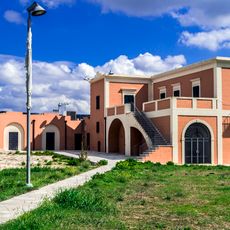
Park of the Rupestrian Churches of Matera, Archaeological park with rock churches in Matera, Italy
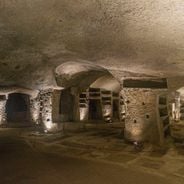
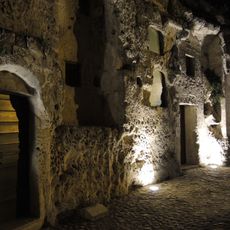
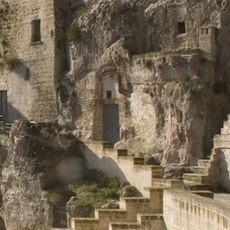
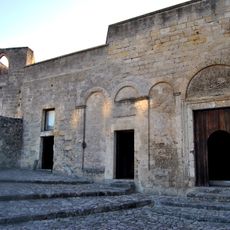
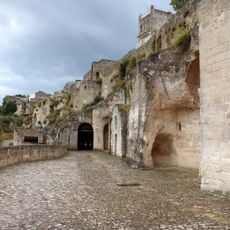
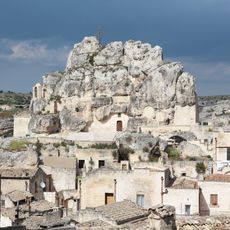
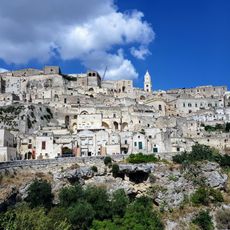
The Park of the Rupestrian Churches of Matera protects a limestone plateau and the Gravina di Matera ravine, where about 150 rock churches are cut into the cliff. The churches have one, two or three naves, sometimes ending in apses, and a few carry domes hollowed out in a lens shape. A path crosses the ravine from the Sassi to the Murgia Timone plateau over a Tibetan bridge.
The park was established by regional law no. 11 of 3 April 1990 to protect the prehistoric and historic remains of the Murgia Materana and its rock churches; its managing authority followed on 7 January 1998, based in Matera. From the early Middle Ages, Benedictine and Byzantine monastic communities occupied the area, leaving about 150 rock churches, many with frescoes and carvings. In 2007 the UNESCO listing of the Sassi was extended to include the park of the rock churches.
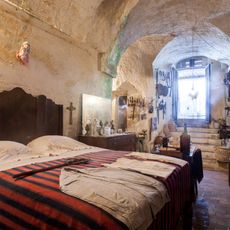
Benedictine and Byzantine monastic communities are recorded across the Murgia and the gravine from the early Middle Ages. Their churches are single-aisle or have two or three naves, sometimes ending in apses preceded by transepts, and some carry domes cut with a lens-shaped excavation. Many interiors keep frescoes and engravings; the best-known are in the Cripta del Peccato originale.
The park is accessible from multiple entry points, and well-marked trails allow visitors to explore the different rock churches at their own pace. Comfortable shoes and plenty of water are recommended, as the terrain is uneven and the sun exposure can be intense on the plateau.
The park's symbol is the lesser kestrel, called u strjscìgnl in the Matera dialect; the small raptor nests in colonies on the roofs of the Sassi. The park also holds the only stand of Valonia oak in Basilicata, the westernmost point of its range.
The community of curious travelers
AroundUs brings together thousands of curated places, local tips, and hidden gems, enriched daily by 92,785 contributors worldwide.