See the monuments around you in AROpen chests in the app
Around Us is built for your phone — point your camera at the streets and discover the monuments and places around you in augmented reality.Around Us is built for your phone — chests unlock when you walk, explore and capture nearby places.
Cultural treasures of Southern Italy near Alberobello
Southern Italy contains a wide range of historical sites, religious structures and natural areas that take visitors through more than two millennia of cultural history. The region holds Greek temples such as the Temple of Hera at Metaponto, medieval fortresses including Castello Aragonese in Taranto and Rocca Calascio in Abruzzo, and religious complexes like the Santuario di Monte Sant'Angelo, an important pilgrimage site since the early Middle Ages. Underground catacombs in Naples and Palermo, rock churches in Matera and the Cripta del Peccato Originale show the development of Christian art and architecture.
The natural environment ranges from marine protected areas like Riserva Marina di Punta Campanella on the Campanian coast to the Tremiti Islands in the Adriatic. Inland landscapes include Parco Nazionale d'Aspromonte in Calabria, the erosive Calanchi di Aliano in Basilicata and Cavagrande del Cassibile in Sicily. Coastal formations such as the Arco Naturale near Palinuro and sea caves like Grotta della Poesia at Roca Vecchia add to the geographic variety. Cities including Matera with its sassi districts, Lecce with baroque palaces and the Quartieri Spagnoli in Naples illustrate different urban developments. This collection centers on the area around Alberobello, whose trulli structures have been a UNESCO World Heritage Site since 1996.
Cultural treasures of Southern Italy near Alberobello
Southern Italy contains a wide range of historical sites, religious structures and natural areas that take visitors through more than two millennia of cultural history. The region holds Greek temples such as the Temple of Hera at Metaponto, medieval fortresses including Castello Aragonese in Taranto and Rocca Calascio in Abruzzo, and religious complexes like the Santuario di Monte Sant'Angelo, an important pilgrimage site since the early Middle Ages. Underground catacombs in Naples and Palermo, rock churches in Matera and the Cripta del Peccato Originale show the development of Christian art and architecture.
The natural environment ranges from marine protected areas like Riserva Marina di Punta Campanella on the Campanian coast to the Tremiti Islands in the Adriatic. Inland landscapes include Parco Nazionale d'Aspromonte in Calabria, the erosive Calanchi di Aliano in Basilicata and Cavagrande del Cassibile in Sicily. Coastal formations such as the Arco Naturale near Palinuro and sea caves like Grotta della Poesia at Roca Vecchia add to the geographic variety. Cities including Matera with its sassi districts, Lecce with baroque palaces and the Quartieri Spagnoli in Naples illustrate different urban developments. This collection centers on the area around Alberobello, whose trulli structures have been a UNESCO World Heritage Site since 1996.
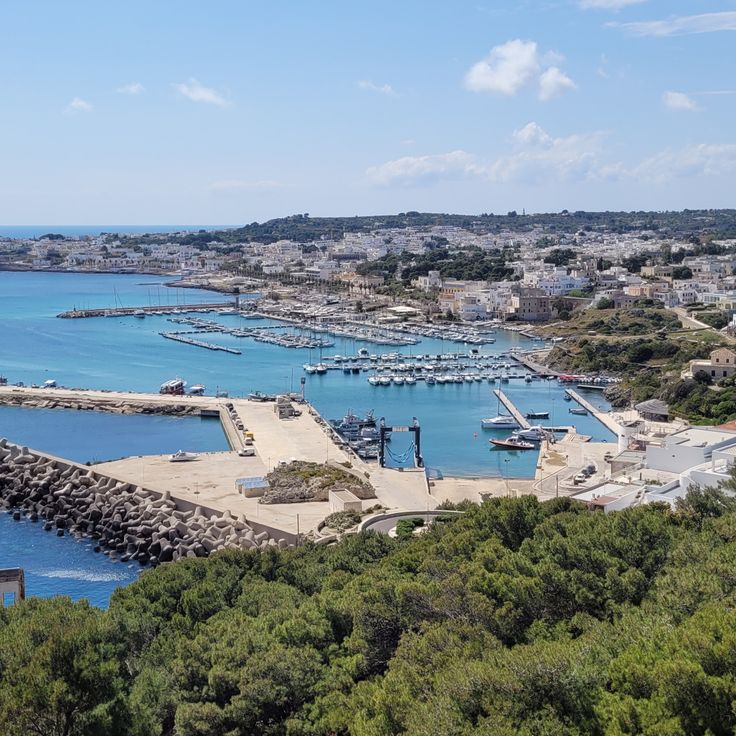
This 18th-century white marble basilica stands on the foundations of a Roman temple at the southernmost point of the Italian peninsula. The complex occupies Capo Santa Maria di Leuca, where tradition holds the Adriatic Sea meets the Ionian Sea. The church documents centuries of religious continuity at this site, which served as a sacred place in antiquity before becoming an important pilgrimage destination. Visitors can examine architectural details that reflect both the original Roman structure and later Christian additions.
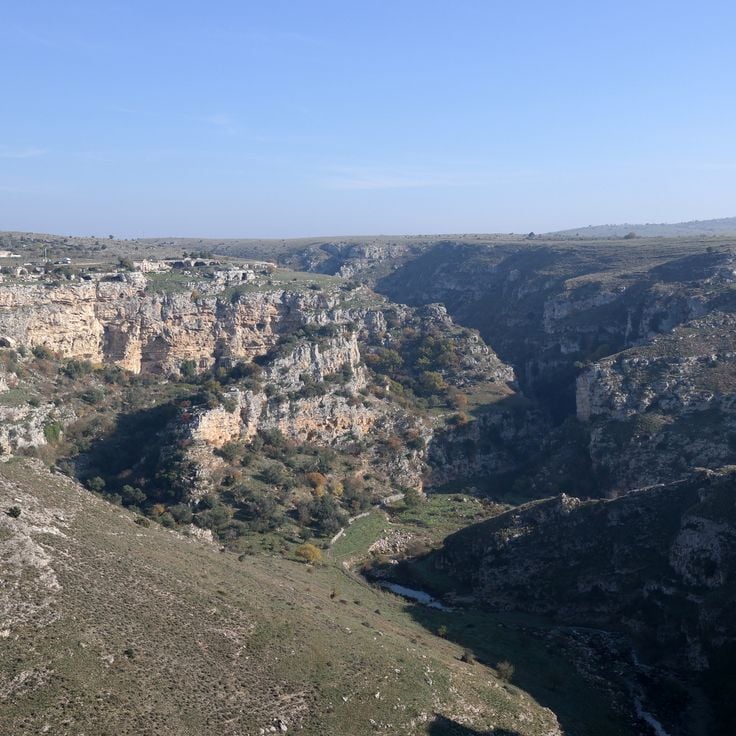
This archaeological park along the Gravina di Matera gorge contains over 150 rock-hewn churches carved into the limestone between the eighth and thirteenth centuries. The sites preserve Byzantine wall paintings, frescoes depicting biblical scenes and representations of saints. Several churches including Santa Maria de Idris and San Pietro Caveoso remain open to visitors and document the monastic tradition of the region. The park extends across the Murgia plateau and forms an open-air museum of Christian rock architecture in southern Italy.
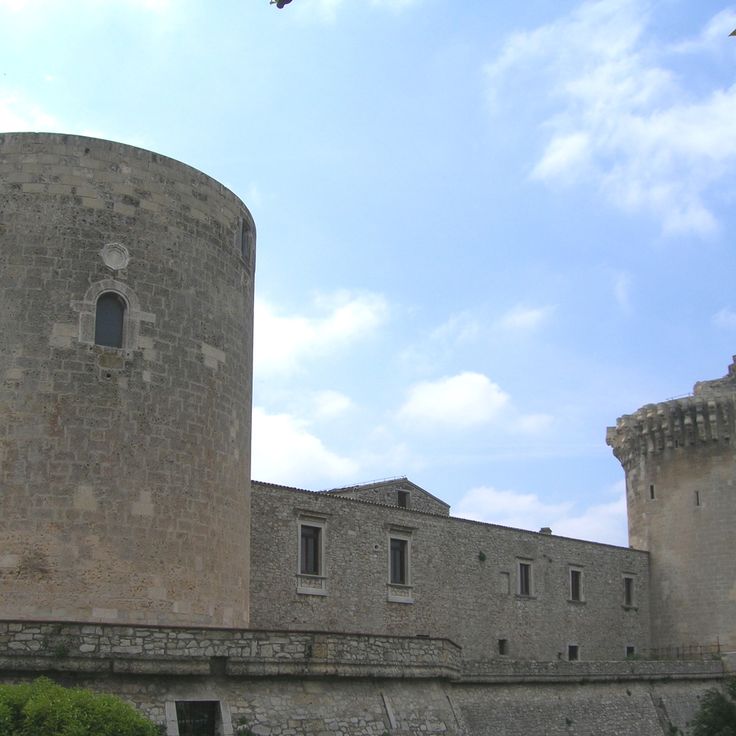
The fortress of Venosa was built in the 15th century on Roman ruins and combines Norman and Aragonese architectural elements. This castle sits in Basilicata and shows the military architecture from the period when the region was contested between different ruling houses. The walls and towers stand on foundations from antiquity, demonstrating the long settlement history of the site. Visitors can trace the connection between the Roman past and medieval fortress architecture in the structures.
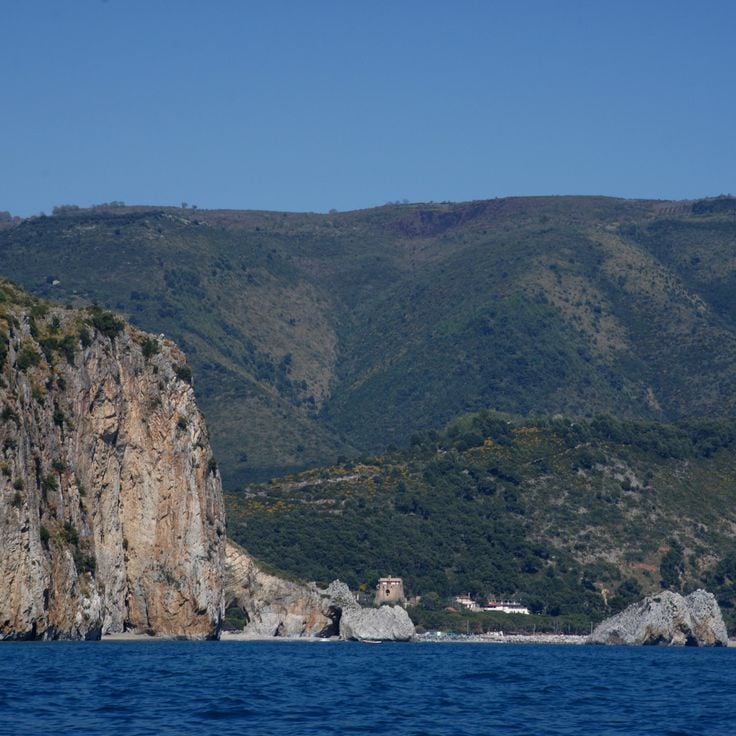
This limestone arch in the Tyrrhenian Sea stands 20 meters (66 feet) above the water and formed through erosion over thousands of years. The Arco Naturale Palinuro sits along the Campanian coast and can be reached by sea or via hiking trails. The formation consists of layered limestone that has been carved by wave action and weathering. Boat tours from Palinuro pass beneath the arch and provide access to nearby sea caves. The area is part of Cilento National Park.
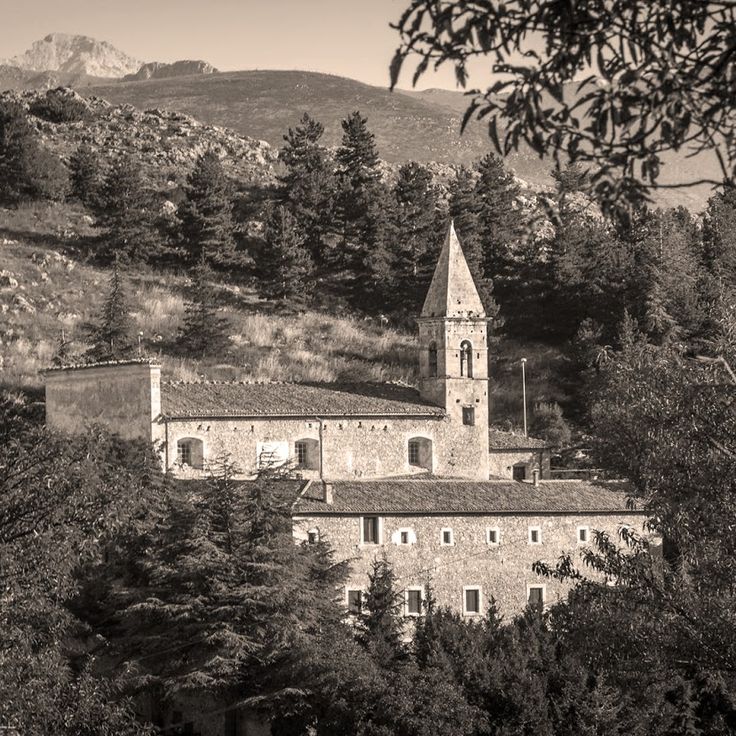
This fortress sits on a mountaintop in the Abruzzo mountains at an elevation of 4790 feet (1460 meters). The watchtower at Rocca Calascio was built during the Norman period and served to control trade routes between the Adriatic coast and the interior. The stone structure was part of a defensive system connecting several fortifications across the region. The building suffered partial destruction from an earthquake in the 15th century and was subsequently expanded with additional walls. From the fortress, views extend across the Gran Sasso massif.
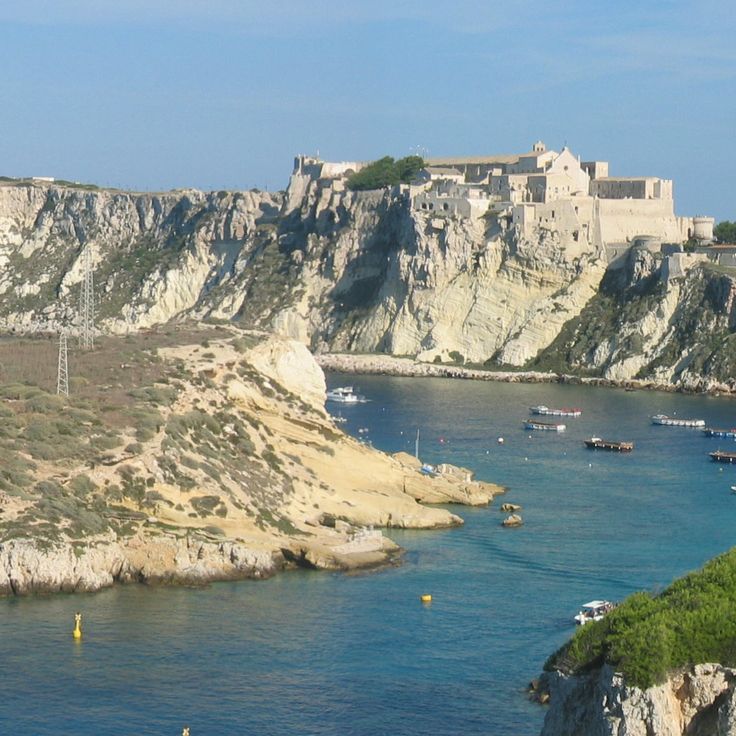
This archipelago consists of five islands in the Adriatic Sea, 14 miles (22 kilometers) off the Apulian coast. The Tremiti Islands form a marine protected area with several historic monasteries and fortifications built primarily on the main island of San Nicola. The Abbey of Santa Maria a Mare dates from the 11th century and displays Romanesque architecture with later defensive reinforcements. San Domino is the largest and most wooded island, while Capraia remains largely uninhabited. The protected area allows access by ferry from several coastal towns in the region.
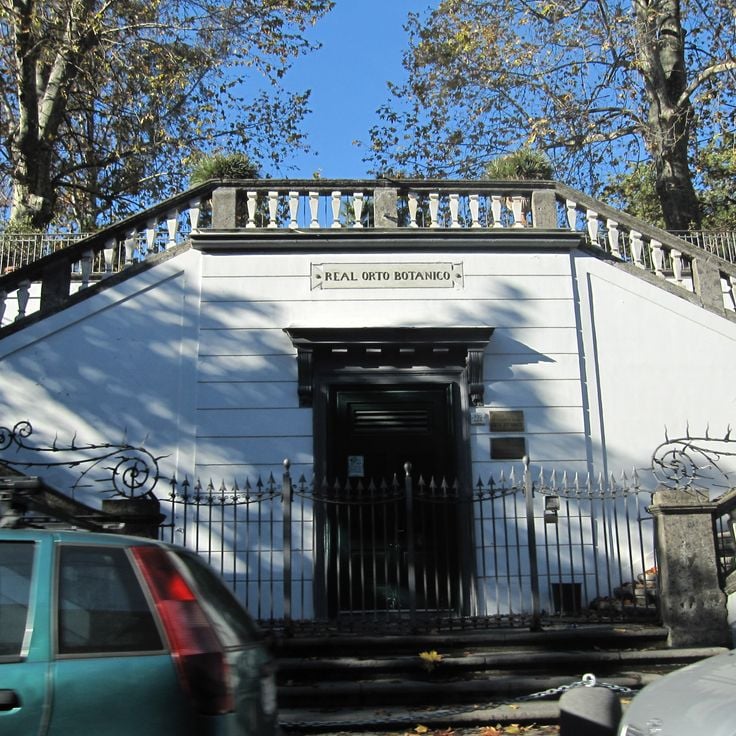
This botanical garden in Naples was founded in 1807 and serves the University of Naples as a research and teaching facility. The grounds contain approximately 25,000 specimens representing around 10,000 plant species across 30 acres (12 hectares). Visitors find 19th-century glasshouses, collections of Mediterranean and tropical plants, and rare botanical specimens. The garden sits in the city center and provides a quiet space for scientific study and public education. The collections support ongoing botanical research and preserve plant diversity from various climate zones.
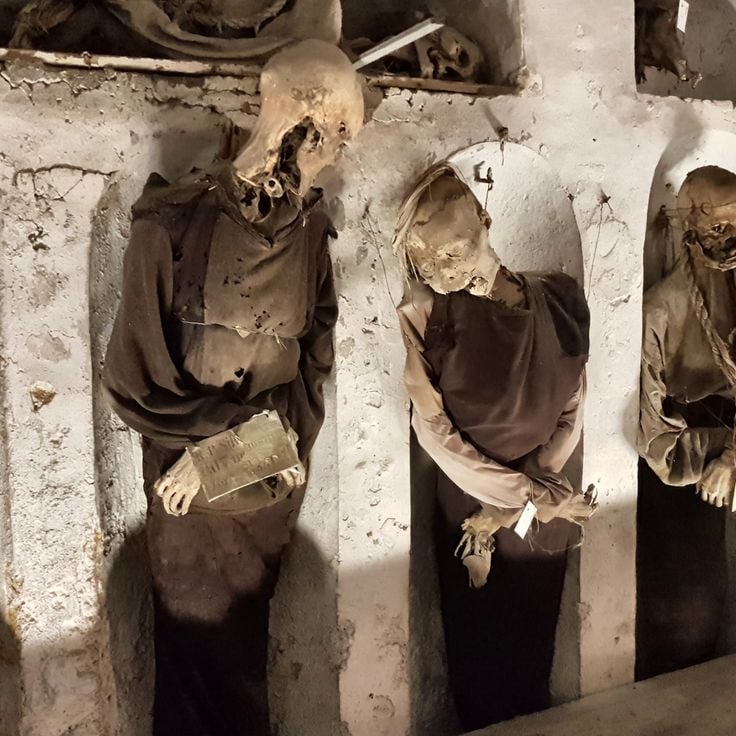
This burial site in Palermo preserves roughly eight thousand conserved bodies, prepared between 1599 and 1920 by Capuchin monks using natural desiccation and embalming methods. The Cimitero dei Cappuccini documents past funerary practices and social structures in Sicily across several centuries. The deceased are arranged in different sections according to status and gender. A visit provides insight into historical preservation techniques and offers an uncommon engagement with mortality and regional history near the cultural treasures of southern Italy.
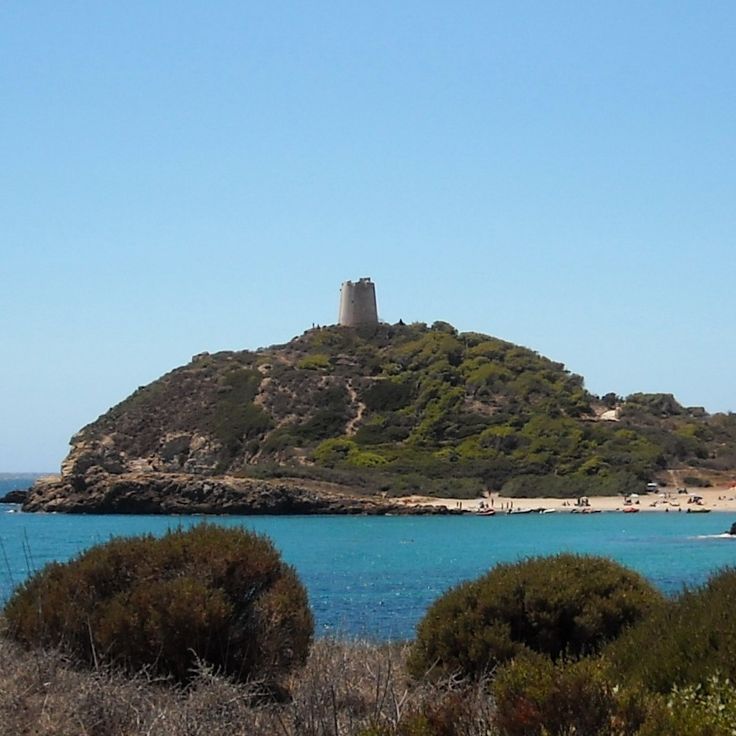
This 16th-century tower stands on a rocky promontory above the sea and once defended the coast from pirate raids. The structure belongs to a system of watchtowers built along the Sardinian coastline. From Torre di Chia, guards maintained a wide view of the sea and could relay signals to neighboring towers when danger approached. The structure was built with local stone and demonstrates the military architecture of the period. Today the tower stands as evidence of the historical defense systems of southern Italy.
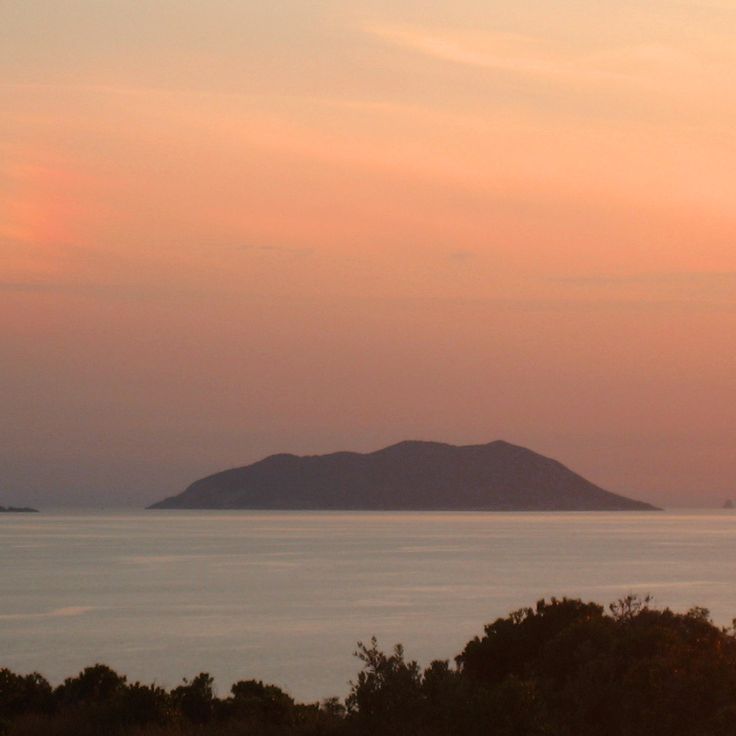
This island lies 500 yards (450 meters) off the coast of Gallipoli in the Ionian Sea. The lighthouse on Sant'Andrea was built in 1866 and has served navigation along this stretch of coastline ever since. The island forms part of the historical maritime landmarks in the Puglia region and belongs to the maritime heritage of southern Italy near Alberobello. From the shore, the lighthouse remains clearly visible and marks the entrance to the port of Gallipoli.
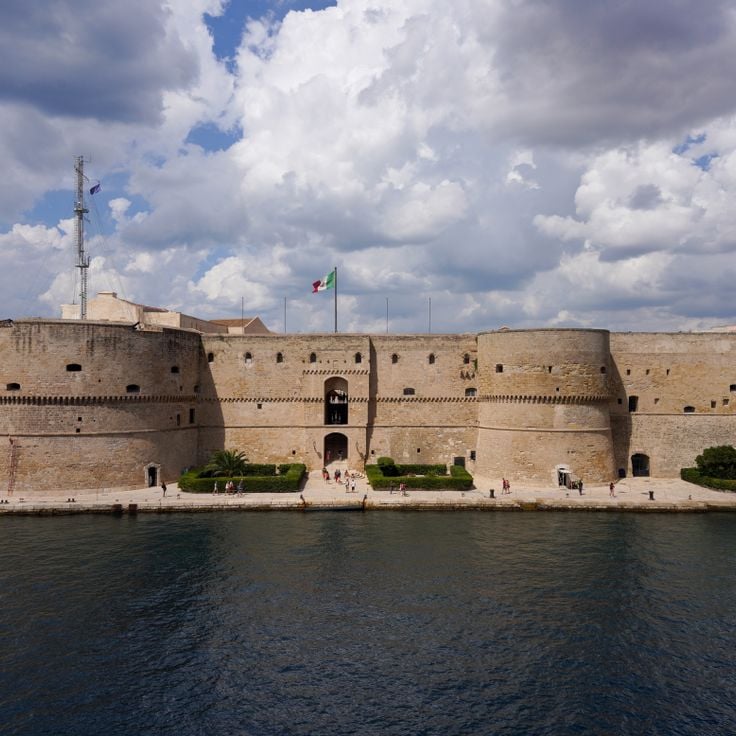
The Castello Aragonese di Taranto was built in 1486 under Ferdinand of Aragon and connects the old town to the mainland via a stone arch. The fortress served as a military stronghold for centuries and now houses a museum documenting the history of the city and region. Visitors can explore the ramparts, towers and casemates, and from the upper levels view the city and sea below. The structure displays typical features of late fifteenth century Aragonese military architecture.
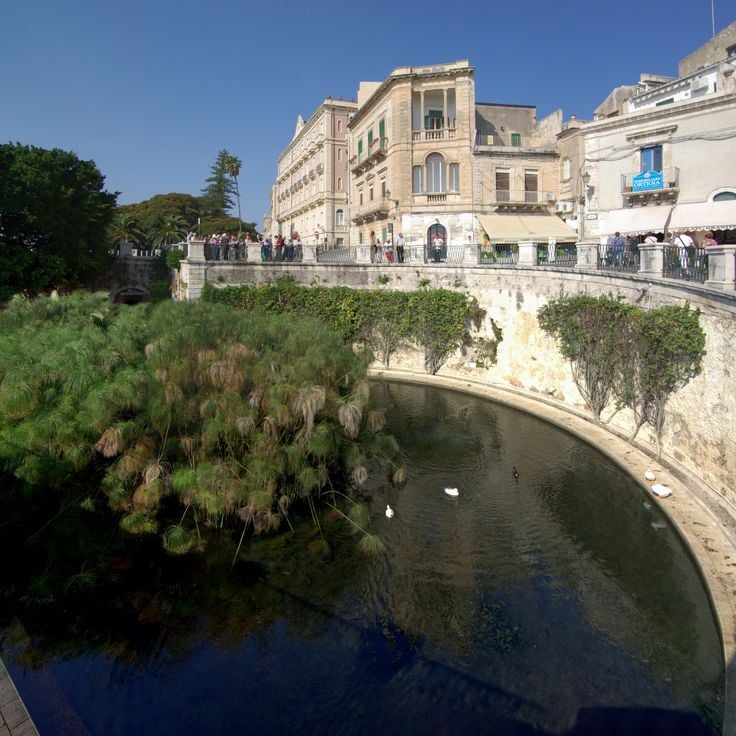
The Fonte Aretusa is a natural freshwater spring in Syracuse that emerges just meters from the sea. Papyrus plants grow in its basin, thriving here since ancient times and representing one of the few wild stands of this species in Europe. The spring sits on Ortygia island and forms part of the historic center of the city. Greek mythology links it to the nymph Arethusa, who supposedly found refuge here from the river god Alpheus. The clear water forms a small pond enclosed by stone walls, remaining accessible to the public today.
Maratea sits on the Tyrrhenian coast and contains 32 religious structures documenting several centuries of architectural development. The 69-foot Christ statue stands on the cliffs above the town and has marked the skyline since 1965. The old quarter preserves medieval street patterns, while the coastal position provides access to several coves. The various churches display Romanesque, Gothic and Baroque elements, reflecting the religious history of the region.
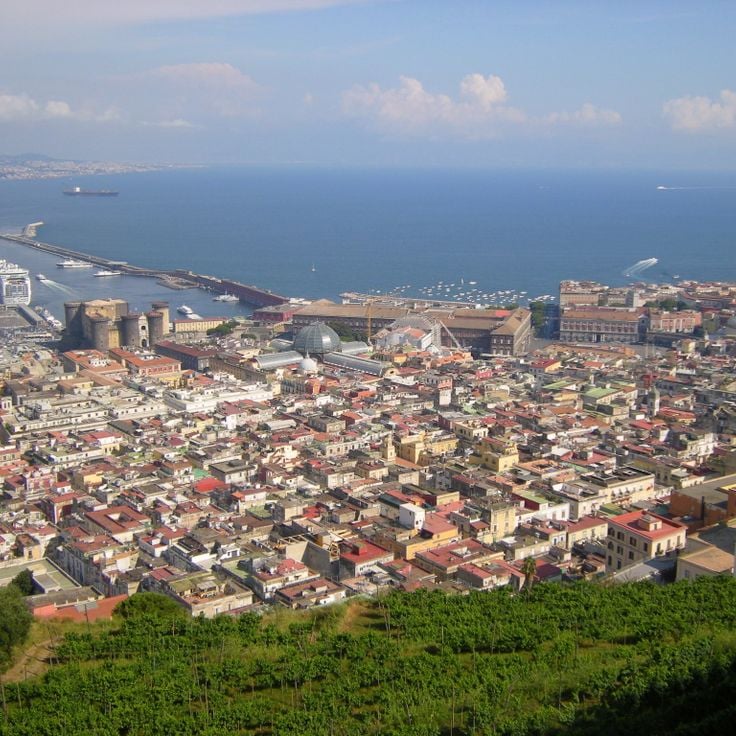
This sixteenth-century neighborhood occupies the central district of Naples, preserving its original urban layout of narrow streets and multistory residential buildings. The Quartieri Spagnoli were established under Spanish rule to house military troops and evolved into a densely populated residential area. Today the steep streets wind between traditional apartment buildings where laundry hangs between facades and local restaurants serve Neapolitan cuisine. The neighborhood shows daily life in a southern Italian city and complements the cultural and historical sites near Alberobello with an authentic urban experience.
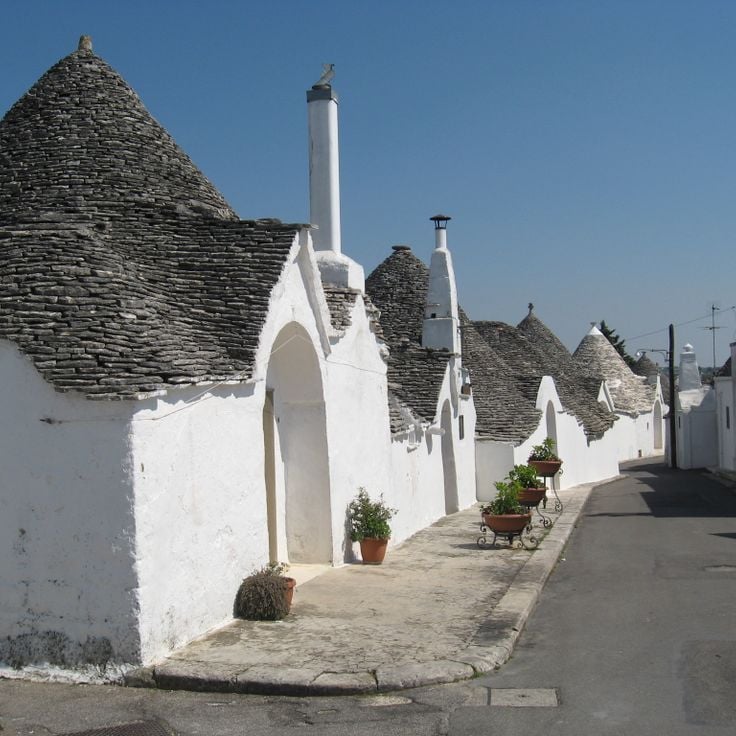
These round stone houses with conical roofs date from the 14th century and represent a characteristic form of traditional Apulian architecture. The Trulli di Alberobello were built without mortar, a technique developed over centuries in this region. The structures originally served as agricultural dwellings and storage facilities. Today they form the center of the historic town and document the architectural adaptation to the local climate and available materials of the southern Italian landscape.
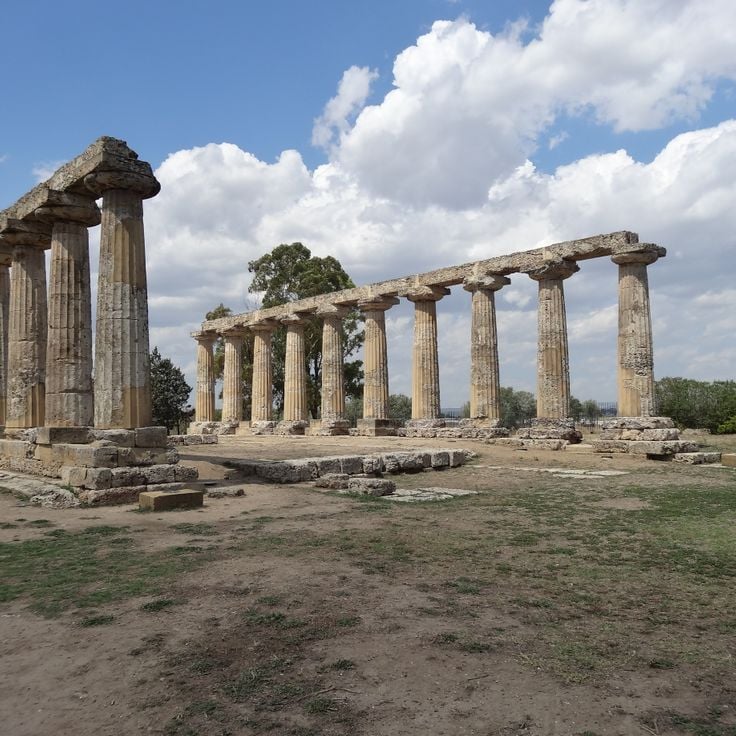
This temple in Metaponto was built in the 6th century BC and displays Doric architecture from the Greek colonial period in southern Italy. Of the original columns, 15 still stand and demonstrate the ancient construction techniques of Magna Graecia. The temple belonged to the Greek settlement of Metapontum and was dedicated to the goddess Hera. The surviving columns provide insight into the religious and architectural traditions of the Greek settlers who shaped this coastal region between the 8th and 3rd centuries BC.
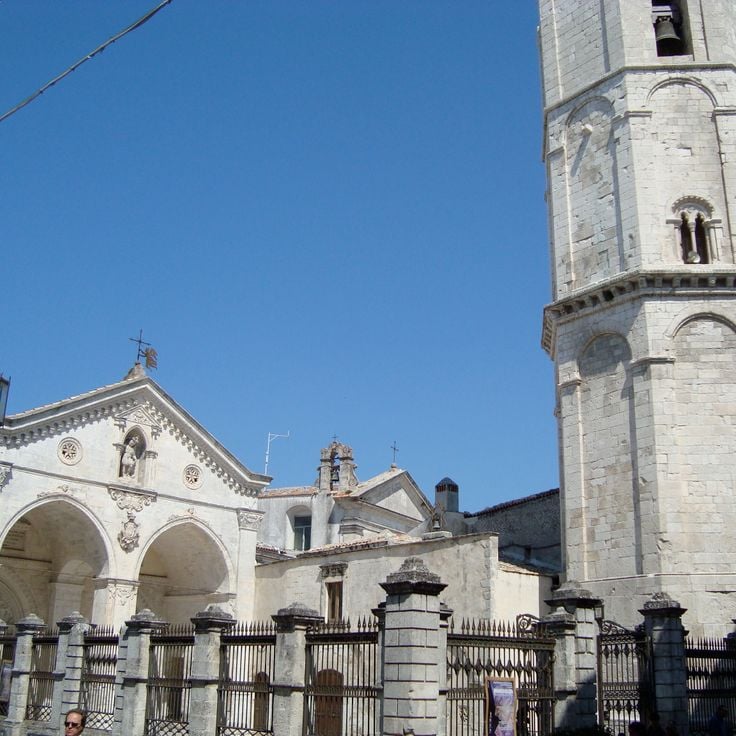
This medieval Benedictine abbey stands on a 2,600-foot (800-meter) mountain overlooking the Gulf of Manfredonia. The Abbey of Saint Michael developed into a major pilgrimage site in southern Italy and displays Romanesque architecture with later Gothic additions. The complex includes a grotto carved into the rock where the Archangel Michael is said to have appeared in the 5th century. Visitors reach the sanctuary through a wide stone staircase leading to the underground church space. The 11th-century bronze doors show biblical scenes in detailed relief work.
This medieval town sits on a rocky spur and contains the Sanctuary of San Michele Arcangelo, a 5th-century cave church that became an important pilgrimage site on the route to Jerusalem. Monte Sant'Angelo joined the UNESCO World Heritage List in 2011 and preserves an old quarter with narrow lanes, whitewashed houses and Norman-era structures. The cave church lies 46 feet (14 meters) below ground level and holds 11th-century Byzantine bronze doors. Views from the town walls extend across the Gargano Peninsula to the Adriatic Sea.
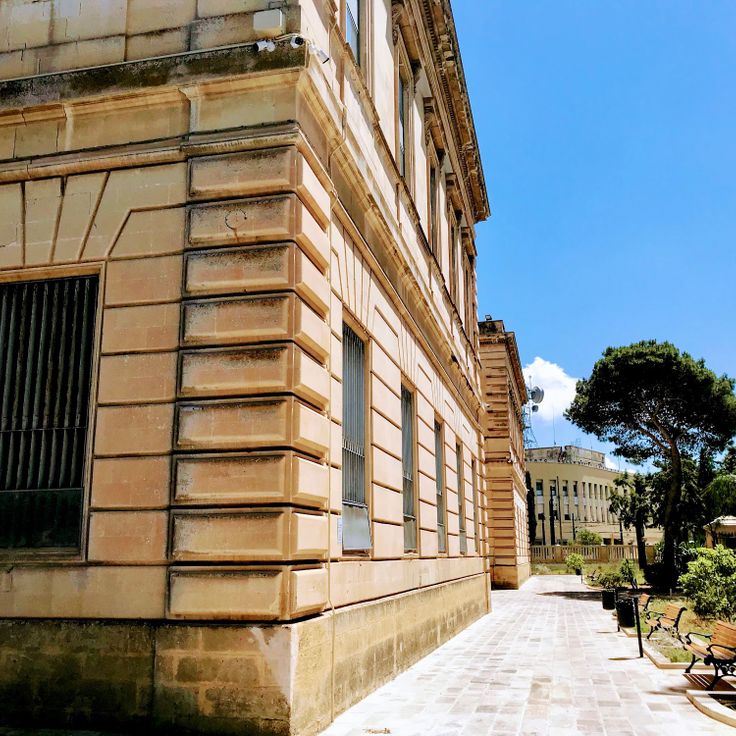
The Museo Castromediano displays archaeological finds from the Salento region spanning the Paleolithic through Roman periods. The collection includes prehistoric stone tools, Messapian pottery, Greek vases and Roman sculptures. Founded in 1868, the museum takes its name from Duke Sigismondo Castromediano, who established the institution. The exhibits document the settlement history of the region and the cultural connections between ancient Mediterranean civilizations. The museum occupies a modern building on the outskirts of Lecce.
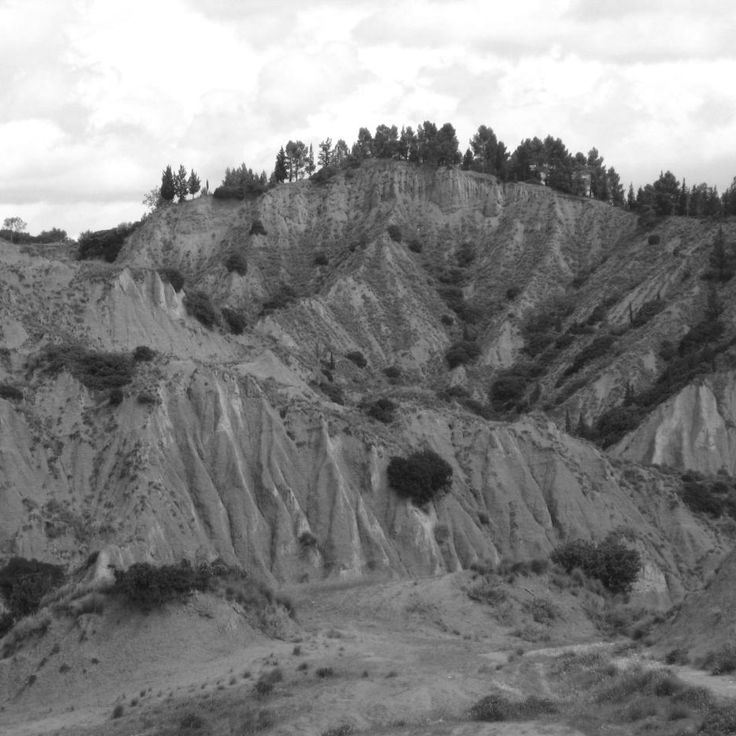
The Calanchi di Aliano are erosion formations in Basilicata created by centuries of water and wind acting on clay soils. Carlo Levi spent time in this remote area during his political exile in the 1930s and wrote his notable work "Christ Stopped at Eboli" here, which documented life in southern Italy during that period. The formations feature deep gullies and ridges carved into the landscape.
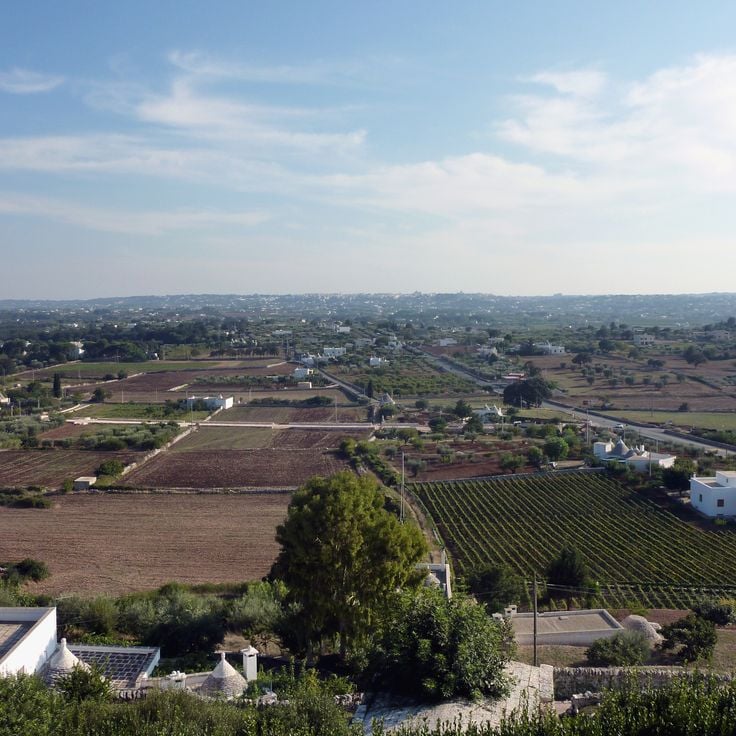
This depression between Bari and Brindisi contains dry stone dwellings with conical roofs made from stacked limestone slabs, known as trulli. The valley spans roughly 230 square miles (600 square kilometers) of rolling terrain with olive groves, vineyards and Mediterranean vegetation between the municipalities of Locorotondo, Cisternino and Martina Franca. Agricultural traditions shape the cultural landscape, where families have constructed stone structures without mortar for centuries and cultivated crops on red soil between dry stone walls.
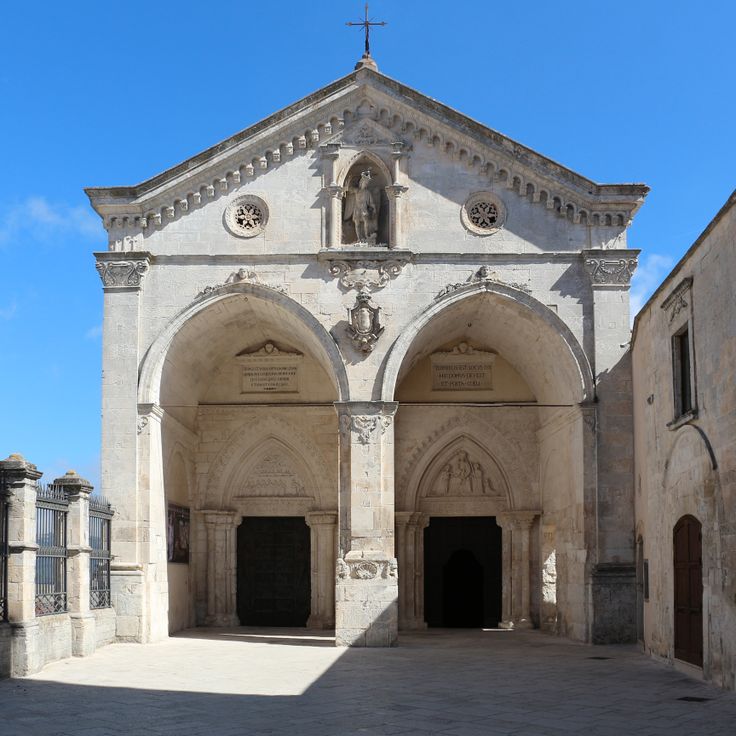
This sanctuary in Monte Sant'Angelo stands on a mountain in the Gargano range and was founded as a pilgrimage church in the 5th century. The complex includes a grotto carved into the rock where liturgical objects and religious artifacts from different periods are kept. The site has drawn pilgrims for centuries and is part of the UNESCO World Heritage listing of Lombard power centers in Italy.
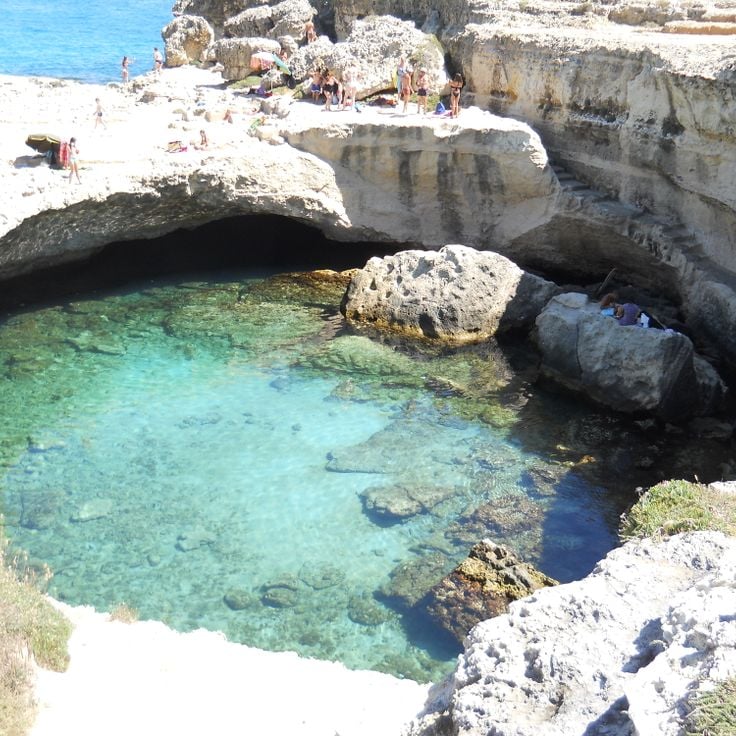
This natural swimming pool on the coast of Roca Vecchia formed through the erosion of limestone over thousands of years. Grotta della Poesia connects to the sea through underground passages and has served as a cult site since the Bronze Age. Archaeologists discovered Messapian and Greek inscriptions on the walls, evidence of religious ceremonies. The clear water and cliffs roughly 16 feet (5 meters) high attract swimmers and climbers.
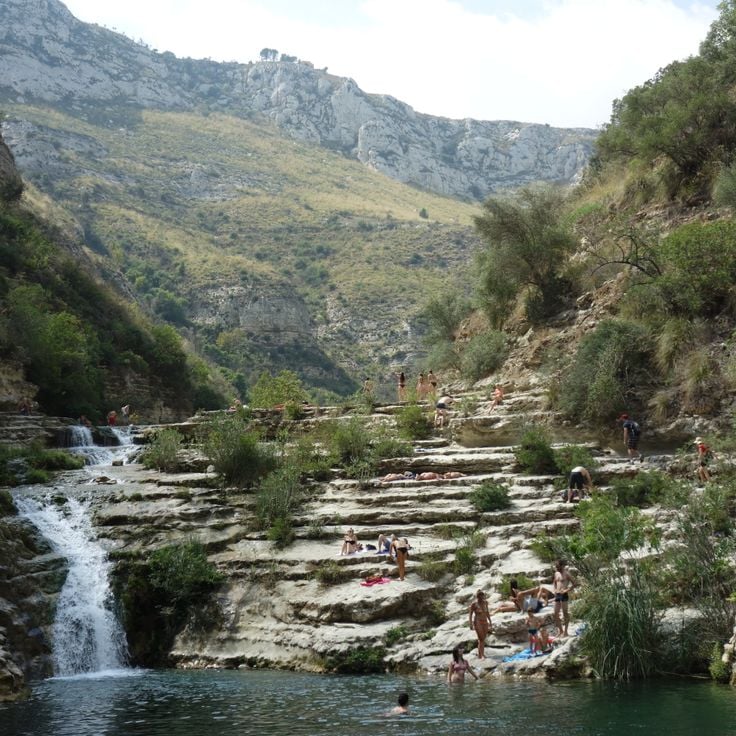
The Riserva Naturale Orientata Cavagrande del Cassibile is a protected area in the Hyblaean Mountains featuring a 6-mile canyon carved by the Cassibile River. The gorge reaches depths of approximately 1,000 feet (300 meters), and natural pools have formed along its floor where visitors can swim. Prehistoric necropolises are cut into the limestone walls, containing chamber tombs from the Bronze Age. Hiking trails descend from the plateau to the riverbed, where Mediterranean vegetation including oleander, plane trees and willows thrives. This natural site in southern Sicily reveals the geological and archaeological layers of the region.
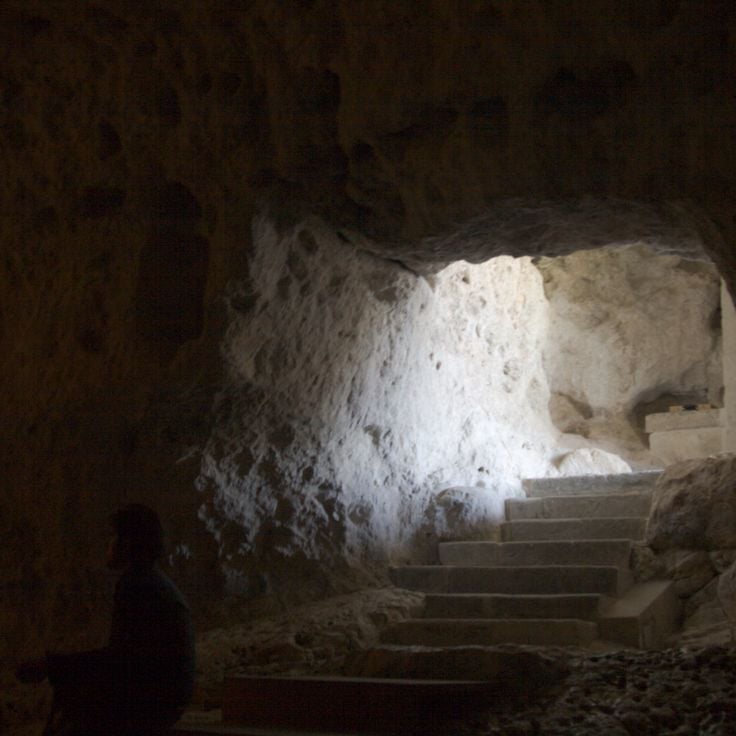
This 9th-century rock church in Matera contains Byzantine frescoes depicting religious themes and the apostles. The Crypt of Original Sin sits about 7.5 miles (12 kilometers) outside the historic center of Matera in a natural cavity. The frescoes show scenes from the Old and New Testaments as well as the figures of Peter and Paul. The church was rediscovered in the 1960s and opened to the public after restoration work.
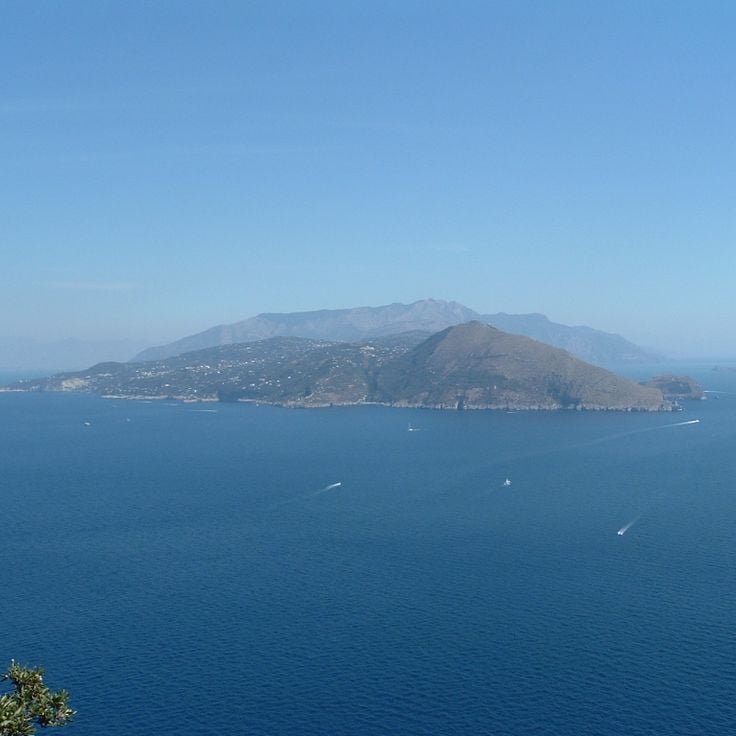
This marine reserve spans 1,500 acres of sea along the southern coast of the Sorrento Peninsula, protecting Posidonia seagrass meadows, coral formations and Mediterranean fish species. The reserve lies between the Gulf of Naples and the Gulf of Salerno, with seabeds ranging from shallow areas to depths of 165 feet (50 meters). The zone includes three distinct protection areas with regulated diving opportunities and boat tours for observing underwater fauna that comprises more than 200 fish species.
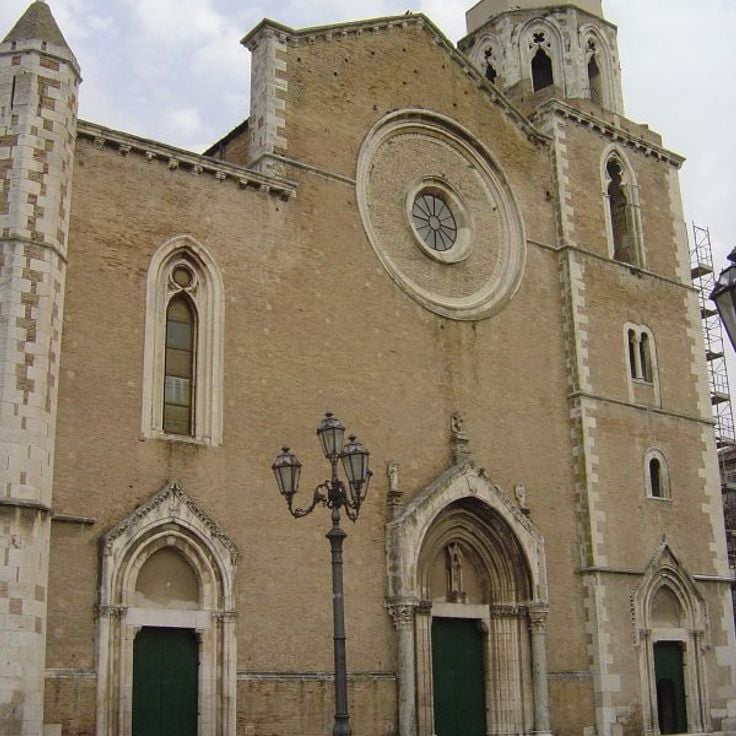
The Cathedral of Troia stands in the province of Foggia and represents Romanesque architecture in southern Italy. Consecrated in 1093, this church features bronze doors with 28 relief panels and a rose window decorated with geometric patterns. The facade shows Byzantine and Islamic influences characteristic of medieval construction in this region. Inside, a 12th-century mosaic floor and a 13th-century pulpit remain intact. The cathedral ranks among the notable Romanesque religious structures in Puglia and is located roughly 50 miles (80 kilometers) northwest of Alberobello.
This 65,000-acre national park in Calabria protects mountain forests, Mediterranean vegetation and endemic species. The Aspromonte massif ranges from forested high elevations to lower zones with scrubland and olive groves, where wolves, wildcats and various raptors inhabit the terrain. Trails lead through old beech forests and to villages of the Greek-speaking minority, while waterfalls and gorges mark the rugged topography.
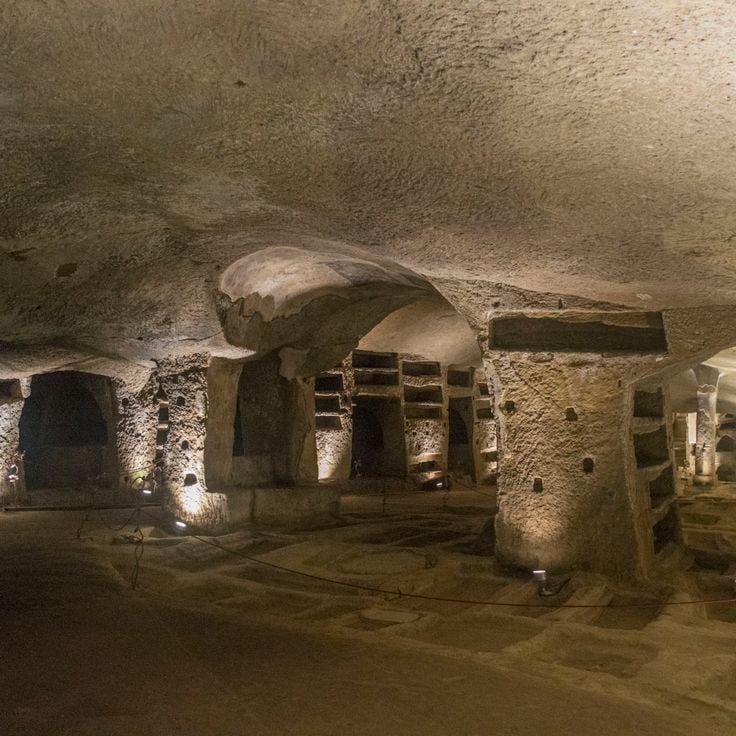
These second-century catacombs extend across two levels beneath the streets of Naples and rank among the important early Christian sites in southern Italy. The underground passages contain early Christian frescoes, mosaics and more than 2,000 burial sites. The complex documents the development of the Christian community in the region between the second and ninth centuries. Visitors can tour the various burial chambers, basilicas and decorated vaults that provide insights into the religious practices and burial customs of the period.
This 18th-century white marble basilica stands on the foundations of a Roman temple at the southernmost point of the Italian peninsula. The complex occupies Capo Santa Maria di Leuca, where tradition holds the Adriatic Sea meets the Ionian Sea. The church documents centuries of religious continuity at this site, which served as a sacred place in antiquity before becoming an important pilgrimage destination. Visitors can examine architectural details that reflect both the original Roman structure and later Christian additions.
This archaeological park along the Gravina di Matera gorge contains over 150 rock-hewn churches carved into the limestone between the eighth and thirteenth centuries. The sites preserve Byzantine wall paintings, frescoes depicting biblical scenes and representations of saints. Several churches including Santa Maria de Idris and San Pietro Caveoso remain open to visitors and document the monastic tradition of the region. The park extends across the Murgia plateau and forms an open-air museum of Christian rock architecture in southern Italy.
The fortress of Venosa was built in the 15th century on Roman ruins and combines Norman and Aragonese architectural elements. This castle sits in Basilicata and shows the military architecture from the period when the region was contested between different ruling houses. The walls and towers stand on foundations from antiquity, demonstrating the long settlement history of the site. Visitors can trace the connection between the Roman past and medieval fortress architecture in the structures.
This limestone arch in the Tyrrhenian Sea stands 20 meters (66 feet) above the water and formed through erosion over thousands of years. The Arco Naturale Palinuro sits along the Campanian coast and can be reached by sea or via hiking trails. The formation consists of layered limestone that has been carved by wave action and weathering. Boat tours from Palinuro pass beneath the arch and provide access to nearby sea caves. The area is part of Cilento National Park.
This fortress sits on a mountaintop in the Abruzzo mountains at an elevation of 4790 feet (1460 meters). The watchtower at Rocca Calascio was built during the Norman period and served to control trade routes between the Adriatic coast and the interior. The stone structure was part of a defensive system connecting several fortifications across the region. The building suffered partial destruction from an earthquake in the 15th century and was subsequently expanded with additional walls. From the fortress, views extend across the Gran Sasso massif.
This archipelago consists of five islands in the Adriatic Sea, 14 miles (22 kilometers) off the Apulian coast. The Tremiti Islands form a marine protected area with several historic monasteries and fortifications built primarily on the main island of San Nicola. The Abbey of Santa Maria a Mare dates from the 11th century and displays Romanesque architecture with later defensive reinforcements. San Domino is the largest and most wooded island, while Capraia remains largely uninhabited. The protected area allows access by ferry from several coastal towns in the region.
This botanical garden in Naples was founded in 1807 and serves the University of Naples as a research and teaching facility. The grounds contain approximately 25,000 specimens representing around 10,000 plant species across 30 acres (12 hectares). Visitors find 19th-century glasshouses, collections of Mediterranean and tropical plants, and rare botanical specimens. The garden sits in the city center and provides a quiet space for scientific study and public education. The collections support ongoing botanical research and preserve plant diversity from various climate zones.
This burial site in Palermo preserves roughly eight thousand conserved bodies, prepared between 1599 and 1920 by Capuchin monks using natural desiccation and embalming methods. The Cimitero dei Cappuccini documents past funerary practices and social structures in Sicily across several centuries. The deceased are arranged in different sections according to status and gender. A visit provides insight into historical preservation techniques and offers an uncommon engagement with mortality and regional history near the cultural treasures of southern Italy.
This 16th-century tower stands on a rocky promontory above the sea and once defended the coast from pirate raids. The structure belongs to a system of watchtowers built along the Sardinian coastline. From Torre di Chia, guards maintained a wide view of the sea and could relay signals to neighboring towers when danger approached. The structure was built with local stone and demonstrates the military architecture of the period. Today the tower stands as evidence of the historical defense systems of southern Italy.
This island lies 500 yards (450 meters) off the coast of Gallipoli in the Ionian Sea. The lighthouse on Sant'Andrea was built in 1866 and has served navigation along this stretch of coastline ever since. The island forms part of the historical maritime landmarks in the Puglia region and belongs to the maritime heritage of southern Italy near Alberobello. From the shore, the lighthouse remains clearly visible and marks the entrance to the port of Gallipoli.
The Castello Aragonese di Taranto was built in 1486 under Ferdinand of Aragon and connects the old town to the mainland via a stone arch. The fortress served as a military stronghold for centuries and now houses a museum documenting the history of the city and region. Visitors can explore the ramparts, towers and casemates, and from the upper levels view the city and sea below. The structure displays typical features of late fifteenth century Aragonese military architecture.
The Fonte Aretusa is a natural freshwater spring in Syracuse that emerges just meters from the sea. Papyrus plants grow in its basin, thriving here since ancient times and representing one of the few wild stands of this species in Europe. The spring sits on Ortygia island and forms part of the historic center of the city. Greek mythology links it to the nymph Arethusa, who supposedly found refuge here from the river god Alpheus. The clear water forms a small pond enclosed by stone walls, remaining accessible to the public today.
Maratea sits on the Tyrrhenian coast and contains 32 religious structures documenting several centuries of architectural development. The 69-foot Christ statue stands on the cliffs above the town and has marked the skyline since 1965. The old quarter preserves medieval street patterns, while the coastal position provides access to several coves. The various churches display Romanesque, Gothic and Baroque elements, reflecting the religious history of the region.
This sixteenth-century neighborhood occupies the central district of Naples, preserving its original urban layout of narrow streets and multistory residential buildings. The Quartieri Spagnoli were established under Spanish rule to house military troops and evolved into a densely populated residential area. Today the steep streets wind between traditional apartment buildings where laundry hangs between facades and local restaurants serve Neapolitan cuisine. The neighborhood shows daily life in a southern Italian city and complements the cultural and historical sites near Alberobello with an authentic urban experience.
These round stone houses with conical roofs date from the 14th century and represent a characteristic form of traditional Apulian architecture. The Trulli di Alberobello were built without mortar, a technique developed over centuries in this region. The structures originally served as agricultural dwellings and storage facilities. Today they form the center of the historic town and document the architectural adaptation to the local climate and available materials of the southern Italian landscape.
This temple in Metaponto was built in the 6th century BC and displays Doric architecture from the Greek colonial period in southern Italy. Of the original columns, 15 still stand and demonstrate the ancient construction techniques of Magna Graecia. The temple belonged to the Greek settlement of Metapontum and was dedicated to the goddess Hera. The surviving columns provide insight into the religious and architectural traditions of the Greek settlers who shaped this coastal region between the 8th and 3rd centuries BC.
This medieval Benedictine abbey stands on a 2,600-foot (800-meter) mountain overlooking the Gulf of Manfredonia. The Abbey of Saint Michael developed into a major pilgrimage site in southern Italy and displays Romanesque architecture with later Gothic additions. The complex includes a grotto carved into the rock where the Archangel Michael is said to have appeared in the 5th century. Visitors reach the sanctuary through a wide stone staircase leading to the underground church space. The 11th-century bronze doors show biblical scenes in detailed relief work.
This medieval town sits on a rocky spur and contains the Sanctuary of San Michele Arcangelo, a 5th-century cave church that became an important pilgrimage site on the route to Jerusalem. Monte Sant'Angelo joined the UNESCO World Heritage List in 2011 and preserves an old quarter with narrow lanes, whitewashed houses and Norman-era structures. The cave church lies 46 feet (14 meters) below ground level and holds 11th-century Byzantine bronze doors. Views from the town walls extend across the Gargano Peninsula to the Adriatic Sea.
The Museo Castromediano displays archaeological finds from the Salento region spanning the Paleolithic through Roman periods. The collection includes prehistoric stone tools, Messapian pottery, Greek vases and Roman sculptures. Founded in 1868, the museum takes its name from Duke Sigismondo Castromediano, who established the institution. The exhibits document the settlement history of the region and the cultural connections between ancient Mediterranean civilizations. The museum occupies a modern building on the outskirts of Lecce.
The Calanchi di Aliano are erosion formations in Basilicata created by centuries of water and wind acting on clay soils. Carlo Levi spent time in this remote area during his political exile in the 1930s and wrote his notable work "Christ Stopped at Eboli" here, which documented life in southern Italy during that period. The formations feature deep gullies and ridges carved into the landscape.
This depression between Bari and Brindisi contains dry stone dwellings with conical roofs made from stacked limestone slabs, known as trulli. The valley spans roughly 230 square miles (600 square kilometers) of rolling terrain with olive groves, vineyards and Mediterranean vegetation between the municipalities of Locorotondo, Cisternino and Martina Franca. Agricultural traditions shape the cultural landscape, where families have constructed stone structures without mortar for centuries and cultivated crops on red soil between dry stone walls.
This sanctuary in Monte Sant'Angelo stands on a mountain in the Gargano range and was founded as a pilgrimage church in the 5th century. The complex includes a grotto carved into the rock where liturgical objects and religious artifacts from different periods are kept. The site has drawn pilgrims for centuries and is part of the UNESCO World Heritage listing of Lombard power centers in Italy.
This natural swimming pool on the coast of Roca Vecchia formed through the erosion of limestone over thousands of years. Grotta della Poesia connects to the sea through underground passages and has served as a cult site since the Bronze Age. Archaeologists discovered Messapian and Greek inscriptions on the walls, evidence of religious ceremonies. The clear water and cliffs roughly 16 feet (5 meters) high attract swimmers and climbers.
The Riserva Naturale Orientata Cavagrande del Cassibile is a protected area in the Hyblaean Mountains featuring a 6-mile canyon carved by the Cassibile River. The gorge reaches depths of approximately 1,000 feet (300 meters), and natural pools have formed along its floor where visitors can swim. Prehistoric necropolises are cut into the limestone walls, containing chamber tombs from the Bronze Age. Hiking trails descend from the plateau to the riverbed, where Mediterranean vegetation including oleander, plane trees and willows thrives. This natural site in southern Sicily reveals the geological and archaeological layers of the region.
This 9th-century rock church in Matera contains Byzantine frescoes depicting religious themes and the apostles. The Crypt of Original Sin sits about 7.5 miles (12 kilometers) outside the historic center of Matera in a natural cavity. The frescoes show scenes from the Old and New Testaments as well as the figures of Peter and Paul. The church was rediscovered in the 1960s and opened to the public after restoration work.
This marine reserve spans 1,500 acres of sea along the southern coast of the Sorrento Peninsula, protecting Posidonia seagrass meadows, coral formations and Mediterranean fish species. The reserve lies between the Gulf of Naples and the Gulf of Salerno, with seabeds ranging from shallow areas to depths of 165 feet (50 meters). The zone includes three distinct protection areas with regulated diving opportunities and boat tours for observing underwater fauna that comprises more than 200 fish species.
The Cathedral of Troia stands in the province of Foggia and represents Romanesque architecture in southern Italy. Consecrated in 1093, this church features bronze doors with 28 relief panels and a rose window decorated with geometric patterns. The facade shows Byzantine and Islamic influences characteristic of medieval construction in this region. Inside, a 12th-century mosaic floor and a 13th-century pulpit remain intact. The cathedral ranks among the notable Romanesque religious structures in Puglia and is located roughly 50 miles (80 kilometers) northwest of Alberobello.
This 65,000-acre national park in Calabria protects mountain forests, Mediterranean vegetation and endemic species. The Aspromonte massif ranges from forested high elevations to lower zones with scrubland and olive groves, where wolves, wildcats and various raptors inhabit the terrain. Trails lead through old beech forests and to villages of the Greek-speaking minority, while waterfalls and gorges mark the rugged topography.
These second-century catacombs extend across two levels beneath the streets of Naples and rank among the important early Christian sites in southern Italy. The underground passages contain early Christian frescoes, mosaics and more than 2,000 burial sites. The complex documents the development of the Christian community in the region between the second and ninth centuries. Visitors can tour the various burial chambers, basilicas and decorated vaults that provide insights into the religious practices and burial customs of the period.
This 18th-century white marble basilica stands on the foundations of a Roman temple at the southernmost point of the Italian peninsula. The complex occupies Capo Santa Maria di Leuca, where tradition holds the Adriatic Sea meets the Ionian Sea. The church documents centuries of religious continuity at this site, which served as a sacred place in antiquity before becoming an important pilgrimage destination. Visitors can examine architectural details that reflect both the original Roman structure and later Christian additions.
This archaeological park along the Gravina di Matera gorge contains over 150 rock-hewn churches carved into the limestone between the eighth and thirteenth centuries. The sites preserve Byzantine wall paintings, frescoes depicting biblical scenes and representations of saints. Several churches including Santa Maria de Idris and San Pietro Caveoso remain open to visitors and document the monastic tradition of the region. The park extends across the Murgia plateau and forms an open-air museum of Christian rock architecture in southern Italy.
The fortress of Venosa was built in the 15th century on Roman ruins and combines Norman and Aragonese architectural elements. This castle sits in Basilicata and shows the military architecture from the period when the region was contested between different ruling houses. The walls and towers stand on foundations from antiquity, demonstrating the long settlement history of the site. Visitors can trace the connection between the Roman past and medieval fortress architecture in the structures.
This limestone arch in the Tyrrhenian Sea stands 20 meters (66 feet) above the water and formed through erosion over thousands of years. The Arco Naturale Palinuro sits along the Campanian coast and can be reached by sea or via hiking trails. The formation consists of layered limestone that has been carved by wave action and weathering. Boat tours from Palinuro pass beneath the arch and provide access to nearby sea caves. The area is part of Cilento National Park.
This fortress sits on a mountaintop in the Abruzzo mountains at an elevation of 4790 feet (1460 meters). The watchtower at Rocca Calascio was built during the Norman period and served to control trade routes between the Adriatic coast and the interior. The stone structure was part of a defensive system connecting several fortifications across the region. The building suffered partial destruction from an earthquake in the 15th century and was subsequently expanded with additional walls. From the fortress, views extend across the Gran Sasso massif.
This archipelago consists of five islands in the Adriatic Sea, 14 miles (22 kilometers) off the Apulian coast. The Tremiti Islands form a marine protected area with several historic monasteries and fortifications built primarily on the main island of San Nicola. The Abbey of Santa Maria a Mare dates from the 11th century and displays Romanesque architecture with later defensive reinforcements. San Domino is the largest and most wooded island, while Capraia remains largely uninhabited. The protected area allows access by ferry from several coastal towns in the region.
This botanical garden in Naples was founded in 1807 and serves the University of Naples as a research and teaching facility. The grounds contain approximately 25,000 specimens representing around 10,000 plant species across 30 acres (12 hectares). Visitors find 19th-century glasshouses, collections of Mediterranean and tropical plants, and rare botanical specimens. The garden sits in the city center and provides a quiet space for scientific study and public education. The collections support ongoing botanical research and preserve plant diversity from various climate zones.
This burial site in Palermo preserves roughly eight thousand conserved bodies, prepared between 1599 and 1920 by Capuchin monks using natural desiccation and embalming methods. The Cimitero dei Cappuccini documents past funerary practices and social structures in Sicily across several centuries. The deceased are arranged in different sections according to status and gender. A visit provides insight into historical preservation techniques and offers an uncommon engagement with mortality and regional history near the cultural treasures of southern Italy.
This 16th-century tower stands on a rocky promontory above the sea and once defended the coast from pirate raids. The structure belongs to a system of watchtowers built along the Sardinian coastline. From Torre di Chia, guards maintained a wide view of the sea and could relay signals to neighboring towers when danger approached. The structure was built with local stone and demonstrates the military architecture of the period. Today the tower stands as evidence of the historical defense systems of southern Italy.
This island lies 500 yards (450 meters) off the coast of Gallipoli in the Ionian Sea. The lighthouse on Sant'Andrea was built in 1866 and has served navigation along this stretch of coastline ever since. The island forms part of the historical maritime landmarks in the Puglia region and belongs to the maritime heritage of southern Italy near Alberobello. From the shore, the lighthouse remains clearly visible and marks the entrance to the port of Gallipoli.
The Castello Aragonese di Taranto was built in 1486 under Ferdinand of Aragon and connects the old town to the mainland via a stone arch. The fortress served as a military stronghold for centuries and now houses a museum documenting the history of the city and region. Visitors can explore the ramparts, towers and casemates, and from the upper levels view the city and sea below. The structure displays typical features of late fifteenth century Aragonese military architecture.
The Fonte Aretusa is a natural freshwater spring in Syracuse that emerges just meters from the sea. Papyrus plants grow in its basin, thriving here since ancient times and representing one of the few wild stands of this species in Europe. The spring sits on Ortygia island and forms part of the historic center of the city. Greek mythology links it to the nymph Arethusa, who supposedly found refuge here from the river god Alpheus. The clear water forms a small pond enclosed by stone walls, remaining accessible to the public today.
Maratea sits on the Tyrrhenian coast and contains 32 religious structures documenting several centuries of architectural development. The 69-foot Christ statue stands on the cliffs above the town and has marked the skyline since 1965. The old quarter preserves medieval street patterns, while the coastal position provides access to several coves. The various churches display Romanesque, Gothic and Baroque elements, reflecting the religious history of the region.
This sixteenth-century neighborhood occupies the central district of Naples, preserving its original urban layout of narrow streets and multistory residential buildings. The Quartieri Spagnoli were established under Spanish rule to house military troops and evolved into a densely populated residential area. Today the steep streets wind between traditional apartment buildings where laundry hangs between facades and local restaurants serve Neapolitan cuisine. The neighborhood shows daily life in a southern Italian city and complements the cultural and historical sites near Alberobello with an authentic urban experience.
These round stone houses with conical roofs date from the 14th century and represent a characteristic form of traditional Apulian architecture. The Trulli di Alberobello were built without mortar, a technique developed over centuries in this region. The structures originally served as agricultural dwellings and storage facilities. Today they form the center of the historic town and document the architectural adaptation to the local climate and available materials of the southern Italian landscape.
This temple in Metaponto was built in the 6th century BC and displays Doric architecture from the Greek colonial period in southern Italy. Of the original columns, 15 still stand and demonstrate the ancient construction techniques of Magna Graecia. The temple belonged to the Greek settlement of Metapontum and was dedicated to the goddess Hera. The surviving columns provide insight into the religious and architectural traditions of the Greek settlers who shaped this coastal region between the 8th and 3rd centuries BC.
This medieval Benedictine abbey stands on a 2,600-foot (800-meter) mountain overlooking the Gulf of Manfredonia. The Abbey of Saint Michael developed into a major pilgrimage site in southern Italy and displays Romanesque architecture with later Gothic additions. The complex includes a grotto carved into the rock where the Archangel Michael is said to have appeared in the 5th century. Visitors reach the sanctuary through a wide stone staircase leading to the underground church space. The 11th-century bronze doors show biblical scenes in detailed relief work.
This medieval town sits on a rocky spur and contains the Sanctuary of San Michele Arcangelo, a 5th-century cave church that became an important pilgrimage site on the route to Jerusalem. Monte Sant'Angelo joined the UNESCO World Heritage List in 2011 and preserves an old quarter with narrow lanes, whitewashed houses and Norman-era structures. The cave church lies 46 feet (14 meters) below ground level and holds 11th-century Byzantine bronze doors. Views from the town walls extend across the Gargano Peninsula to the Adriatic Sea.
The Museo Castromediano displays archaeological finds from the Salento region spanning the Paleolithic through Roman periods. The collection includes prehistoric stone tools, Messapian pottery, Greek vases and Roman sculptures. Founded in 1868, the museum takes its name from Duke Sigismondo Castromediano, who established the institution. The exhibits document the settlement history of the region and the cultural connections between ancient Mediterranean civilizations. The museum occupies a modern building on the outskirts of Lecce.
The Calanchi di Aliano are erosion formations in Basilicata created by centuries of water and wind acting on clay soils. Carlo Levi spent time in this remote area during his political exile in the 1930s and wrote his notable work "Christ Stopped at Eboli" here, which documented life in southern Italy during that period. The formations feature deep gullies and ridges carved into the landscape.
This depression between Bari and Brindisi contains dry stone dwellings with conical roofs made from stacked limestone slabs, known as trulli. The valley spans roughly 230 square miles (600 square kilometers) of rolling terrain with olive groves, vineyards and Mediterranean vegetation between the municipalities of Locorotondo, Cisternino and Martina Franca. Agricultural traditions shape the cultural landscape, where families have constructed stone structures without mortar for centuries and cultivated crops on red soil between dry stone walls.
This sanctuary in Monte Sant'Angelo stands on a mountain in the Gargano range and was founded as a pilgrimage church in the 5th century. The complex includes a grotto carved into the rock where liturgical objects and religious artifacts from different periods are kept. The site has drawn pilgrims for centuries and is part of the UNESCO World Heritage listing of Lombard power centers in Italy.
This natural swimming pool on the coast of Roca Vecchia formed through the erosion of limestone over thousands of years. Grotta della Poesia connects to the sea through underground passages and has served as a cult site since the Bronze Age. Archaeologists discovered Messapian and Greek inscriptions on the walls, evidence of religious ceremonies. The clear water and cliffs roughly 16 feet (5 meters) high attract swimmers and climbers.
The Riserva Naturale Orientata Cavagrande del Cassibile is a protected area in the Hyblaean Mountains featuring a 6-mile canyon carved by the Cassibile River. The gorge reaches depths of approximately 1,000 feet (300 meters), and natural pools have formed along its floor where visitors can swim. Prehistoric necropolises are cut into the limestone walls, containing chamber tombs from the Bronze Age. Hiking trails descend from the plateau to the riverbed, where Mediterranean vegetation including oleander, plane trees and willows thrives. This natural site in southern Sicily reveals the geological and archaeological layers of the region.
This 9th-century rock church in Matera contains Byzantine frescoes depicting religious themes and the apostles. The Crypt of Original Sin sits about 7.5 miles (12 kilometers) outside the historic center of Matera in a natural cavity. The frescoes show scenes from the Old and New Testaments as well as the figures of Peter and Paul. The church was rediscovered in the 1960s and opened to the public after restoration work.
This marine reserve spans 1,500 acres of sea along the southern coast of the Sorrento Peninsula, protecting Posidonia seagrass meadows, coral formations and Mediterranean fish species. The reserve lies between the Gulf of Naples and the Gulf of Salerno, with seabeds ranging from shallow areas to depths of 165 feet (50 meters). The zone includes three distinct protection areas with regulated diving opportunities and boat tours for observing underwater fauna that comprises more than 200 fish species.
The Cathedral of Troia stands in the province of Foggia and represents Romanesque architecture in southern Italy. Consecrated in 1093, this church features bronze doors with 28 relief panels and a rose window decorated with geometric patterns. The facade shows Byzantine and Islamic influences characteristic of medieval construction in this region. Inside, a 12th-century mosaic floor and a 13th-century pulpit remain intact. The cathedral ranks among the notable Romanesque religious structures in Puglia and is located roughly 50 miles (80 kilometers) northwest of Alberobello.
This 65,000-acre national park in Calabria protects mountain forests, Mediterranean vegetation and endemic species. The Aspromonte massif ranges from forested high elevations to lower zones with scrubland and olive groves, where wolves, wildcats and various raptors inhabit the terrain. Trails lead through old beech forests and to villages of the Greek-speaking minority, while waterfalls and gorges mark the rugged topography.
These second-century catacombs extend across two levels beneath the streets of Naples and rank among the important early Christian sites in southern Italy. The underground passages contain early Christian frescoes, mosaics and more than 2,000 burial sites. The complex documents the development of the Christian community in the region between the second and ninth centuries. Visitors can tour the various burial chambers, basilicas and decorated vaults that provide insights into the religious practices and burial customs of the period.