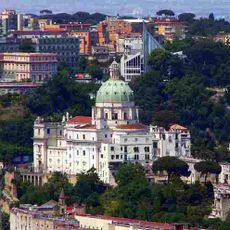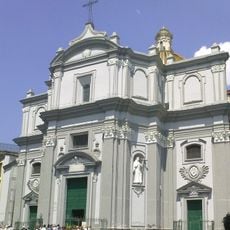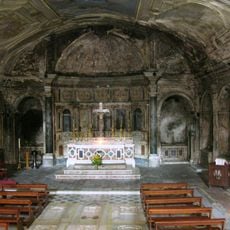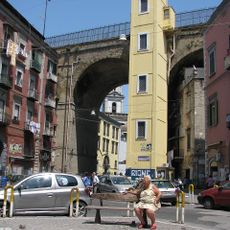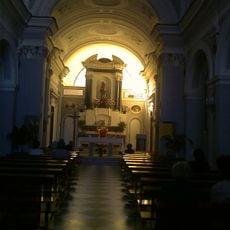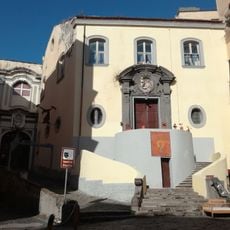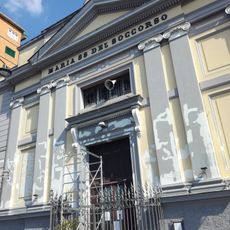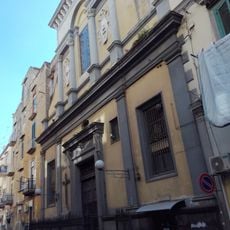
Catacombs of San Gennaro, Paleo-Christian catacombs in Rione Sanità, Naples, Italy
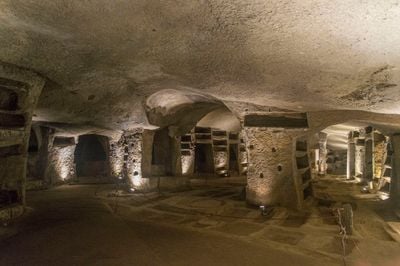
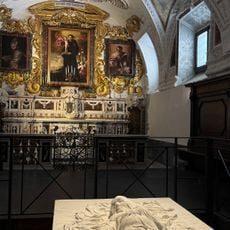
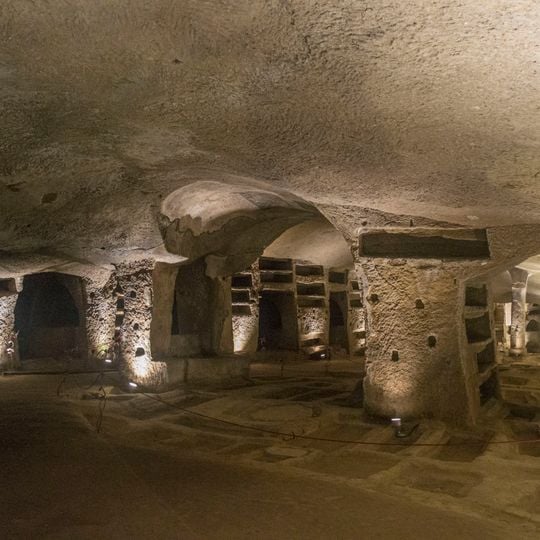
The Catacombs of San Gennaro are an early Christian burial site beneath Naples with two underground levels carved from tuff stone, containing tombs, frescoes, and religious artwork. The complex features spacious corridors with various grave types and demonstrates the burial practices of the early community.
The lower level dates to the 2nd-3rd century, when a wealthy Roman family's tomb became the core of the cemetery; the family's name is lost because the epigraphic material was dispersed. At the end of the 3rd century the remains of Saint Agrippinus, sixth bishop of Naples, were placed in the lower vestibule, making it a place of veneration. Bishop John I later moved the relics of Saint Gennaro here after his martyrdom in 305.
The name comes from Saint Gennaro, whose remains were moved here in the 5th century and later taken to Benevento by the Lombard prince Sicone I in 831. In the vestibule of the lower level stands a baptismal font built in 762 by Bishop Paul II, who lived at the catacombs in exile. Visitors can see the 5th-century portrait of the martyr with the inscription Sancto Martyri Januario.
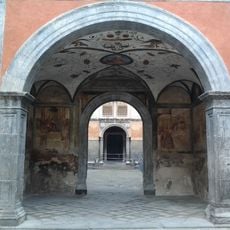
Access is from a staircase near the church of the Incoronata a Capodimonte, leading straight to the upper level; the route then descends to the lower vestibule and the confessio of San Gennaro. The floor is flat but dusty, with uneven tuff pillars and a low cable across the foreground, so wear suitable footwear. Small lamps are mounted on the pillars and walls.
The oldest oil lamps found in the catacombs date from the second half of the third century and were made in Naples itself, while 54 African red slip lamps among the roughly 200 recovered point to imported wares. Look for the small lamps mounted on the pillars and walls of the chambers.
The community of curious travelers
AroundUs brings together thousands of curated places, local tips, and hidden gems, enriched daily by 92,619 contributors worldwide.