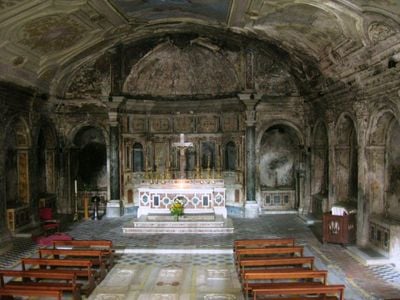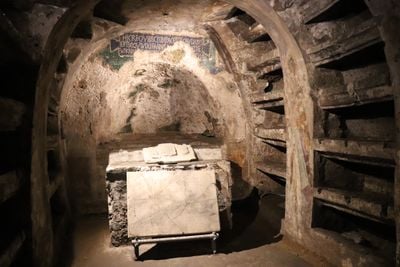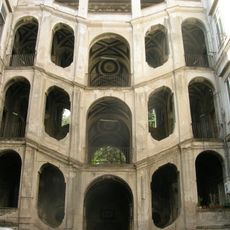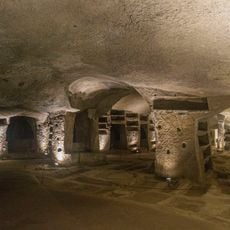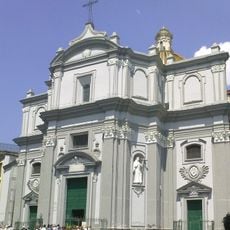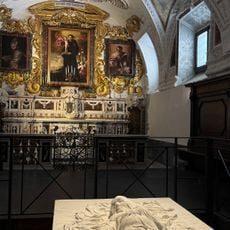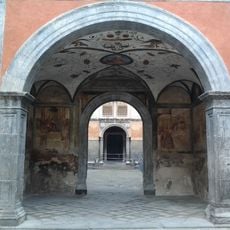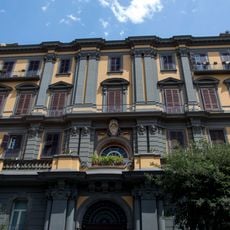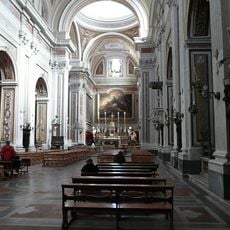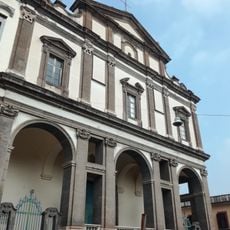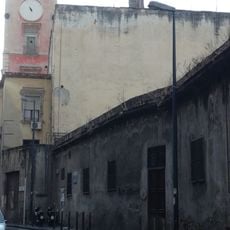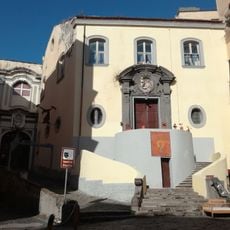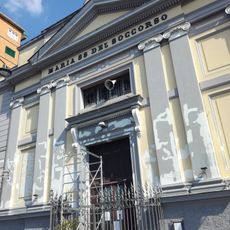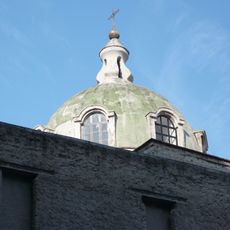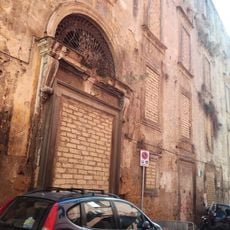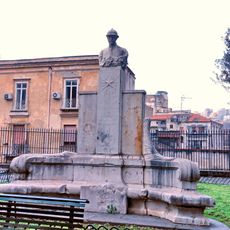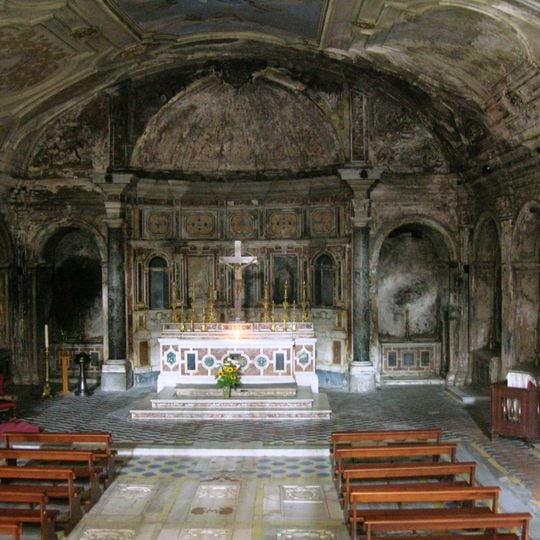
Catacombs of Saint Gaudiosus, Early Christian catacombs beneath Basilica Santa Maria della Sanita in Naples, Italy.
The Catacombs of Saint Gaudiosus form an underground burial complex beneath the Basilica Santa Maria della Sanità with multiple chambers, stone tombs, and ancient frescoes lining the passageways. The entire site was carved from volcanic stone by hand, creating an intricate network of corridors and burial spaces.
The catacombs developed from a Greek-Roman necropolis in the uninhabited valley of the Sanità. Gaudiosus, a North African bishop shipwrecked at Naples, was buried here between 451 and 453, and the site took his name although it also held the tomb of Bishop Nostrianus. Mudslides from Capodimonte buried the area through the Middle Ages; from the 16th century the district was built up, and in the 17th century the basilica of Santa Maria della Sanità was raised over the old chapel, altering the cemetery. Only a small portion survives.
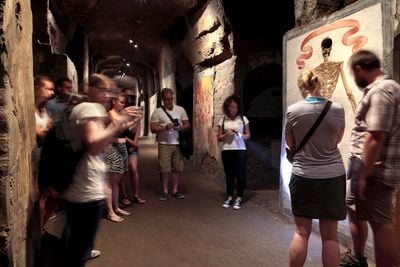
From the 17th century the Dominican friars dried corpses on stone drainers, then set the skulls into the walls and painted a body beneath showing the dead person's trade. This was reserved for wealthy families and was banned in 1637 over the condition of the catacombs. Among those buried this way were Donna Sveva Gesualda, princess of Montesarchio, and the painter Giovanni Balducci.
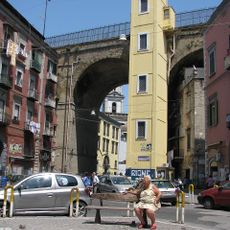
Entry to this site happens through Piazza Sanità and requires a guided tour to safely navigate the underground passages. Visitors should be prepared for uneven floors, tight spaces, and cool temperatures at depth.
The skulls set into the walls are mostly just the upper calottes, as humidity destroyed the front of the skulls. Many calottes are visibly smaller than those of modern people, which is attributed to better nutrition and general health today.
The community of curious travelers
AroundUs brings together thousands of curated places, local tips, and hidden gems, enriched daily by 92,619 contributors worldwide.