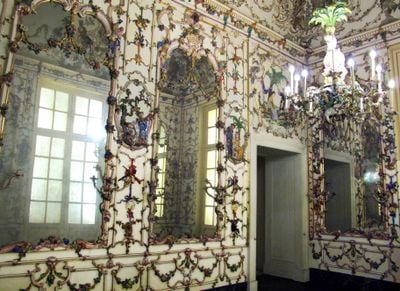
Porcelain boudoir of Maria Amalia of Saxony, Royal porcelain room at Capodimonte Museum, Naples, Italy
The Porcelain boudoir of Maria Amalia of Saxony is a square room whose walls are entirely covered with porcelain slabs, with twelve pilasters framing six large mirrors that structure the space. The surfaces are decorated with floral garlands and fine ornaments that create a unified, glowing impression.
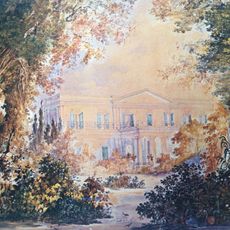
The room was created between 1757 and 1759 as part of the Royal Palace of Portici for Queen Maria Amalia's chambers. After being relocated in 1866, it was integrated into the Capodimonte Palace in Naples, where it remains today.
The decoration shows Chinese-inspired themes with scenes of daily life, animal motifs, and plant designs across the porcelain panels. These images reflect the European fascination with Far Eastern cultures that greatly influenced art and design in the 1700s.
The room is located within the Capodimonte Museum in Naples as part of the palace's permanent collection. Visitors should be aware that the intimate space and reflective surfaces create a unique visual and light experience.
The ceiling chandelier depicts a palm tree with a monkey climbing it and a young Chinese figure teasing a dragon with a fan. These details show how European artisans playfully interpreted their vision of the Far East into luxury items.
The community of curious travelers
AroundUs brings together thousands of curated places, local tips, and hidden gems, enriched daily by 60,000 contributors worldwide.