The Trulli of Alberobello, Stone dwellings with conical roofs in Alberobello, Italy
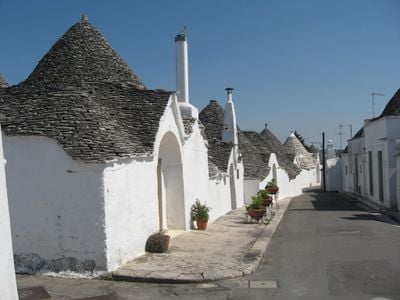
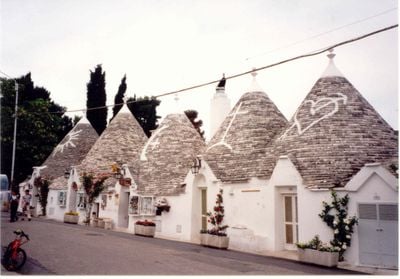
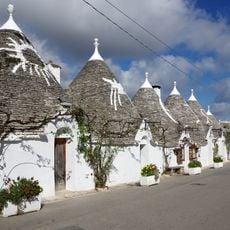
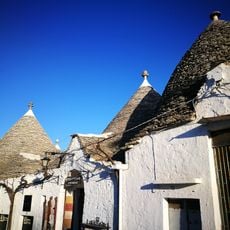
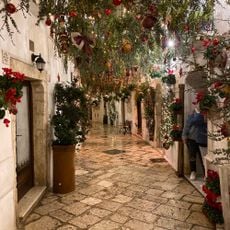
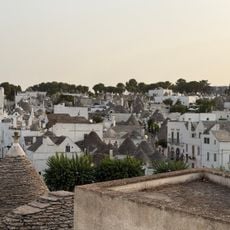
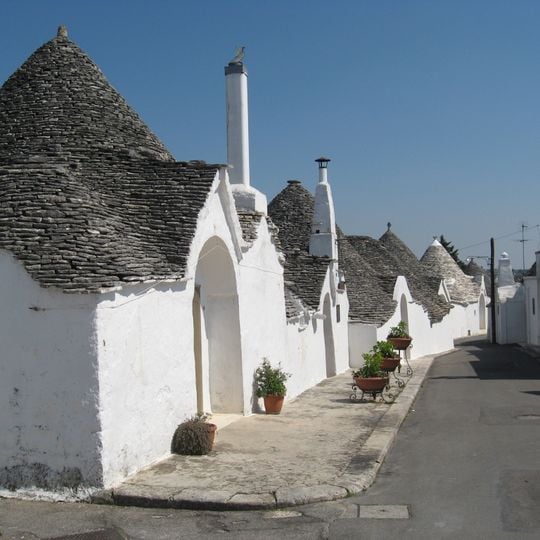
The Trulli of Alberobello comprise roughly 1,600 limestone structures with thick walls and distinctive conical roofs scattered throughout the town. The two main districts, Rione Monti and Aia Piccola, form the core of this remarkable ensemble.
In the 14th century, local people built these structures without mortar to dismantle them quickly when tax collectors arrived in the area. This practical building method allowed them to protect their homes from seizure.
Each roof displays painted symbols representing family heritage, religious beliefs, or protection marks rooted in local tradition. These markings reveal how personal and spiritual identity mattered deeply to those living here.
Both districts are accessible on foot and offer guided tours in several languages. The terrain is generally walkable, though visitors should expect hilly ground and narrow, cobblestone streets.
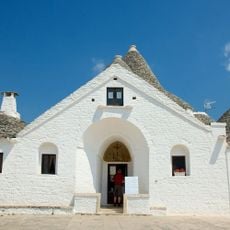
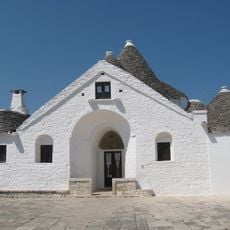
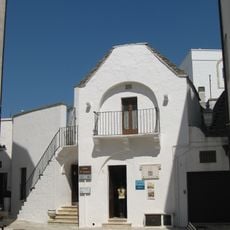
The Trullo Sovrano stands as the only two-story building among all the single-story trulli and still displays furnishings from the 20th century. Its exceptionally thick walls of roughly 3 meters show how solidly this exceptional structure was built.
Location: Alberobello
GPS coordinates: 40.78250,17.23694
Latest update: December 6, 2025 16:01
Southern Italy contains a wide range of historical sites, religious structures and natural areas that take visitors through more than two millennia of cultural history. The region holds Greek temples such as the Temple of Hera at Metaponto, medieval fortresses including Castello Aragonese in Taranto and Rocca Calascio in Abruzzo, and religious complexes like the Santuario di Monte Sant'Angelo, an important pilgrimage site since the early Middle Ages. Underground catacombs in Naples and Palermo, rock churches in Matera and the Cripta del Peccato Originale show the development of Christian art and architecture. The natural environment ranges from marine protected areas like Riserva Marina di Punta Campanella on the Campanian coast to the Tremiti Islands in the Adriatic. Inland landscapes include Parco Nazionale d'Aspromonte in Calabria, the erosive Calanchi di Aliano in Basilicata and Cavagrande del Cassibile in Sicily. Coastal formations such as the Arco Naturale near Palinuro and sea caves like Grotta della Poesia at Roca Vecchia add to the geographic variety. Cities including Matera with its sassi districts, Lecce with baroque palaces and the Quartieri Spagnoli in Naples illustrate different urban developments. This collection centers on the area around Alberobello, whose trulli structures have been a UNESCO World Heritage Site since 1996.
Architecture does not have to follow straight lines and right angles. This collection presents buildings that stand out through their form: domes, spirals, tilted facades or organic structures that recall animals or plants. From Gaudí's mosaic covered works in Barcelona to the stacked concrete cubes of Habitat 67 in Montreal or the conical trulli of Alberobello, these structures demonstrate alternative approaches to construction. Some emerged from technical necessity, such as the temporary cardboard cathedral in Christchurch after the 2011 earthquake. Others are artistic statements: the Guggenheim Museum in Bilbao with its titanium plates, the Dancing House in Prague or the cubist houses in Rotterdam. In Đà Lạt, the Crazy House transforms tree trunks and caves into habitable spaces, while the Atomium in Brussels represents a magnified iron crystal. These structures attract visitors but also raise questions about function and livability. The Longaberger Basket Building in Ohio takes the form of a seven story basket. The Lotus Temple in New Delhi uses concrete shells to form 27 petals. The Aldar headquarters in Abu Dhabi resembles a circular coin. These buildings expand the definition of what architecture can be.
Italy preserves numerous historical sites away from standard tourist routes, ranging from medieval hill towns to Etruscan burial grounds. These locations document different periods of Italian history through architecture, art and natural settings. The collection includes Roman archaeological sites such as Palazzo Valentini Domus Romane, where ancient townhouses remain beneath modern streets, and Basilica di San Clemente, which displays three construction phases built one above another. In southern Italy, the Sassi of Matera show cave dwellings from prehistoric times, while the Crypt of the Original Sin presents early Christian frescoes from the 8th century. The architectural variety ranges from the conical trulli houses in Alberobello to the Moorish inspired rooms of Sammezzano Castle. Civita di Bagnoregio sits on a tufa rock plateau separated from surrounding land by erosion. The Greek Theatre of Taormina and the Temple of Concordia in Agrigento document the ancient Greek presence in Sicily. Natural formations such as Grotta Azzurra on Capri and the thermal springs of Saturnia complement the historical structures. The sites spread across the entire country, from the Alps to the Aeolian Islands.
Italy preserves architectural evidence from two thousand years of history. In Rome, Roman temples stand beside Renaissance palaces, while Florence houses museums and cathedrals from the 15th century. Venice developed its canal system over centuries as a response to its lagoon environment. In the Campania region, Mount Vesuvius shapes the landscape, and the ancient city of Pompeii has remained preserved under volcanic ash since the 1st century.
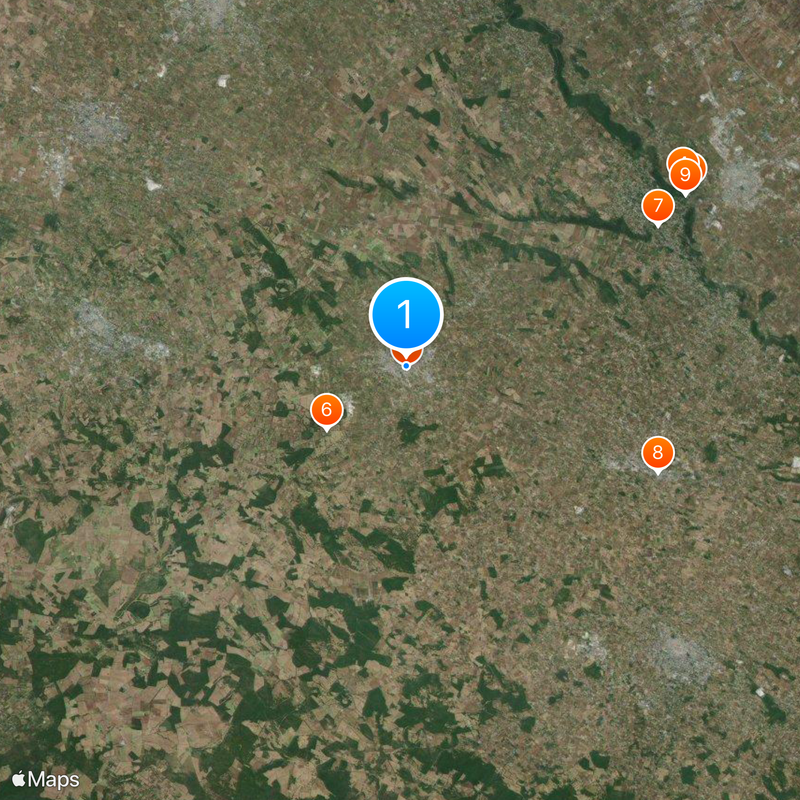
Trullo
48 m
Fasanolandia
10.4 km
Zoosafari Fasanolandia
10.3 km
Trullo Sovrano
561 m
Casa Rossa
3.1 km
Minareto di Fasano
8.9 km
Église Saint Georges
8.5 km
Eurofighter
10.2 km
Madonna della Greca
8.5 km
San Francesco da Paola
11.6 km
Santi Medici Cosma e Damiano
471 m
Territory Museum "House Pezzolla"
250 m
Trullo Sovrano
634 m
Chiesa dell'Addolorata (Locorotondo)
8.4 km
War memorial in Locorotondo
8.3 km
Sant'Antonio di Padova (Alberobello)
236 m
Trulli
91 m
Chiesa Madre (Noci)
9.6 km
Chiesa del Purgatorio (Noci)
9.6 km
Chiesa di San Nicola di Myra
8.4 km
Chiesa di Santa Chiara (Noci)
9.7 km
Casa d'Amore
250 m
Sant'Antonio dei Cappuccini
11.4 km
Cripta Madonna Odegitria
11.4 km
Historic centre of Noci
9.7 km
Chiostro del villaggio
11.4 km
Parco "Madonna della Croce"
10.6 km
Self service
10.2 kmVisited this place? Tap the stars to rate it and share your experience / photos with the community! Try now! You can cancel it anytime.
Discover hidden gems everywhere you go!
From secret cafés to breathtaking viewpoints, skip the crowded tourist spots and find places that match your style. Our app makes it easy with voice search, smart filtering, route optimization, and insider tips from travelers worldwide. Download now for the complete mobile experience.
A unique approach to discovering new places❞
— Le Figaro
All the places worth exploring❞
— France Info
A tailor-made excursion in just a few clicks❞
— 20 Minutes