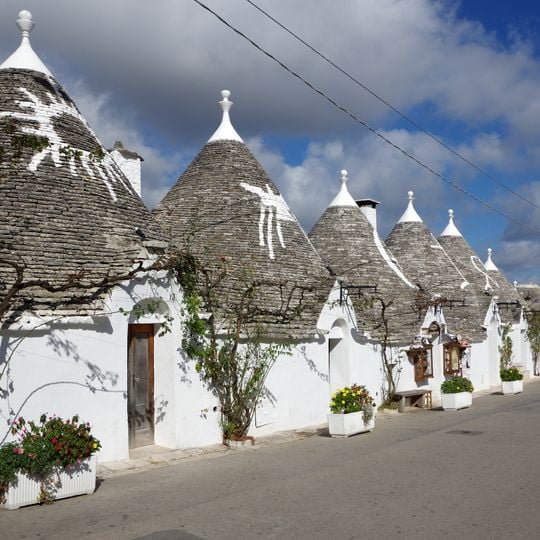
Trullo, Dry stone huts in the Itria Valley, Apulia, Italy
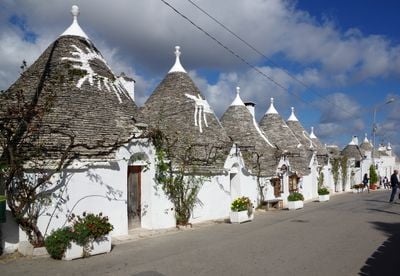
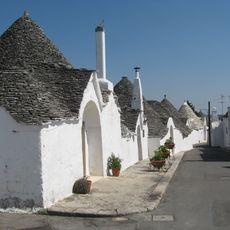
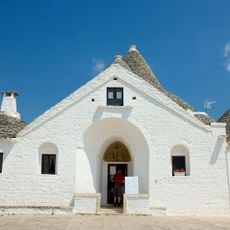
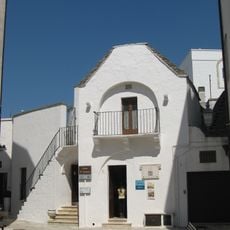
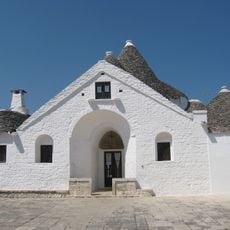
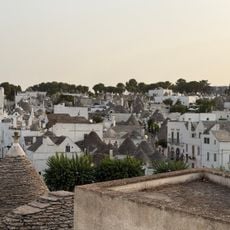
A trullo is a dry stone hut in Alberobello, Italy, built with thick limestone walls and a conical roof made from flat stone slabs stacked without mortar. Most structures consist of a single room with a small window and a low wooden door, while larger complexes combine several cones under a shared base.
Farmers erected these stone dwellings in the 17th century as temporary shelters to avoid taxes imposed by the Kingdom of Naples, since they could be quickly dismantled when needed. The settlement later became permanent and grew into its own district within Alberobello.
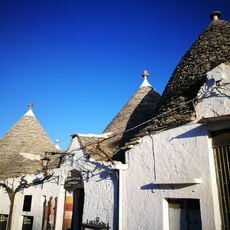
The name trullo comes from the Greek τροῦλλος, meaning cupola; locals in the Murgia once called these houses casedda, and a builder is a trullaro or caseddaro. The white painted symbols on the roofs, such as the sun-like marking and the crossbar figure seen on the nearest cones, are apotropaic signs of esoteric or superstitious character, carved or painted at the apex.
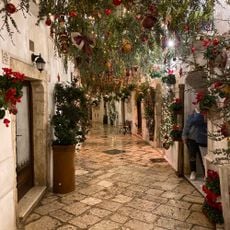
Most structures in the historic district are open during daylight hours, and many now serve as shops or guesthouses that allow visitors to view interiors. The narrow lanes between the stone houses are designed for pedestrians, so walking is the recommended way to explore with comfortable footwear.
The thick stone walls regulate indoor temperature naturally, keeping rooms cool in summer and warm in winter without modern heating or cooling systems. This thermal property made the structures particularly well suited to the Mediterranean climate of the region.
The community of curious travelers
AroundUs brings together thousands of curated places, local tips, and hidden gems, enriched daily by 92,307 contributors worldwide.