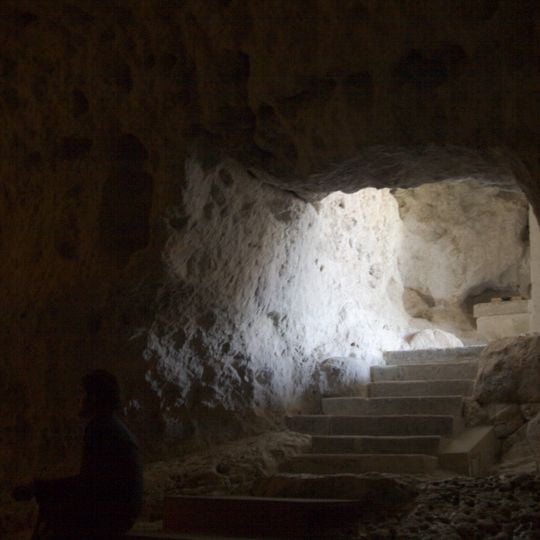
Crypt of the Original Sin
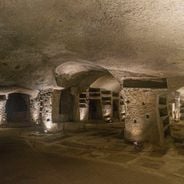
Crypt of the Original Sin, Cave church with biblical frescoes in Matera, Italy
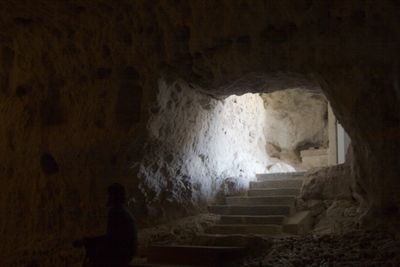
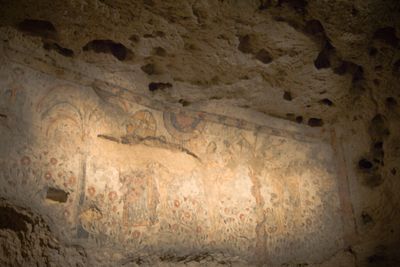
The rock-cut church contains detailed wall paintings depicting scenes from Genesis and representations of saints, angels, and biblical figures along its stone surfaces.
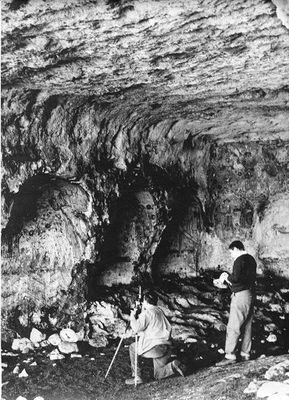
During the 8th century, monks from Eastern Europe and Asia Minor established this religious sanctuary, creating a meditation space within the natural cave formation.
The frescoes demonstrate the merging of Byzantine artistic techniques with early Christian religious narratives through detailed representations of biblical stories and figures.
Visitors need advance reservations to enter the church, which opens Tuesday through Sunday with seasonal hours and costs 10 euros for admission.
The red flower motifs painted at the base of the frescoes earned the site its alternative name, the Church of the Flower Painter.
Location: Matera
Address: Località Pietrapenta 60, 75100 Matera 75100
Website: http://criptadelpeccatooriginale.it/index.php?lang=it
GPS coordinates: 40.62067,16.56342
Latest update: March 4, 2025 19:20
European crypts and catacombs form a network of underground burial chambers beneath urban streets. These spaces house tombs, skeletal remains, and religious monuments from different historical periods. The chambers contain frescoes, mosaics, stone carvings and architectural elements that combine Roman, Egyptian and Christian designs. The structures reveal burial customs and religious practices from the 1st through 19th centuries.
Southern Italy contains a wide range of historical sites, religious structures and natural areas that take visitors through more than two millennia of cultural history. The region holds Greek temples such as the Temple of Hera at Metaponto, medieval fortresses including Castello Aragonese in Taranto and Rocca Calascio in Abruzzo, and religious complexes like the Santuario di Monte Sant'Angelo, an important pilgrimage site since the early Middle Ages. Underground catacombs in Naples and Palermo, rock churches in Matera and the Cripta del Peccato Originale show the development of Christian art and architecture. The natural environment ranges from marine protected areas like Riserva Marina di Punta Campanella on the Campanian coast to the Tremiti Islands in the Adriatic. Inland landscapes include Parco Nazionale d'Aspromonte in Calabria, the erosive Calanchi di Aliano in Basilicata and Cavagrande del Cassibile in Sicily. Coastal formations such as the Arco Naturale near Palinuro and sea caves like Grotta della Poesia at Roca Vecchia add to the geographic variety. Cities including Matera with its sassi districts, Lecce with baroque palaces and the Quartieri Spagnoli in Naples illustrate different urban developments. This collection centers on the area around Alberobello, whose trulli structures have been a UNESCO World Heritage Site since 1996.
Italy preserves numerous historical sites away from standard tourist routes, ranging from medieval hill towns to Etruscan burial grounds. These locations document different periods of Italian history through architecture, art and natural settings. The collection includes Roman archaeological sites such as Palazzo Valentini Domus Romane, where ancient townhouses remain beneath modern streets, and Basilica di San Clemente, which displays three construction phases built one above another. In southern Italy, the Sassi of Matera show cave dwellings from prehistoric times, while the Crypt of the Original Sin presents early Christian frescoes from the 8th century. The architectural variety ranges from the conical trulli houses in Alberobello to the Moorish inspired rooms of Sammezzano Castle. Civita di Bagnoregio sits on a tufa rock plateau separated from surrounding land by erosion. The Greek Theatre of Taormina and the Temple of Concordia in Agrigento document the ancient Greek presence in Sicily. Natural formations such as Grotta Azzurra on Capri and the thermal springs of Saturnia complement the historical structures. The sites spread across the entire country, from the Alps to the Aeolian Islands.
The Apulia region in southern Italy contains castles, Greek temple ruins and coastal towers between the Adriatic and Ionian seas. The area features medieval fortresses, cathedrals and traditional trulli houses. Archaeological sites display Greek and Roman artifacts, while nature reserves protect wetlands, caves and Mediterranean coastline. Historic towns like Alberobello showcase stone architecture, and museums preserve regional heritage through extensive collections.
Riserva naturale orientata "San Giuliano"
2.9 km
Castello Tramontano
6 km
Palazzo Lanfranchi
6.2 km
San Francesco d'Assisi (Matera)
6.3 km
Chiesa del Purgatorio
6.2 km
National Museum of Matera
6.2 km
Palazzo del Sedile
6.3 km
Chiesa di Santa Lucia alle Malve
6.3 km
National Museum of Medieval and Modern Art of Basilicata
6.2 km
Palazzo dell'Annunziata
6.3 km
Santa Lucia alla Fontana
6.2 km
Église Sainte-Marie-des-Arméniens de Matera
6.2 km
Sant'Antonio
6.2 km
Biblioteca provinciale Tommaso Stigliani
6.3 km
Casa Grotta del Casalnuovo
6.2 km
Materdomini (Matera)
6.3 km
MOOM Matera Olive Oil Museum
6.1 km
The Gathering of the Waters
6.2 km
War memorial in Matera
6.3 km
Casa Cisterna
6.3 km
San Vincenzo De' Paoli
5 km
Fontana Ferdinandea
6.2 km
Casino Padula
5.7 km
Pino domestico
5.7 km
Parco Giovanni Paolo II (parke sa Italya, Basilicata)
6.1 km
Parco Macamarda
6 km
Parco del Castello (parke sa Italya, Basilicata)
6.1 km
Chiesa di Santa Chiara
6.2 kmReviews
Visited this place? Tap the stars to rate it and share your experience / photos with the community! Try now! You can cancel it anytime.
Discover hidden gems everywhere you go!
From secret cafés to breathtaking viewpoints, skip the crowded tourist spots and find places that match your style. Our app makes it easy with voice search, smart filtering, route optimization, and insider tips from travelers worldwide. Download now for the complete mobile experience.
A unique approach to discovering new places❞
— Le Figaro
All the places worth exploring❞
— France Info
A tailor-made excursion in just a few clicks❞
— 20 Minutes