The Sassi and the Park of the Rupestrian Churches of Matera, Ancient rock-cut settlement in Basilicata, Italy.
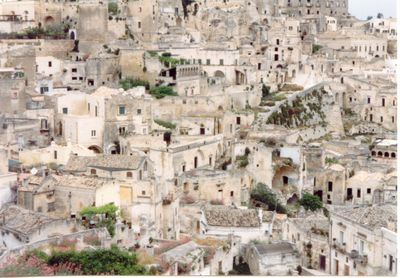
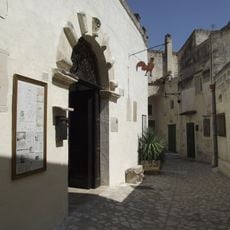
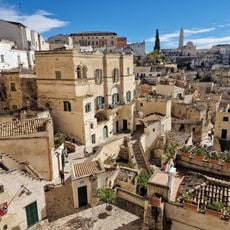
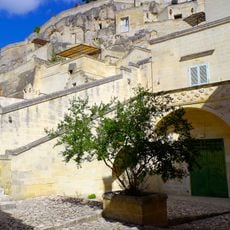
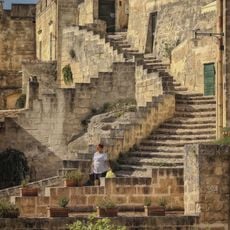
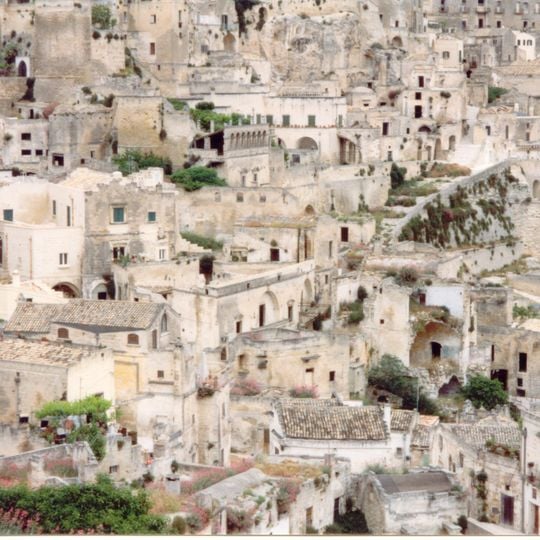
The Sassi and the Park of the Rupestrian Churches of Matera consist of two rock-cut districts, Sasso Barisano to the north and Sasso Caveoso to the south, separated by a rocky promontory. Houses often have only a masonry facade with a door and small window closing a space dug into the tufa. Dwellings stack up to ten levels, linked by stairs and narrow alleys. The park includes about 150 rock churches carved between the 8th and 14th centuries.
The settlement traces back to the Paleolithic period and experienced continuous habitation over thousands of years, with different cultures leaving their marks. Over time it developed into an important religious and social center, until 1952 when residents were relocated due to poor living conditions.
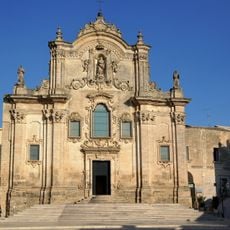
Around 150 rupestrian churches were cut into the Gravina ravine by monastic communities, mainly between the 8th and 14th centuries; some keep frescoes. The name Sassi simply means "the stones" or "the rocks" in local speech. Armenian immigrants left their own mark: the church of Santa Maria. Several dwellings shared a courtyard and a rock-cut cistern fed by rainwater from the plateau.
The site is best explored on foot, as most areas are connected by walking paths and stairs. Visitors should wear comfortable shoes and expect uneven terrain as routes pass through old stone structures.
The traditional cave houses were ingeniously structured across three levels of the slope, with separate areas for living, storage, and keeping animals. This integrated design shows how residents maximized every available space for daily life.
The community of curious travelers
AroundUs brings together thousands of curated places, local tips, and hidden gems, enriched daily by 94,387 contributors worldwide.