Igreja de Santa Maria de Belém, Catholic church in Belém, Lisbon, Portugal
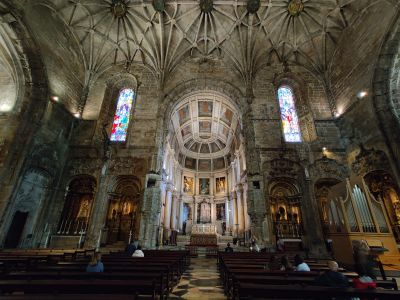
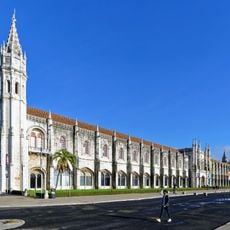
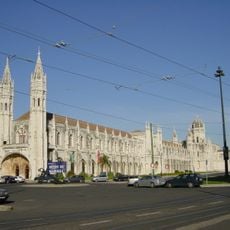
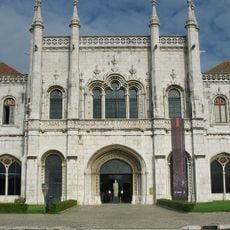
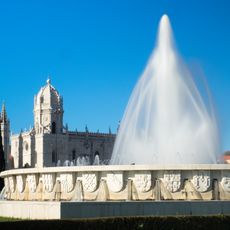
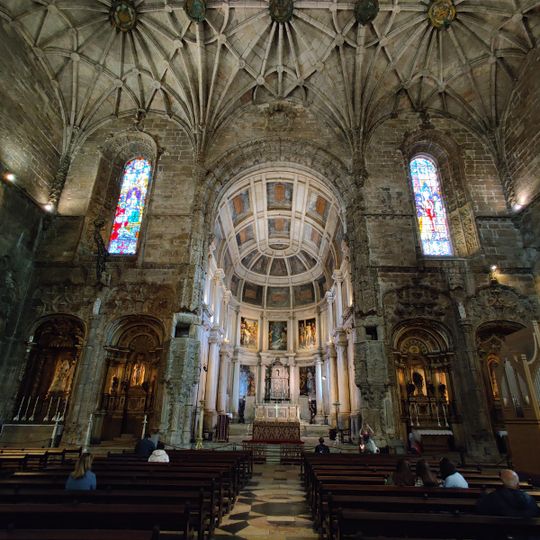
The Hieronymitenkirche, also known as Mosteiro dos Jerónimos, is a Catholic church in the Belém district of Lisbon, Portugal, built in the Manueline style from white limestone. The facade is covered in carvings of shells, anchors and other maritime motifs, while the interior holds a three-aisled nave with a ribbed vaulted ceiling.
King Manuel I had the monastery built near the Tagus at the end of the 15th century, funded by revenues from the spice trade with Asia. Construction lasted nearly a century and was continued by several architects, each leaving their own mark on the building.
The monastery sits by the river and leaves a strong mark on Belém. As you step inside, you notice tall columns carefully shaped and a ceiling that gently spreads light through the nave. The building tells the story of Portugal as a sea-faring nation: the facade shows sculptures of shells, anchors, and navigation symbols. The graves of important figures like the poet Luís de Camões are in the main part of the church, visible to everyone walking by. It was built between the late 1400s and the 1500s, funded by the wealth from spice trade with Asia. Several architects worked on it, each adding their own ideas.
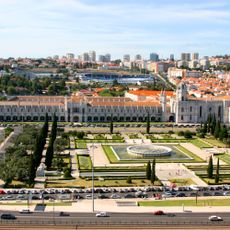
The complex sits right on the bank of the Tagus in Belém and is easy to reach on foot from the other historic sites in the area. A morning visit tends to be more comfortable, as fewer visitors are around and the light inside the church is at its best.
Although the monastery is dedicated to an order that had little presence in Portugal itself, kings and famous poets such as Luís de Camões chose this place for their final rest. The tombs are not hidden away in a crypt but placed in the main nave, directly along the path that visitors walk today.
The community of curious travelers
AroundUs brings together thousands of curated places, local tips, and hidden gems, enriched daily by 60,000 contributors worldwide.