Top structure building - Andrzej shaft - 1870, Tourist attraction in Wirek, Ruda Śląska, Poland
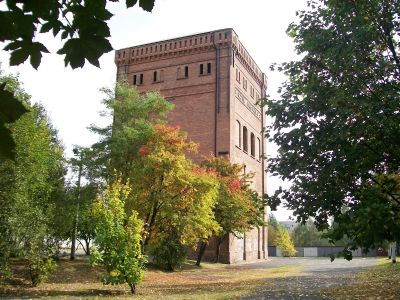
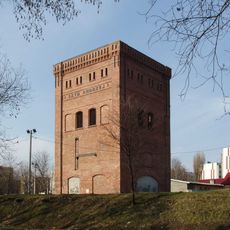
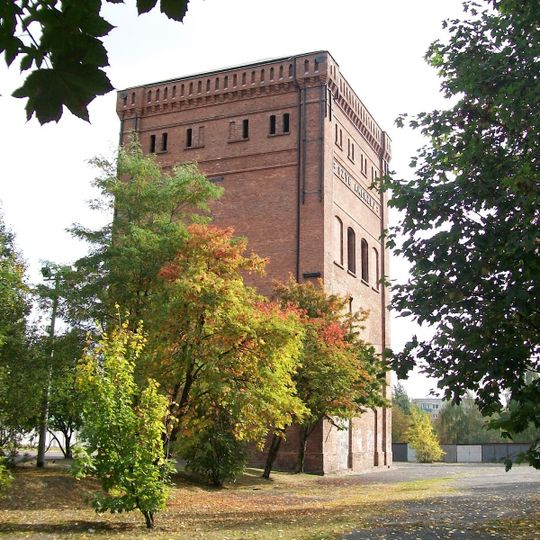
Budynek Nadszybowy - Szyb Andrzej - 1870 r. is a preserved headframe building from 1870 in the Wirek district of Ruda Śląska, Poland. Built from red brick, the structure rises about 23 meters (75 feet) tall across three floors, with thick walls, narrow window openings, and a crenellated top that gives it the appearance of a fortified tower.
The shaft was originally called Aschenborn and was sunk as part of the Gottessegen mine, whose name means Blessing of God in German. After World War One, when Silesia passed to Poland, the mine was renamed and the shaft fell out of regular use by the early 1920s, later serving briefly as a backup during the 1940s and 1950s before being sealed completely.
The tower looks like a medieval fortress, with brick battlements and narrow openings along the top, which makes it stand out from typical mining structures. This deliberate design choice reflected the ambitions of 19th-century industrialists who wanted their buildings to project power and permanence.
The building can be seen from outside at any time, but the interior is closed to visitors. Arriving by public transport is possible using trams or buses from nearby cities, though a short walk to the site is needed at the end.
The tower was listed as a protected monument in 1978 and later fitted with a new roof to replace the original metal one topped with a spire, bringing it closer to its first appearance. At night, the building is lit up, which makes it a popular stop for people photographing old industrial architecture.
The community of curious travelers
AroundUs brings together thousands of curated places, local tips, and hidden gems, enriched daily by 91,601 contributors worldwide.