Jiyu Gakuen Myonichikan, Historic school building and museum in Nishi-Ikebukuro, Tokyo, Japan
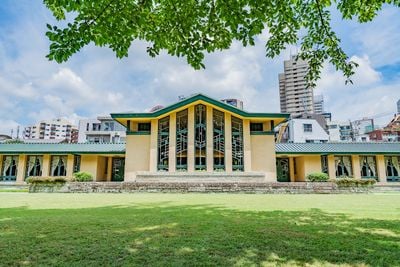
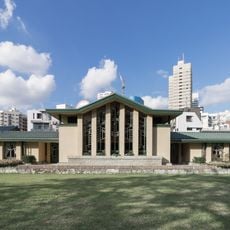
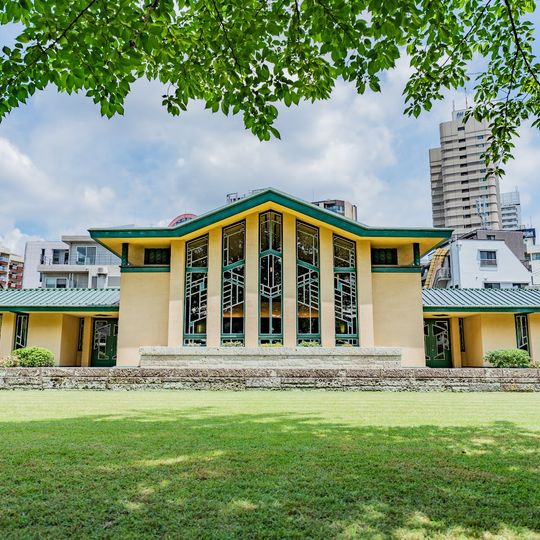
Jiyu Gakuen Myonichikan is a historic building in the Nishi-Ikebukuro neighborhood of Tokyo, originally constructed as a girls' school and now open to visitors as a museum. The structure follows a C-shaped layout that wraps around a green lawn, with a facade marked by geometric patterns and large windows.
The building was designed in 1921 by American architect Frank Lloyd Wright, who worked on the project alongside his associate Arata Endo. After the school relocated in 1934, the building continued to serve the school community and was carefully restored in the late 1990s before being designated a national cultural property.
The building's name, Myonichikan, means "House of Tomorrow" in Japanese, reflecting the educational vision of the school's founder, Motoko Hani. Inside, a communal dining hall sits at the heart of the layout, expressing the idea that sharing meals was part of learning together.
The building is within walking distance of Ikebukuro Station, one of Tokyo's main train hubs, making it easy to reach by public transit. The site has some accessibility features, but the structure includes several steps, so it is worth checking accessibility details before visiting.
During restoration work, workers uncovered a wall mural in the entrance hall painted by students under their art teacher's guidance, showing a verse from the school song drawn from Old Testament imagery. The building was also constructed using Oya stone, a porous Japanese volcanic rock that Wright used in the Imperial Hotel in Tokyo.
The community of curious travelers
AroundUs brings together thousands of curated places, local tips, and hidden gems, enriched daily by 60,000 contributors worldwide.