Hōmyō-ji Temple, Buddhist temple in Minami-Ikebukuro, Japan.
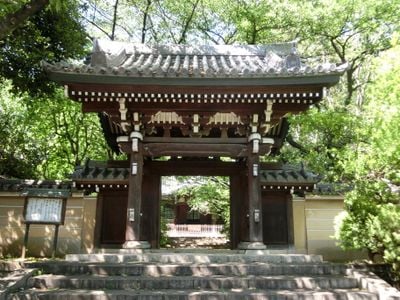
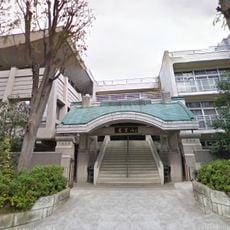
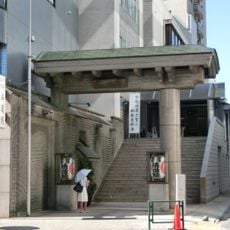
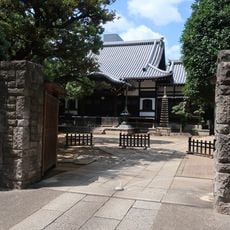
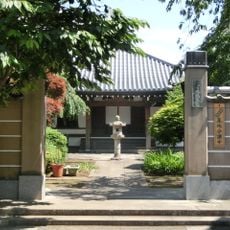
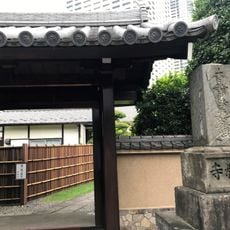
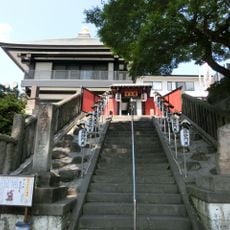
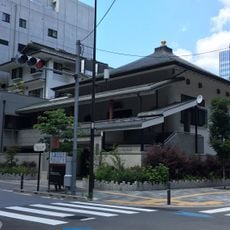
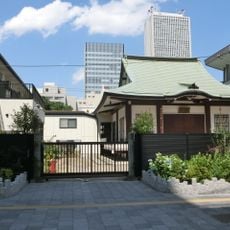
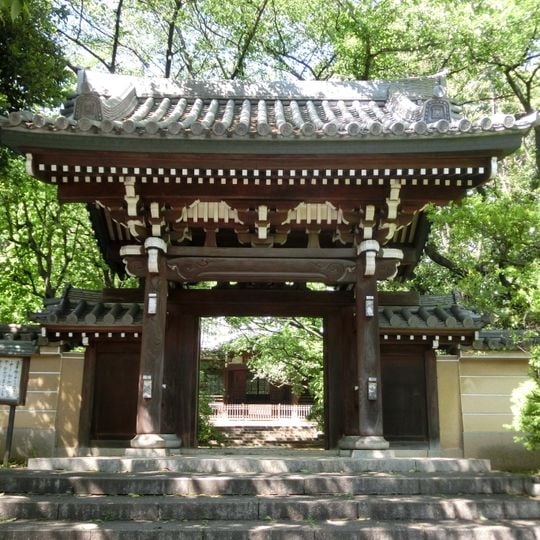
Hōmyō-ji is a Nichiren-sect temple in Minami-Ikebukuro whose two-story wooden gate, rebuilt in 1968, stands atop a short flight of stone steps. Dark doors open onto a path beyond, and two square pillars with stone footings carry a white-flecked band and a gray tiled roof with an upturned eave. Its main hall was rebuilt in 1959 and its study in 1963.
The temple was founded in 810 as Ikō-ji of the Shingon sect and transformed into a Nichiren sect temple in 1312 under Nichigen's guidance. This shift marked a turning point that shaped the temple's spiritual direction for centuries to come.
Kishimojin, the deity of childbirth and children, is honoured at the temple's detached hall in Zōshigaya, where the character for "ki" is written without its top dot. The hall's objects include two Edo-period colour paintings on wood, one of Ōmori Hikoshichi by Toriyama Sekien and one of three shirabyōshi dancers by Torii Kiyomitsu II, both designated Tokyo cultural properties.
Hōmyō-ji is reached from the Toden Arakawa Line's Kishibojin-mae stop, from Tokyo Metro Fukutoshin Line's Zōshigaya Station, or on foot in about 15 minutes from either JR Ikebukuro or JR Mejiro Station. The main hall, the Soshidō hall and the temple gate stand in Minami-Ikebukuro, while the Kishibojin-dō lies on a detached precinct in Zōshigaya 3-chōme, a short separate walk away.
The temple's main hall was rebuilt in 1959 after wartime fire destroyed the whole complex in 1945; the gate and bell tower followed in 1968. The Kishimojin hall stands apart, in Zōshigaya, and its name is written with a character for "oni" that lacks the usual top stroke.
The community of curious travelers
AroundUs brings together thousands of curated places, local tips, and hidden gems, enriched daily by 94,896 contributors worldwide.