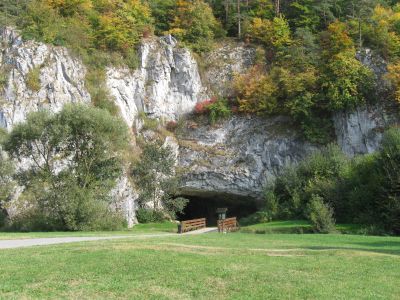
Sloupsko-šošůvské jeskyně, Cave system in Moravian Karst, Czech Republic
Sloupsko-šošůvské caves are an extensive underground system in the Moravian Karst region featuring multiple levels of chambers and passages. The network contains abundant stalactite and stalagmite formations distributed throughout different sections of the caves.
The Brno physician Johannes Ferdinand Hertod z Todtenfeldu first described the caves in writing in 1669 in Tartaro-Mastix Moraviae as brightly white and full of stalactites. In 1748 J. A. Nagel descended into the lower levels of Stará skála and found the abyss bearing his name. Miner Václav Sedlák fell into unknown spaces in 1879 while digging bones for Dr. Jindřich Wankel, revealing Eliščina jeskyně, opened in 1881; the rest was explored mainly 1889–1915.
The chamber called Eliščina jeskyně is used for occasional chamber-music concerts, and guides demonstrate its acoustics by playing recorded music to visitors. The cave name Sloup likely comes from the 20-metre limestone pillar Hřebenáč in the valley, which gave the village its name.
The caves are open from March to November, not October. The guided circuit is 1.5 km long, passing through Nicová Cave and Eliščina Cave by an artificial tunnel into the Staré skály section. The dry upper level holds 7–8 °C, so bring warm clothing.
The 65-metre Stupňovitá propast shaft ends the Gothic Corridor, and the tour route crosses Nagelova propast on two bridges; from ceiling to the Sloupský potok below it measures about 90 metres, making it one of the largest underground shafts in the Czech Republic.
The community of curious travelers
AroundUs brings together thousands of curated places, local tips, and hidden gems, enriched daily by 92,754 contributors worldwide.