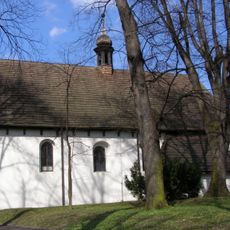
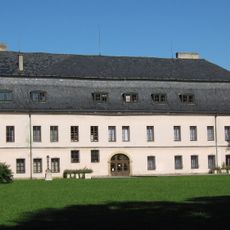
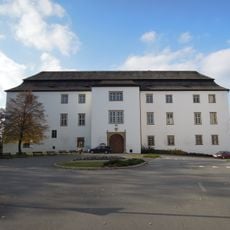
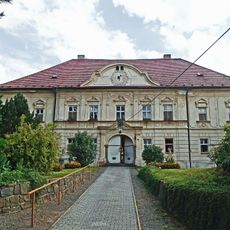
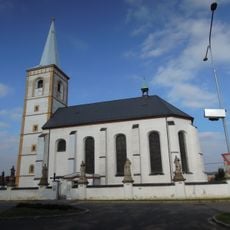
Lešná Castle, Baroque and Neoclassical château in Lešná, Czech Republic.
Lešná Castle is a château with an irregular pentagonal ground plan and an arcaded courtyard, surrounded by a moat. Its present appearance combines Baroque modifications with a Neoclassical redesign by Viennese architects under August Kinský in 1887, including a winter garden.
A stone fortress of the Lešná nobility stood here from the 14th century; after 1628 Martin Půhonč of Přednost rebuilt it as a Renaissance château with an irregular pentagonal plan and an arcaded courtyard, surrounded by a moat. Rudolf Magnus Podstatský made Baroque alterations between 1710 and 1740, and after August Kinský bought the estate in 1887 Viennese architects gave it a Neoclassical form with Neo-Gothic details.
The castle was used as a film location by director Filip Renč for Requiem for a Doll, where it stood in for the Měděnec social care institute, the site of Czechoslovakia's deadliest fire in 1984, which killed 26 people. The interiors display furniture of the Kinský counts from around 1900.
The castle is accessible by regional bus from Vsetín, and the grounds are easy to navigate on foot. Visitors should check opening hours in advance since guided tours operate only on certain days of the week.
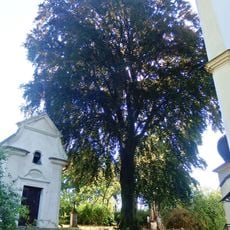
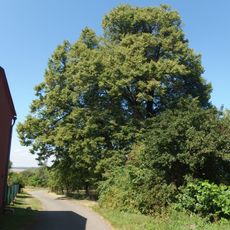
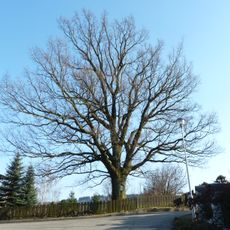
The castle park holds one of the largest hornbeams in Central Europe, a single tree formed of seven fused trunks with a girth of 8.25 m. Italian gardeners laid out the 7.22-hectare English park between 1820 and 1840 for Count Josef Beess-Chrostin, and it once included a deer enclosure with mouflon and fallow deer.
The community of curious travelers
AroundUs brings together thousands of curated places, local tips, and hidden gems, enriched daily by 92,225 contributors worldwide.