Jablunkovské šance, Military fortification system in Mosty u Jablunkova, Czech Republic.
Jablunkovské šance is a fortification system built along the former Silesian-Hungarian border at the Jablunkov Pass. Its main fortress, the Great Šance, stood on the Dejůvka hill (637 m) and later on a nearby hill (607 m) in today's Mosty u Jablunkova. The site preserves earthen ramparts, ditches, and traces of bastions, with a visitor centre nearby.
Fortifications were built from 1529, when Ottoman invasion threatened, and expanded in 1578 by Duke Wenceslaus III Adam on the southern slope of the pass. In 1638 Hungarian forces destroyed the ramparts, which Princess Elizabeth Lucretia had rebuilt from 1642; the main fort was rebuilt in stone with four bastions between 1724 and 1729. A twelve-man garrison was driven out in 1848, after which the site was abandoned and its stone taken for local houses.
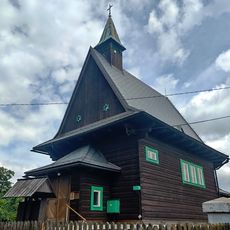
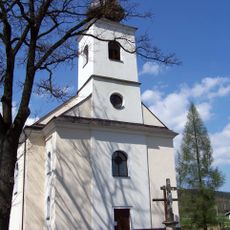
The defenders were the vybraňci, highland peasants chosen from surrounding villages, exempt from corvée labour and free to use the nearby forests; their unit was abolished in 1829. A round chapel of Saints Peter and Paul, built in 1829, stands where a second chapel was erected in 1712.
The site is accessible for walking and best explored with information about the different stations, though the hilly terrain requires physical effort and sturdy footwear.
The main fortress was rebuilt in 1724–1729 from large stone blocks in a bastion system covering almost 3 ha, with four bastions and three storeys, one underground. The only road to Hungary passed through its fortified outer bailey, which held barracks, food and ammunition stores, a chapel, a post station and stables.
The community of curious travelers
AroundUs brings together thousands of curated places, local tips, and hidden gems, enriched daily by 92,632 contributors worldwide.