Jiří Myron Theatre, Performance venue in Ostrava, Czech Republic
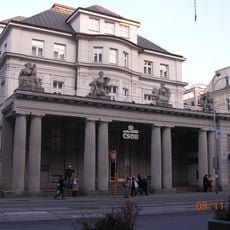
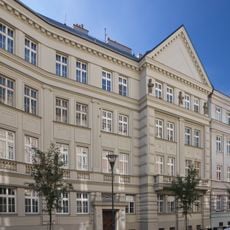
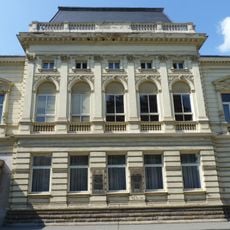
The Jiří Myron Theatre is a neo-Renaissance building on a square opposite the Basilica of the Divine Saviour, with a classical front section by architect Josef Srb and a rear stage wing rebuilt after a 1976 fire to a 1979 design by Ivo Klimeš. Its dvorana decoration was entrusted to Robert Holzer of the Prague National Theatre.
The National House was initiated in 1881 by JUDr. František Chleborád of the Moravian Club, built 1892–1894 to a design by architect Josef Srb in classicist neo-Renaissance style, at a cost of 156,000 gold coins. A fire on the night of 6 December 1976 damaged the building; architect Ivo Klimeš had the rear wing demolished and replaced, while the original front section was kept.
The building opened in 1894 as the Czech National House, a clubhouse for Ostrava's Czech associations, and hosted figures such as Tomáš Garrigue Masaryk and Emil Holub. Its name since 1954 honours Jiří Myron, the sixth director of the National Moravian-Silesian Theatre. The first permanent Czech season here opened on 16 September 1908 with Smetana's The Bartered Bride.
The theatre stands on the square facing the Basilica of the Divine Redeemer, in the emerging part of the city chosen for the building in 1892. The original front wing on the square survives; the rear stage block was rebuilt after the 1976 fire. Performances are given by the National Moravian-Silesian Theatre, whose other stage is the Antonín Dvořák Theatre.
The 1976 fire destroyed the rear wing, and architect Ivo Klimeš found that repair could not meet modern stage requirements. The old rear section was demolished and a new one built from a 1979 design inspired by Hans Scharoun and Alvar Aalto, while the original front tract was kept.
The community of curious travelers
AroundUs brings together thousands of curated places, local tips, and hidden gems, enriched daily by 93,528 contributors worldwide.