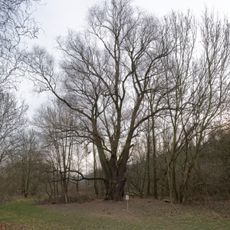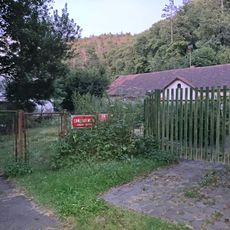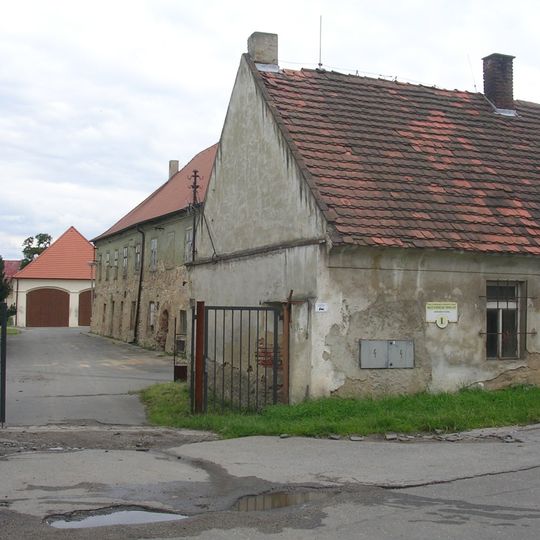
Brandejsův statek, Historical homestead in Praha-Suchdol, Czech Republic.
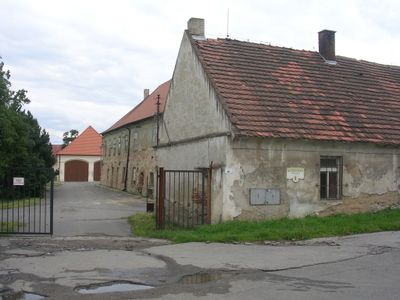
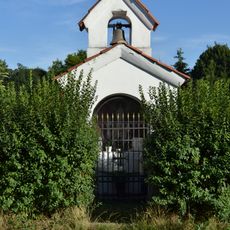
Brandejsův statek is a traditional farmstead in Praha-Suchdol with several historic buildings that once served agricultural functions. The complex shows a typical rural layout with a main house, barns, and outbuildings arranged to create a working farm property.
The manor on which the farm stands was founded probably between 950 and 970 along the Přemyslid route linking Levý Hradec with Prague Castle, and first appears in writing in 1045. From 1679 it belonged to the Benedictines of the Emauzy Monastery, who brewed beer here until the brewery closed in 1863. After a fire in 1822, the present form was given in 1822–1823.
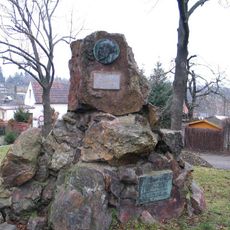
The estate is named after Alexander Brandejs, a tenant farmer and patron of Czech artists who lived and farmed here from 1874 to 1899. The painter Mikoláš Aleš stayed here in 1877–1879 and created his cycle of twelve lunettes Vlast for the National Theatre. The stallion Ardo from Brandejs's stable served Josef Václav Myslbek as the model for the horse in the St Wenceslas group on Wenceslas Square.
The farmstead stands in the north of Prague-Suchdol, and the buildings are now used by the Czech University of Life Sciences, Faculty of Agrobiology, Food and Natural Resources, so parts of the grounds serve teaching and research rather than being open visitor sites. Approach on foot or by public transport serving Suchdol and view the complex from the surrounding lanes.
The horse Ardo from Brandejs's stables was the model for Josef Václav Myslbek's horse in the St Wenceslas group on Wenceslas Square. During Mikoláš Aleš's stay in the 1870s, archaeologist Čeněk Rýzner made finds here that gave the name to the Únětice culture.
The community of curious travelers
AroundUs brings together thousands of curated places, local tips, and hidden gems, enriched daily by 94,498 contributors worldwide.