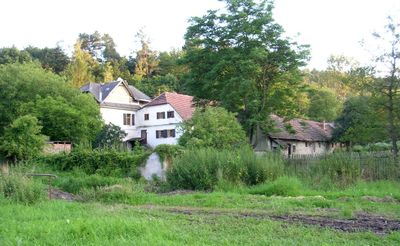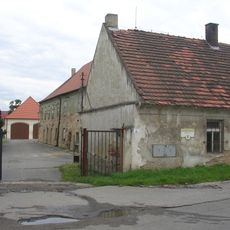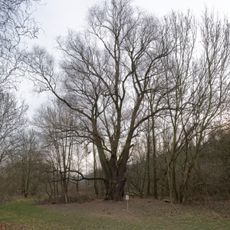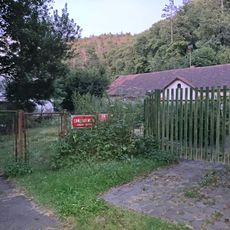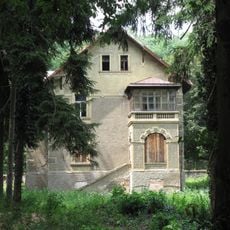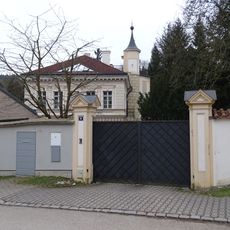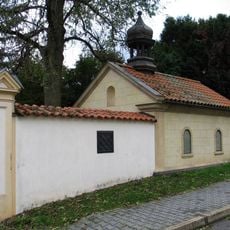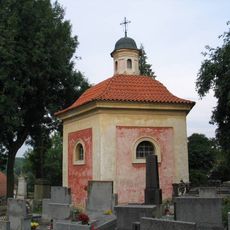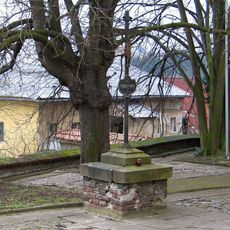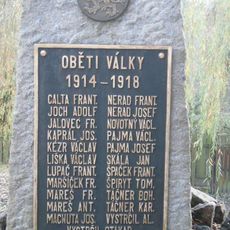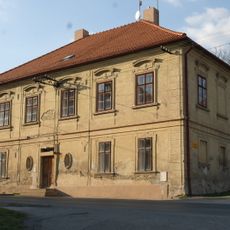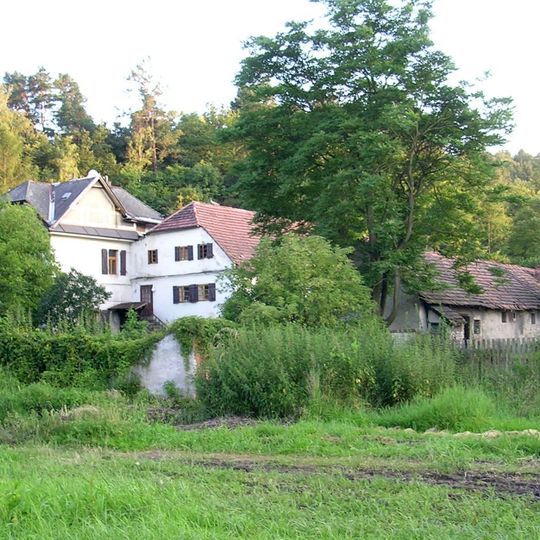
Trojanův mlýn, Mill building in Praha-Suchdol, Czech Republic.
Trojanův mlýn is a mill building in the Prague area that shows typical features of Czech industrial architecture across several centuries. The structure preserves original building and mechanical elements from its time as an active grain mill.
Grain was milled here, on the old path linking Levý Hradec to Prague Castle, from the mid-12th century; in 1125–1140 canon Zbyhněv founded two mills, one with a single waterwheel on this spot. The wooden mill was rebuilt in stone between 1360 and 1378. The Emauzy Benedictines enlarged it to two wheels in the late 17th century, and the Trojan family owned it from 1730 to 1857.
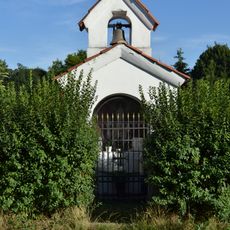
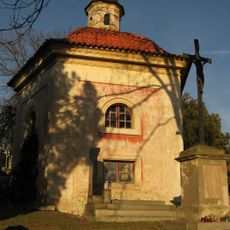
The name Trojanův mlýn comes from the Trojan family, who owned the mill from 1730 to 1857; Václav Trojan bought the nearby Chapel of St. Wenceslas with its cemetery in 1806, had it repaired and reconsecrated, and from 1821 also kept the roadside inn. The painter Mikoláš Aleš stayed at the mill, and it has served as a filming location for the series Byli jednou dva písaři and the films Bestiář and Agent bez minulosti.
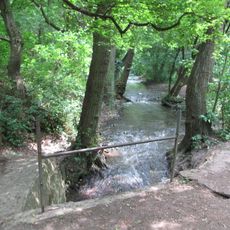
Trojanův mlýn stands on the Únětický potok in the Tiché údolí of Prague 6-Suchdol, on the old path that linked Levý Hradec with Prague Castle. The heritage protection granted in 2003 excludes the surrounding walls, gate and wicket gate. The mill buildings are private and not open as a museum, so view the L-shaped farm buildings, the outdoor stair with wooden railing and the late-18th-century barn from outside.
The mill is a frequent film location: scenes were shot here for the series Byli jednou dva písaři, directed by Ján Roháč after Flaubert's novel Bouvard and Pécuchet, and for the Czech films Bestiář, Hlava – ruce – srdce and Signál, as well as the American film The Bourne Identity. The painter Mikoláš Aleš also stayed at the site.
The community of curious travelers
AroundUs brings together thousands of curated places, local tips, and hidden gems, enriched daily by 94,330 contributors worldwide.