Cimburk, prehistoric and early medieval hillfort on the southern edge of Kutná Hora, Czech Republic
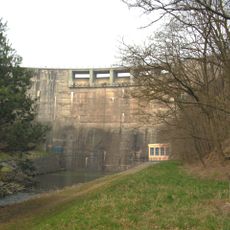
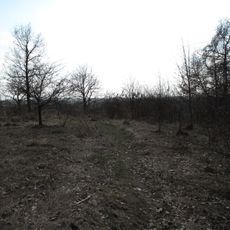
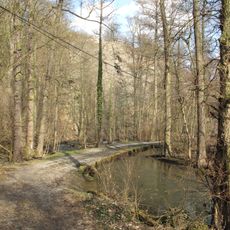
Cimburk is a prehistoric and early medieval hillfort on the Homole plateau at the southern edge of Kutná Hora, above the left bank of the Vrchlice. The promontory is about 450 metres long and 70 to 200 metres wide, with steep rocky slopes above the river valley. Its Eneolithic ramparts and ditches, later Hallstatt and hillfort-period fortifications, enclosed roughly two hectares.
Cimburk is a prehistoric and early medieval hillfort on the southern edge of Kutná Hora, above the left bank of the Vrchlice. It was first settled and fortified in the Eneolithic by people of the Funnel Beaker culture, re-fortified in the Hallstatt period, and last fortified in the early medieval period as a two-part hillfort.
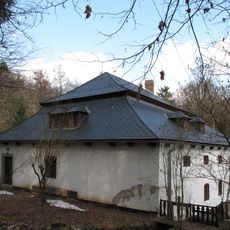
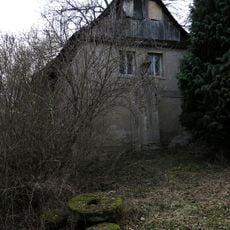
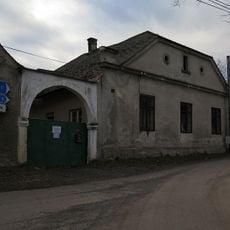
The name Cimburk comes from a former mill, which in turn was named after a former castle. The site lies on the Homole plateau above the left bank of the Vrchlice, at the boundary of the Bylany u Kutné Hory and Kutná Hora cadastral areas, and is protected as a cultural monument.
The ruins are accessible on foot, though the terrain is uneven and located in a mountainous area that requires suitable footwear. Weather conditions change seasonally and can affect accessibility, so planning your visit according to the season is advisable.
The site takes its name from a former mill, which in turn was named after a former castle. The promontory called Homole is about 450 metres long and 70 to 200 metres wide, with rocky, very steep slopes above the Vrchlice valley.
The community of curious travelers
AroundUs brings together thousands of curated places, local tips, and hidden gems, enriched daily by 92,110 contributors worldwide.