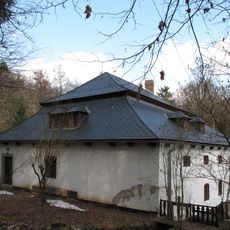
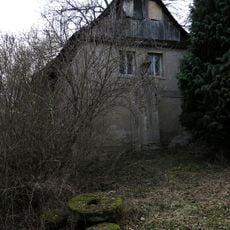
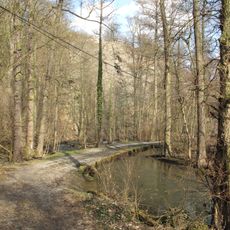
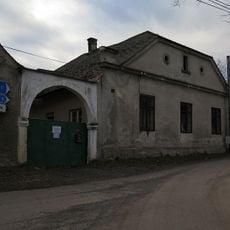
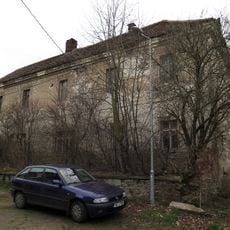
Denemark, Cultural monument and hillfort in Žižkov, Czech Republic.
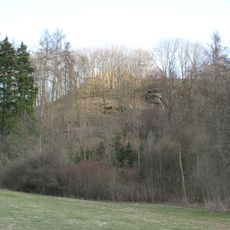
Denemark is a hillfort on a narrow promontory in Žižkov, Kutná Hora, with an acropolis measuring 60 by 20 metres protected by steep slopes on three sides and a large outer bailey on the north. Excavations in the 1980s by Milan Zápotocký and Marie Zápotocká found that both were fortified in two phases, the older outer bailey being a simple palisade. A stonemasonry workshop of the Řivnáč culture was uncovered outside the bailey.
The hillfort was built in the middle Eneolithic by the Řivnáč culture, whose fortifications of the outer bailey and acropolis went through two construction phases; the older outer bailey wall was a simple palisade. In the 1980s Milan Zápotocký and Marie Zápotocká excavated here, finding Řivnáč pottery plus Bronze Age sherds of the Unětice and Štítary cultures. The site has been a cultural monument since 1987.
The name Denemark comes from a nearby adit in Kutná Hora where Danish miners are said to have worked, and the mill and hillfort took it over. The Rivenian culture stonemasonry workshop found outside the outer bailey shows that stoneworking, not only defence, took place here. Visitors today see embankments and ditches in the woods above the Vrchlice.
The site is accessible via marked paths from Žižkov with information boards along the way. Wear comfortable shoes since the terrain is hilly and uneven in places.
The wall on the acropolis, built by the Řivnáč culture in the middle Eneolithic, is the oldest known structure of dressed stone in the Czech Republic. Milan Zápotocký and Marie Zápotocká excavated the site in the 1980s, finding Řivnáč pottery plus a few Bronze Age sherds of the Unětice and Štítary cultures.
The community of curious travelers
AroundUs brings together thousands of curated places, local tips, and hidden gems, enriched daily by 94,459 contributors worldwide.