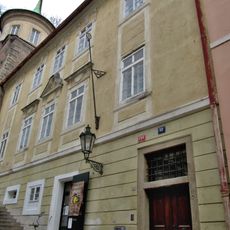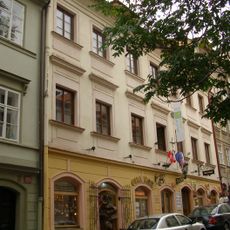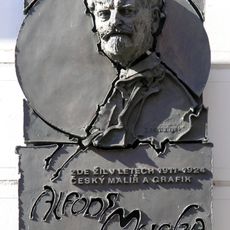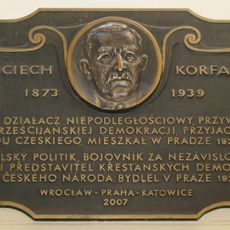
Kostel Panny Marie Ustavičné pomoci a svatého Kajetána, Roman Catholic monastery church in Malá Strana, Prague, Czech Republic
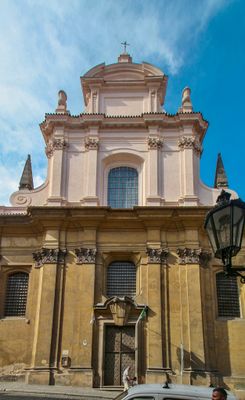
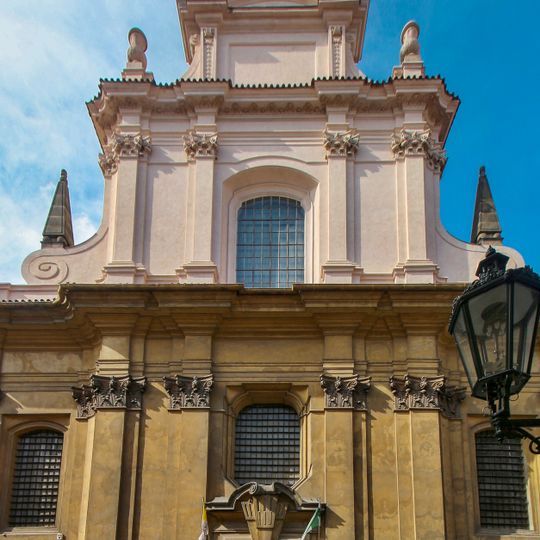
Kostel Panny Marie Ustavičné pomoci a svatého Kajetána is a single-nave Baroque church on Nerudova Street in Malá Strana, built on a cross-shaped plan with a semicircular side chapel and a central dome at the crossing. Its interior follows radical Roman Baroque models, with a concave-convex facade on the main front. The high altar has a wooden, partly marbled architectural frame.
The cornerstone was laid in 1691 by Archbishop Jan Bedřich of Valdštejn, after a 1679 design by Theatine architect Guarino Guarini; Giovanni Domenico Orsi probably led the building work. Jan Blažej Santini-Aichel joined only in 1706 and gave the main facade its concave-convex curve. The church was consecrated on 29 September 1717 by Bishop Daniel Josef Mayer.
The church is Roman Catholic, named after Our Lady of Perpetual Help and St Cajetan, and was long called "U Kajetánů" after the Theatines. The high altar, funded by Count Václav Norbert Oktavián Kinský, held a rare "Statio septima" privilege granting the same indulgences as Rome's seven pilgrimage basilicas.
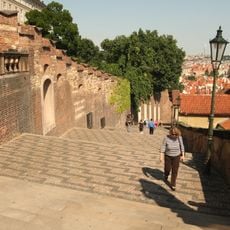
The church stands on Nerudova Street in Malá Strana, on the route up to Prague Castle. It was open daily for visits and personal prayer during the years 2018–2021, when the Orléans obedience of the Order of St. Lazarus administered it. Since August 2021 the Archdiocesan Charity of Prague has managed the church.
The main altar held a rare "Statio septima" privilege, granting the same indulgences as the seven pilgrimage basilicas of Rome; in Czech lands it was the only such altar, the nearest other being in Austria. The original 1706 altarpiece by Jan Valerián Callot was replaced in 1899 by Josef Mathauser's painting of Christ the Redeemer.
The community of curious travelers
AroundUs brings together thousands of curated places, local tips, and hidden gems, enriched daily by 92,835 contributors worldwide.