Bílá skála, Natural monument near Fryšava pod Žákovou horou, Czech Republic.
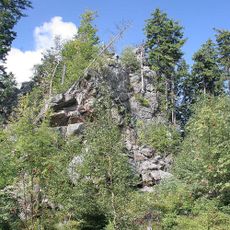
Bílá skála is a frost-weathered rock wall of gneiss, 28 metres high and about 60 metres long, formed during the Pleistocene. It stands at the end of a 1,150-metre belt of gneiss blocks running northeast from Devět skal, within a 3.18-hectare protected area that also takes in the adjoining forest.
Bílá skála is a frost-shattered gneiss (rhyolite) crag formed by frost weathering during the Pleistocene, 28 m high and about 60 m long. It is protected as natural monument no. 688, a 3.18 ha site in the Žďárské vrchy Protected Landscape Area, managed by AOPK ČR.
The name Bílá skála means "White Rock" in Czech, though the rock is a gneiss frost-shattered cliff rather than white. The site is a natural monument where climbing is permitted only without magnesium, and only from 1 July to 31 December each year.
Marked hiking trails connect this site to the nearby village of Křižánky, passing through forest areas and leading to the rocky summit. Visitors should wear proper footwear and stay on established paths to protect the natural surroundings.
The northern wall of this 28-metre frost-weathered gneiss crag is notable for its bryophytes: 19 moss and liverwort species have been recorded there, among them mountain species such as Anastrepta orcadensis and Bazzania trilobata. Climbing is permitted only without magnesium, from 1 July to 31 December.
The community of curious travelers
AroundUs brings together thousands of curated places, local tips, and hidden gems, enriched daily by 92,644 contributors worldwide.