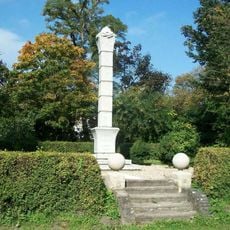
Klášter Dolní Ročov, Augustinian monastery in Dolní Ročov, Czech Republic.
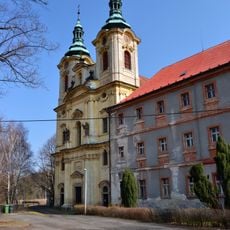
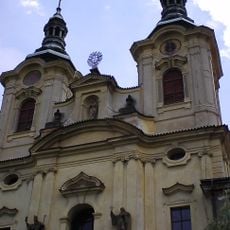
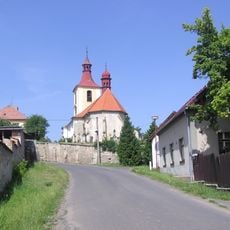
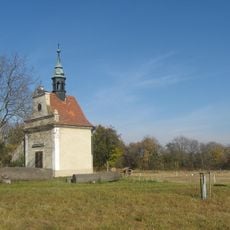
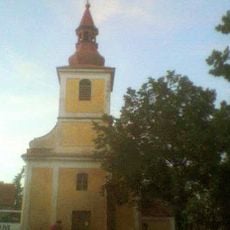
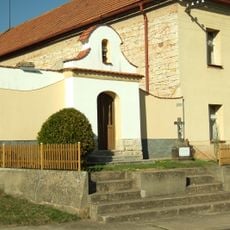
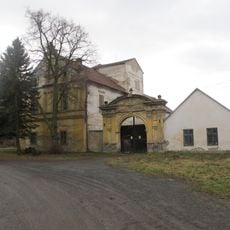
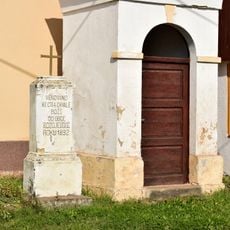
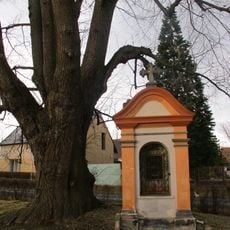
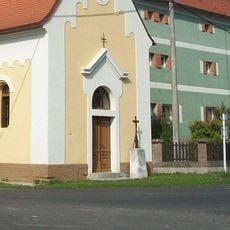
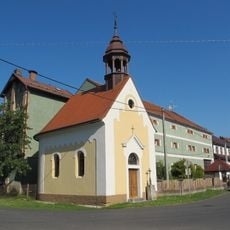
Klášter Dolní Ročov is a former Augustinian monastery in the Džbán highlands, twelve kilometres south of Louny, in the valley of the Klášterský potok. Its baroque complex, rebuilt in 1746–1750 under Kilian Ignaz Dientzenhofer and then by Anselmo Lurago, centres on the Church of the Assumption of the Virgin Mary, whose front carries a tall tower built by Jan Blažej Santini in 1715–1718. A cemetery chapel stands by the church.
Founded in 1373 by Albrecht z Kolovrat, the monastery later suffered significant damage during the Hussite Wars and Saxon attacks in 1631. The baroque transformation with the new towers followed about a century later, marking an architectural reorientation of the complex.
The monastery's best-known symbol is the Gothic limestone Madonna of Področov with the Child Jesus, 1.25 metres tall and dating from the founder's era; it stands in a glass case on the main altar and is credited with many miracles. The Ročov Gradual, a manuscript in Czech chorale notation, was written here, but the monastery's book collection is now kept in the town museum in Louny. Each year pilgrims come for the annual pilgrimage, where the Ročov Zdrávas hymn is sung in honour of the Mother of God.
The site is currently undergoing renovation and serves as a humanitarian aid warehouse. Visitors should check ahead about access availability and be prepared for construction work and restricted areas.
The tall tower on the church front and the cemetery chapel were added by Jan Blažej Santini between 1715 and 1718, not by Dientzenhofer. Dientzenhofer led the 1746–1750 rebuild after cloudbursts in 1731, 1740 and 1745 made the monastery unsafe.
The community of curious travelers
AroundUs brings together thousands of curated places, local tips, and hidden gems, enriched daily by 92,325 contributors worldwide.