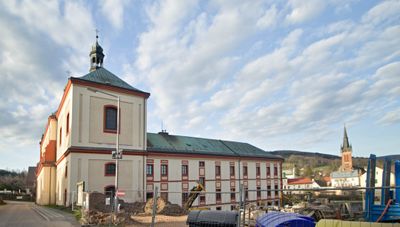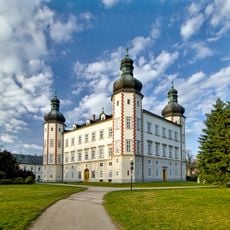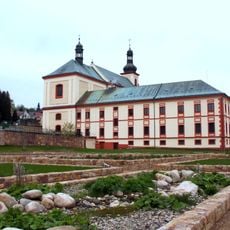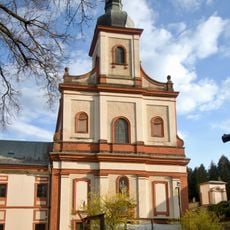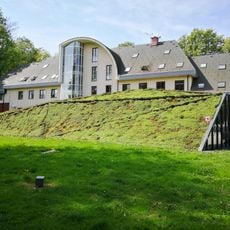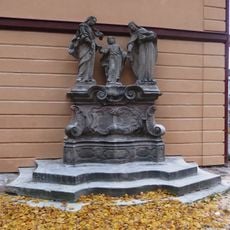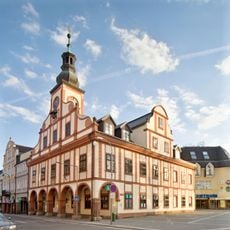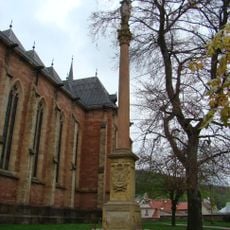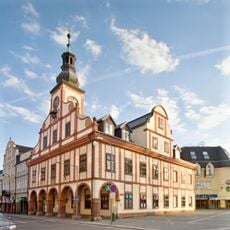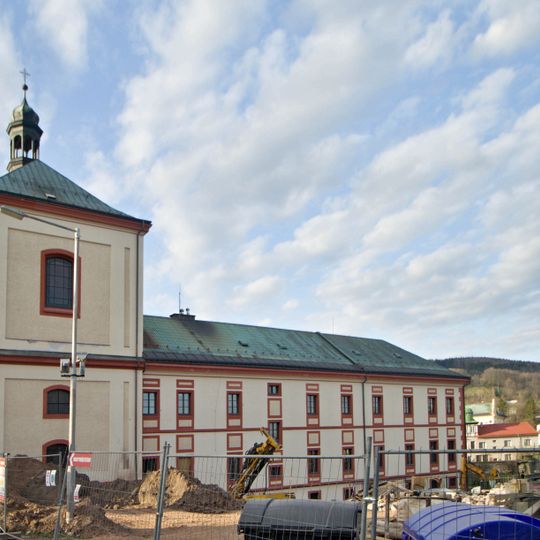
Augustinian monastery in Vrchlabí, Augustinian monastery in Vrchlabí, Czech Republic.
The Augustinian monastery in Vrchlabí is a monastic complex in Bohemia featuring a church with notable Baroque characteristics and decorated with valuable artworks inside. The stone buildings were designed to create a unified religious space where the altar, ceiling paintings, and architectural details work together as a cohesive whole.
Count Maxmilián František Felix of Morzin commissioned the monastery in 1705, entrusting the design to his court architect Matyáš Auer; the foundation stone was laid on 12 January 1705. After the count died in 1706 his brother Václav of Morzin continued the work, and four priests and one lay brother arrived in 1714. A fire caused by tinsmiths' apprentices damaged church and convent in 1895, with repairs finished in 1904.
The monastery church is now owned by the town and used mainly as a ceremonial and concert hall, with services held only rarely. Its two organs support this: the Rieger brothers' Opus 666 from Krnov was installed in 1898, and a restored 1872 two-manual instrument by Amand Hanisch was placed in the presbytery in 2008. The organist is Radek Hanuš.
The grounds are visible from outside at any time, but to see the interior spaces you should check when guided access is available and arrange your visit accordingly. Comfortable footwear is helpful since you will walk through multiple rooms and levels to explore the different areas of the complex.
The church holds two organs: the 1898 Opus 666 from the Rieger brothers' workshop in Krnov on the choir loft, and a two-manual instrument by Amand Hanisch from 1872, placed in the presbytery in 2008. Organist Radek Hanuš plays here.
The community of curious travelers
AroundUs brings together thousands of curated places, local tips, and hidden gems, enriched daily by 94,114 contributors worldwide.